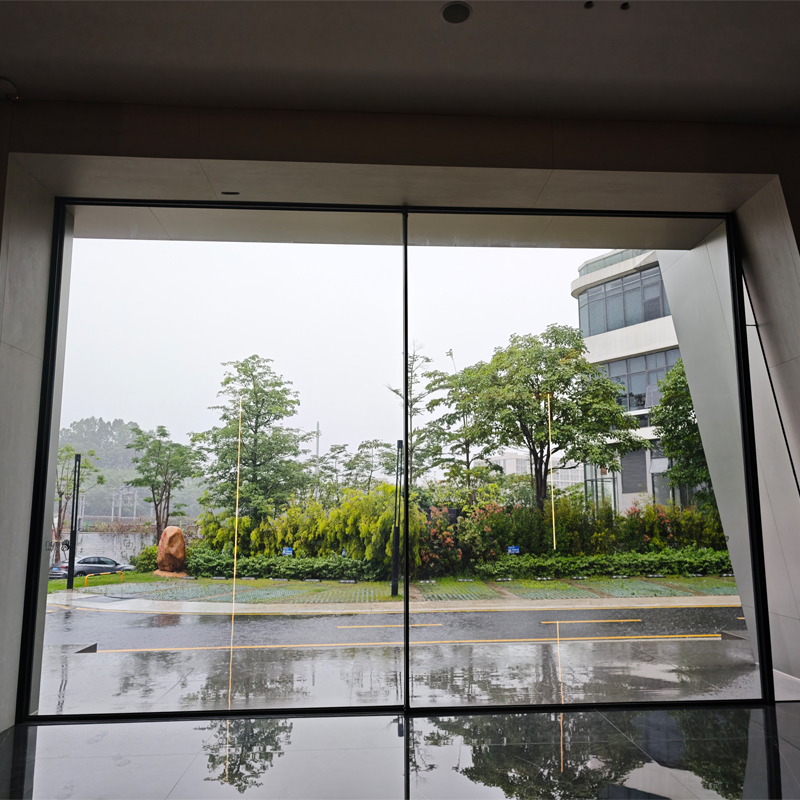
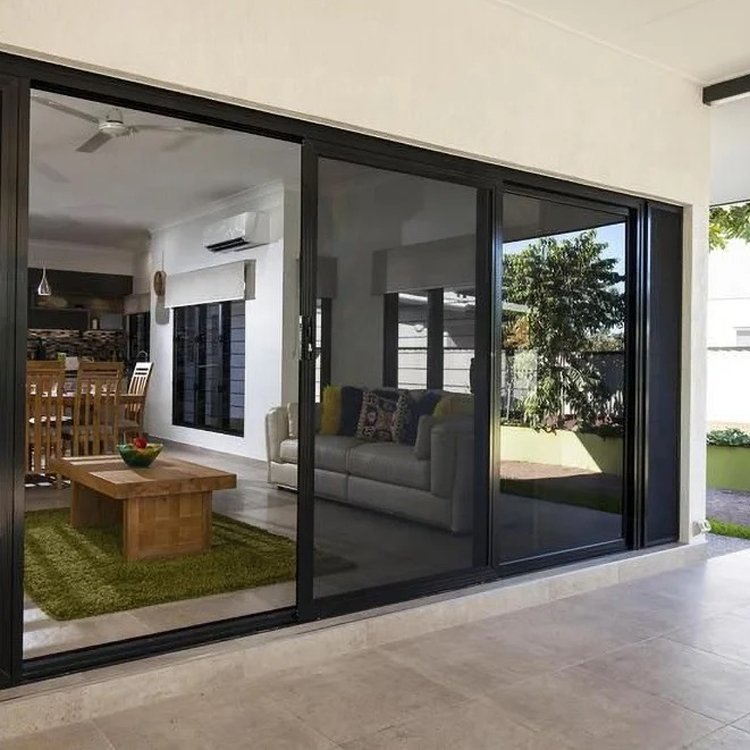
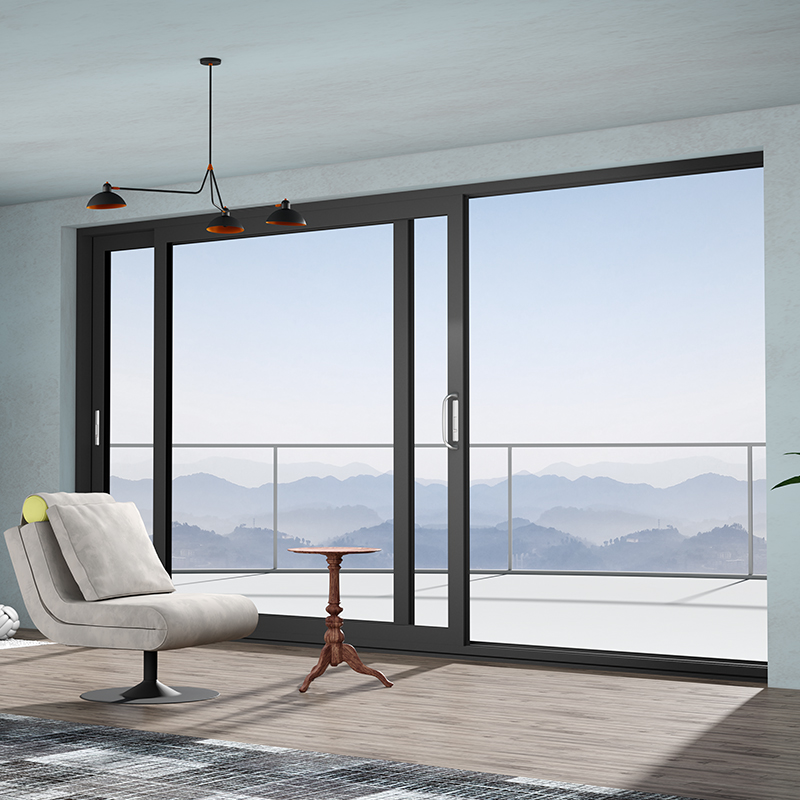
Dubai is a demanding environment for large glazed openings. Strong sun, extreme heat, airborne dust, humidity, and long-term exposure all raise the performance stakes. In that kind of climate, bright and open interiors matter, but larger glass areas have to be handled carefully so they do not make cooling demand, comfort, or maintenance harder to manage.


That was the challenge behind this Dubai project. The goal was not simply to create bigger openings for visual effect. The result needed to feel premium, but it also needed to work.
Aluminium sliding doors made sense because they supported both sides of the brief at once. This project is a useful example of how the right sliding door system can balance climate performance, daylight, and a high-end architectural result in a hot, high-exposure setting.
The Dubai Project Had to Solve More Than One Problem
At first glance, this could look like a project about aesthetics and larger openings. In reality, it had to solve more than one problem at the same time.
Extreme heat and solar exposure raised the performance stakes
Dubai’s climate immediately raises the stakes for large glazed openings. Temperatures regularly climb past 40°C, and strong solar exposure can quickly turn a visually impressive opening into a source of unwanted heat gain if the system is not designed carefully.
The opening needed to support daylight and views, but it also had to help manage heat in a way that protected indoor comfort and reduced unnecessary pressure on cooling.
Dust, humidity, and durability were part of the decision too
Heat was only part of the story. The UAE environment also brings airborne dust, sand, and humidity into the decision. Those conditions make sealing more important, increase the value of corrosion resistance, and place more pressure on long-term reliability.
That changed what the project needed from the doors. It was not enough for the system to look sleek at installation. It also needed to resist infiltration, hold up under exposure, and keep performing well over time in a setting where environmental stress is constant.
The project still needed light, views, and a premium finish
Even with those environmental demands, the design still needed the things that make large sliding doors attractive in the first place. It needed better daylight, stronger visual openness, and a cleaner premium finish.
The project was not choosing between appearance and performance. It needed both at once, and the door system had to support both without compromise.
Why Aluminium Sliding Doors Made Sense for This Project
Once the project conditions were clear, aluminium sliding doors became a logical fit. The door type and the material both aligned with what the project was trying to achieve.
Sliding doors helped keep the opening wide and usable
Sliding doors suited the project because they allowed large glazed openings without the swing clearance that comes with more conventional formats. That helped keep the opening broad and practical while making the transition between spaces feel cleaner and less restricted.
For a project built around light and openness, that mattered. The doors could support a wider connection between spaces while still keeping the surrounding layout usable.
They also made it easier to preserve the visual openness of the design. Instead of breaking the transition with a more intrusive opening method, sliding panels kept the movement simple and the opening more elegant.
Aluminium supported slim sightlines with structural strength
Aluminium made sense because it supports larger panels while allowing slimmer profiles. That helped the project keep the sightlines narrow and the glass area more visually dominant, which supported the premium architectural look the design was aiming for.
At the same time, aluminium provided the structural confidence needed for larger sliding panels in a more demanding environment. That balance is one of the reasons aluminium sliding doors are so effective in projects like this. They support architectural lightness without giving up practical strength.
The system fit both the climate demands and the design goals
The project needed something that looked expansive and high-end, but still worked in a hot, high-exposure setting. Sliding doors offered that combination more naturally than a more conventional format.
They supported the visual priorities of daylight, openness, and cleaner sightlines, while also allowing the specification to be built around better thermal control, tighter sealing, and longer-term durability.
The Performance Features That Helped the System Work in Dubai
The project worked because the full system responded to the real conditions of the site. No single feature carried the result on its own.
Thermal insulation helped control heat transfer
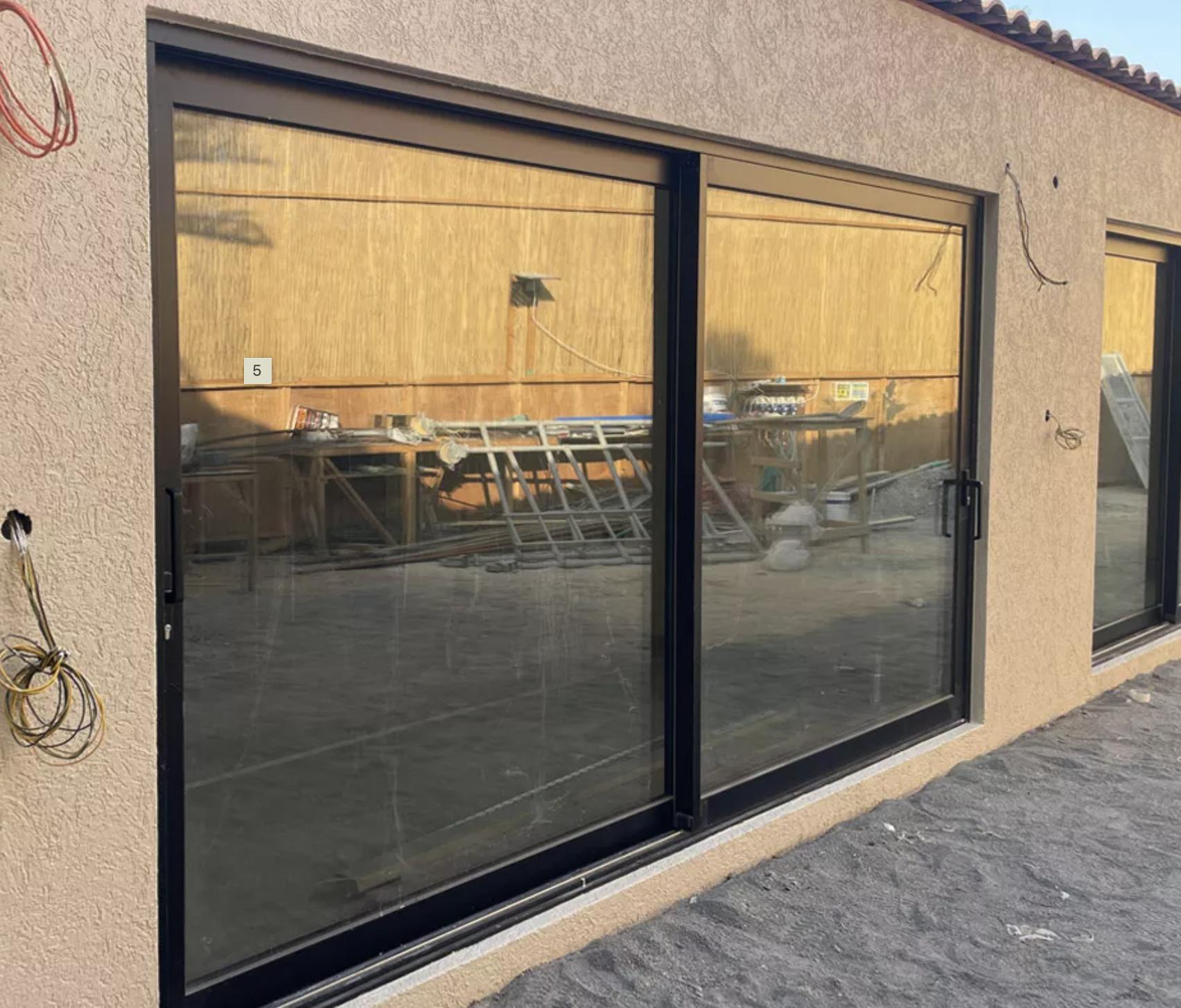
Thermally broken aluminium profiles helped reduce heat transfer and maintain more stable indoor temperatures. Insulated glazing strengthened that response further, giving the opening a better chance of performing well under strong sun and high outdoor temperatures.
This is important because the project was not trying to reduce glazing. It was trying to make larger glazed openings more workable in Dubai’s climate. Better thermal control helped the design keep the openness it wanted without letting the opening become an obvious thermal weak point.
Better sealing helped control dust and air infiltration
In the UAE, sealing quality becomes especially important because of sand, dust, and air infiltration risk. Stronger perimeter sealing helps limit dust ingress, improve indoor comfort, and reduce the maintenance burden that can come with a more exposed environment.
A sliding door in Dubai has to do more than move smoothly. It also has to close back up properly, resist dust intrusion, and keep daily comfort from being undermined by weaker perimeter control.
Acoustic performance improved indoor comfort
Noise control was an important part of the project. Double-glazed configurations and better-sealed frames help reduce outside noise and support a calmer indoor environment, which matters even more in a city setting where the surroundings are active.
That means the doors were solving more than a temperature problem. They were also helping support a quieter interior, which made the project feel more controlled and comfortable overall.
Corrosion resistance supported long-term durability
Durability also mattered because the UAE environment can be hard on exposed materials. Marine-grade aluminium and anti-corrosion finishes help protect the system in humid or coastal conditions, supporting long-term appearance and structural reliability.
For a premium project, this matters over time. The system still has to look good and perform well after years of exposure. Corrosion resistance helps protect not only durability, but also long-term appearance and maintenance value.
Security and structural stability were also part of the solution
Large glazed openings still need to feel secure. Reinforced frames, dependable locking systems, thickened profiles, and stronger wind-resistance performance were essential in this project because the opening had to combine openness with stability and protection.
Structural confidence was a huge part of the overall quality of the opening. A refined sliding system should still feel secure, controlled, and dependable every time it is used.
How the Door System Brought In Light Without Turning Glass Into a Problem
One of the biggest successes of the project was that it kept the visual strengths of large glazing without letting that glazing become the project’s weakness.
Large glass panels helped maximise daylight
The project benefited from large glazed areas that brought more light into the interior and helped the spaces feel brighter and more open. In a location like Dubai, daylight is abundant, but that does not mean every large glazed opening works well automatically. The value comes from using that light in a way that strengthens the interior without making the space harder to cool or less comfortable to use.
Brighter interiors, stronger visual openness, and a better relationship between the inside and outside all helped the final project feel cleaner and more expansive.
Slim profiles supported a cleaner and more premium look
Slim aluminium profiles helped the opening feel more refined and expansive. Narrower sightlines allowed the glass to do more of the visual work, which supported the cleaner premium look the project was after.
That is especially important in a Dubai project, where the final finish is part of the value. The opening needed to look elegant and modern, not heavy or overframed.
The glazing and frame had to work together
Better light and better performance had to happen at the same time, and that depended on the frame, glass, seals, and hardware working together.
That coordination is what turned large glazing into an asset rather than a tradeoff. The opening stayed bright and open, but it also remained better controlled, better protected, and easier to live with in real conditions.
What This Project Shows About Choosing Sliding Doors for Hot-Climate Builds
Large glazed openings need stronger specification in hot climates
In hot-climate projects, large glazed openings need more than a strong visual effect. Heat, solar exposure, humidity, and indoor comfort all increase the importance of thermal control, sealing, and durability.
Appearance alone is not enough in that kind of setting. The larger the glazed opening, the more important the full system becomes. The project worked because the doors were treated as a performance decision, not just a design statement.
The full system matters more than any one feature
No single upgrade creates the whole result. Good performance comes from the complete assembly. Thermal breaks, insulated glazing, tighter seals, durable finishes, and reliable hardware all have to work together.
That is what makes the difference between a door that looks impressive in concept drawings and one that keeps performing after installation.
Projects like this are a reminder that the opening should be judged as a full system.
Long-term value comes from performance as much as appearance
A premium opening still has to manage heat, resist corrosion, maintain comfort, and limit maintenance pressure over time. In demanding climates, the best-looking system still needs to hold up. That is what turns a strong first impression into a stronger long-term project decision.
The value is not only in the finish. It is in how well that finish keeps working under real conditions.
How DERCHI’s Sliding Door Range Supports Similar Projects
Glass options support different climate and design priorities
The sliding door range comes standard with insulated glass, with upgrade options that include Low-E glass, decorative glass, magnetic blinds, solar or electric blinds, fluorocarbon insulated aluminum spacers, and inert gas filling for anti-fog and anti-condensation performance. Those options help tune the system to different climate and design priorities rather than forcing every project into one fixed glazing setup.
For projects where heat control is a major concern, the 143 Series Thermal Break Aluminum Sliding Door is a relevant option within the wider range because it is built around thermal-break construction and insulated glazing. For projects that want a more premium finish along with stronger waterproofing and acoustic performance, the 135F Series Aluminum Glass Sliding Door is another strong fit.
Configuration options support different layouts and opening sizes
Different projects place different demands on opening width, panel size, and overall layout. That is why a wider sliding door range matters. Multiple opening methods, custom sizes, and varied structural options make it easier to apply the same performance-led approach across different project conditions.
The Q5 Series Aluminum Glass Sliding Door is a good example of a more practical thermal-break sliding system that still supports smooth operation, insulated glazing, and large-panel use in residential or mixed-use settings.
Hardware and detailing support everyday performance
A project-ready system also depends on what happens in daily use. Smooth operation, stable hardware, stronger locking, tighter sealing, and controlled drainage all shape how the opening performs after installation.
Everyday performance matters because large sliding doors are not only judged by the idea of openness. They are judged by how dependable they remain over time. This is particularly important in projects that want a premium result without taking on unnecessary maintenance or usability problems later.
The range works across residential and commercial projects
The same sliding door logic can support both residential and commercial work. Luxury homes, hospitality developments, and selected commercial spaces can all benefit from the same combination of openness, climate response, durability, and controlled daily use.
That makes the wider range genuinely relevant to projects that share the same core pressures, even when the building type changes.
Conclusion
This Dubai project works as a strong example because the aluminium sliding-door system answered the project’s environmental and architectural demands at the same time. It supported daylight, openness, and a premium modern finish, while also responding to heat, dust, humidity, sealing demands, and long-term durability in a climate that quickly exposes weak specification decisions.
When the frame, glazing, seals, hardware, and finish all work together, large glazed openings become much easier to manage in demanding environments. That is what made this approach effective in Dubai, and that is why the same thinking remains valuable for similar residential and commercial projects.
FAQs
What mattered most in the Dubai sliding-door specification?
The most important factors were thermal insulation, strong sealing against dust and air infiltration, durable aluminium construction, acoustic control, corrosion resistance, and a full assembly that could support both comfort and a premium glazed design in a hot, high-exposure environment.
Can the same sliding-door approach work in other high-sun or coastal developments?
Yes. The same approach is relevant in other hot, high-sun, humid, or coastal projects where large glazed openings are desirable but heat control, durability, corrosion resistance, and long-term comfort also matter.