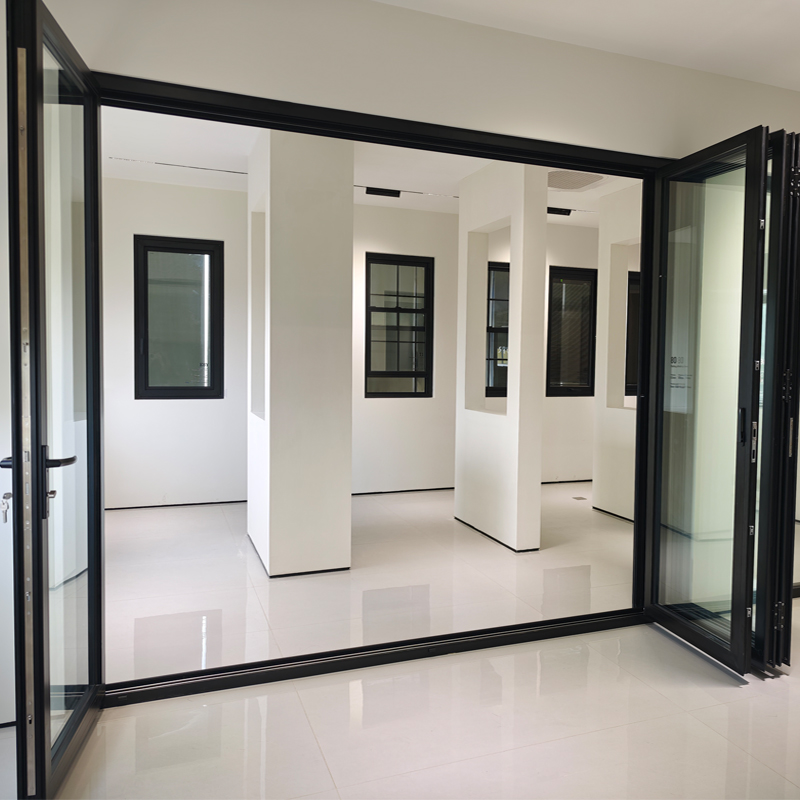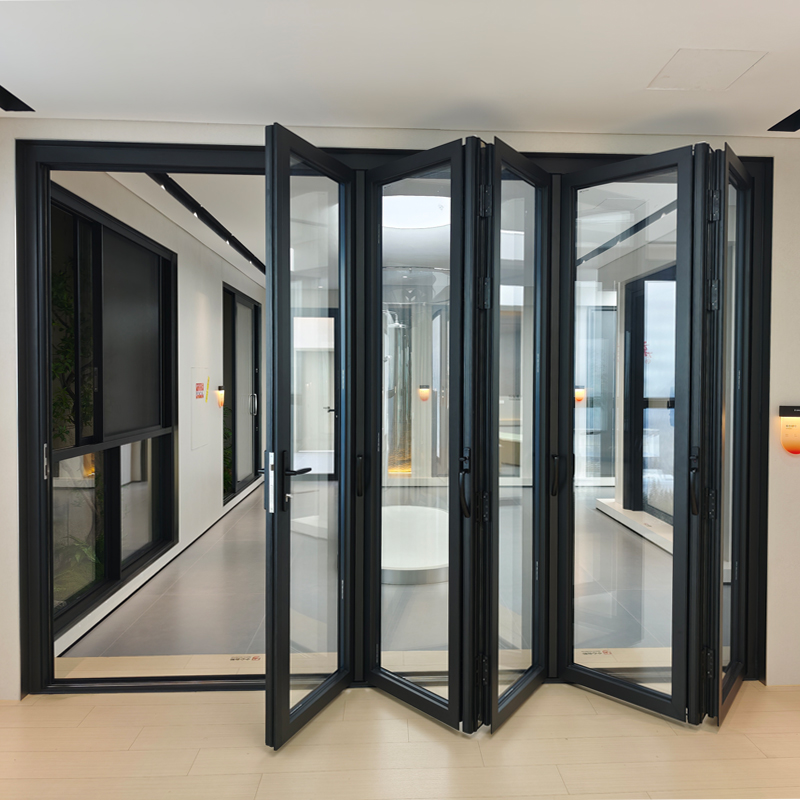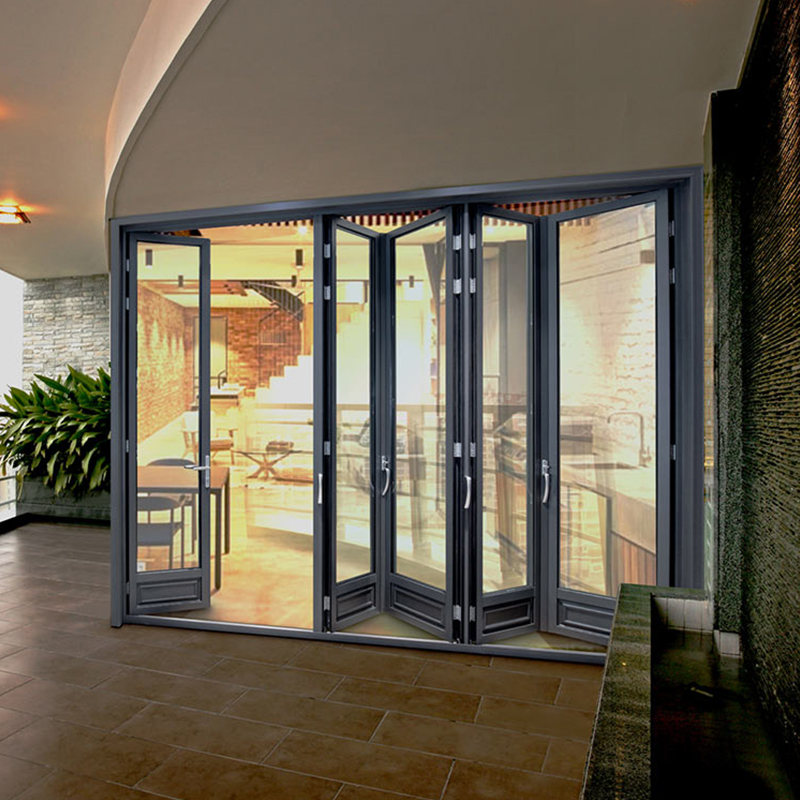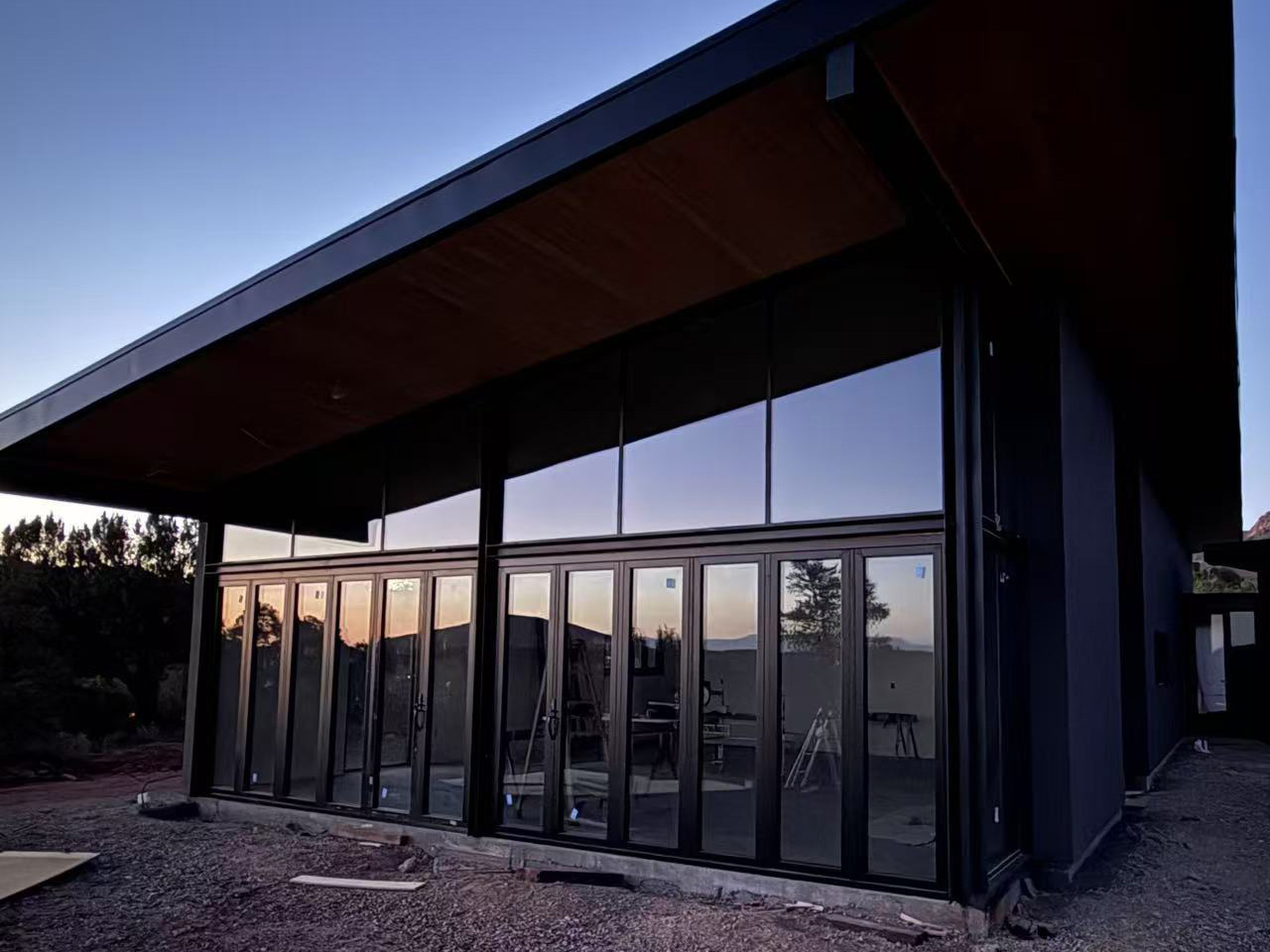
Many commercial spaces now need openings to do more than simply separate one area from another. The result is that door systems are no longer just a finishing element in buildings. They play a direct role in how a space functions.
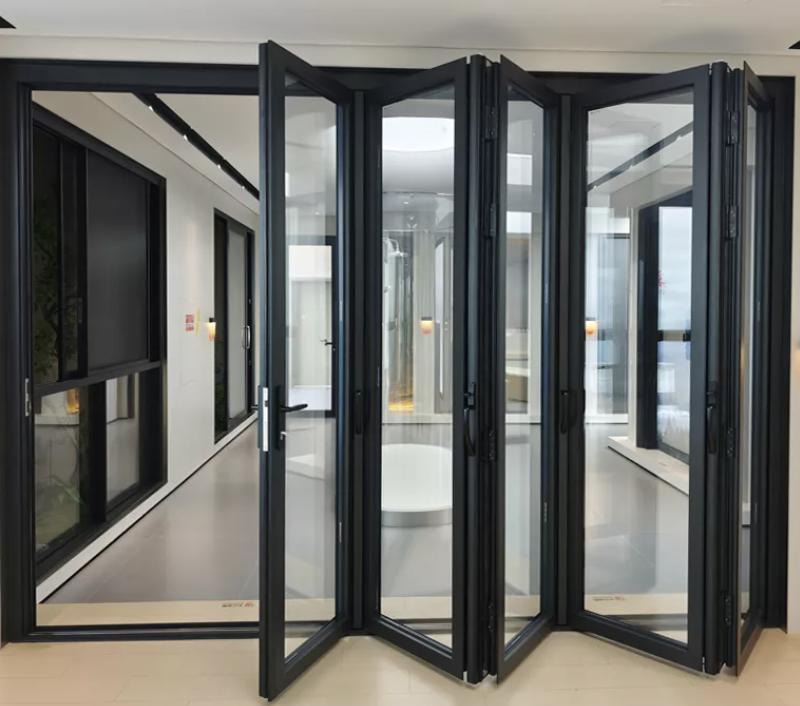
Folding doors stand out because they can open up much more of the span, improve movement between areas, and help the space respond more easily to changing needs. They do not suit every commercial setting, but in the right one, they can make the space easier to use and more flexible in operation.
The key is understanding why they work differently, where they make the most sense, what needs to be planned early, and what makes a system perform well in commercial use.
Why Folding Doors Work Differently From Standard Commercial Doors
Folding doors are not just another commercial entry option. They change how the opening behaves and how the surrounding space can be used. That makes them different from standard hinged systems and different from openings that remain mostly fixed throughout the day.
They open up more of the usable span
One of the clearest advantages of folding doors is that they can free up a much larger part of the opening. Many standard commercial door types give you only a limited access point at one time. A folding system can open much more of the width, which changes the way the transition feels and functions.
In practical terms, it reduces the sense that people are passing through a narrow entry point and instead makes the opening feel like an active part of the layout.
They make the opening more active
With a folding system, the opening becomes more than a fixed boundary. It can help shape how the space welcomes people, how it handles circulation, and how it responds to different times of day or different operating needs.
That matters in commercial spaces because businesses rarely use every area in exactly the same way all day long. A space may need to feel more open during service, more enclosed during setup, or more connected during events. Folding doors give the opening a more active role in that shift.
They suit spaces that need to move between open and enclosed
Some commercial environments do not need the same level of separation all the time. At certain points, a wide, open connection works best. At other times, the business needs the opening closed for comfort, security, weather control, or operational reasons.
Folding doors support that kind of changing use better than door formats that stay more fixed in how they operate. That is where much of their value comes from. They help the space respond to real use conditions instead of locking it into one permanent state.
Where Folding Doors Make the Most Sense


Folding doors are especially effective in commercial spaces where a wider opening creates a real operational advantage. In other settings, they may add complexity without delivering enough day-to-day benefit.
Retail and showroom spaces
Retail spaces often benefit from stronger frontage openness, better visibility, and easier customer entry. A folding door system can support all three. When opened, it helps reduce the sense of a hard barrier between the street and the interior. That can make the space feel more welcoming and more active from the outside.
In showrooms, this can be just as useful. The wider opening can help products, displays, and the general atmosphere of the interior feel more exposed and easier to engage with. This is valuable where first impressions and visibility play a large role in drawing people into the space.
Restaurants, cafés, and hospitality settings
This is one of the strongest use cases for folding doors. In restaurants, cafés, bars, and hospitality environments, indoor and outdoor areas often need to work together rather than feel completely separate. Folding doors help create that relationship by opening up a much broader connection between the two.
That can improve service flow, support a more open and inviting atmosphere, and make the space feel more responsive to weather and occupancy conditions. For hospitality businesses, that kind of flexibility can affect not only the appearance of the venue, but also how well it operates during busy periods.
Offices, amenity areas, and collaborative spaces
Folding doors can also work well inside office environments, especially in amenity zones, meeting areas, and collaborative spaces. These are often areas where the business may want openness at one moment and clearer separation at another.
For example, a shared lounge or multi-use room may need to connect visually and physically to a larger area during one type of use, then operate more independently during another. Folding systems can support that without requiring permanent physical reconfiguration of the layout.
Event and multi-purpose venues
Event spaces, training rooms, shared venues, and other multi-purpose environments often need to adapt quickly to changing use conditions. Attendance levels and room setups may need to change on various occasions. Different activities require different levels of openness and separation.
Folding doors can help the space adjust without major construction or heavy layout changes. That makes them valuable in settings where flexibility needs to be built into the physical environment from the start.
Where another door type may be more practical
Folding doors are not always the most practical answer. In some spaces, a simpler system may be better. If the opening rarely changes, if stacking space is limited, or if the day-to-day use does not really benefit from folding panels, another format may make more sense.
That might mean a hinged door, a sliding system, or a different configuration better suited to the actual operating pattern of the space. This matters because folding doors should be chosen for how they help the business function, not just for the visual impact of a large open span.
What to Plan Before Choosing a Folding Door System
Folding doors can work extremely well, but only if the opening is planned properly and the system genuinely suits the way the commercial space will be used.
How the opening will be used day to day
The first question is whether the opening will be fully opened often, partly opened, or mostly kept closed. That alone can tell you a lot about whether folding doors make sense.
If the opening will rarely change, the system may not deliver enough practical value to justify the added complexity. If it will be actively used as part of how the space operates, the case becomes much stronger. This should be one of the first filters in the decision.
How much room is available for panel stacking
Folding systems need somewhere for the panels to stack when open. That space has to be planned properly. If it is not, the open position can interfere with furniture, customer routes, service counters, displays, or general circulation.
This should never be treated as a small detail to sort out later. The stacked panels are part of how the system functions, so their effect on the layout needs to be considered early.
Whether the opening is customer-facing or operational
A customer-facing opening often prioritises welcome, visibility, and ease of entry. An operational opening may place more weight on durability, practicality, and smooth daily handling. Both can benefit from folding doors, but the priorities are not exactly the same.
Knowing what the opening needs to do in practice helps shape the right system choice and keeps the project from focusing too much on visual openness while overlooking more practical requirements.
What the closed position still needs to do
One of the most common mistakes is paying too much attention to the open position and not enough to the closed one.
Weather separation, security, comfort, and noise control may still matter just as much as the ability to open the span. If the system is weak in the closed position, the flexibility of the opening will not make up for the problems that follow.
How traffic and daily use affect the system choice
High-use commercial openings place much more demand on the system than lightly used ones. Frequent cycling affects hardware, alignment, and long-term operation. A folding system that looks fine in a concept drawing may not hold up well if the actual use is heavy and continuous.
The right solution should match how intensively the business will use the opening in real life, not just how impressive it looks when fully open.
What Makes a Folding Door System Work Well in Commercial Use
Once the planning is right, the next issue is performance. A folding door in a commercial setting needs to be dependable in daily operation, not just visually attractive.
Reliable operation under frequent use
Commercial systems need strong hardware, stable movement, and smooth operation over time. Frequent use places more pressure on the system than occasional opening and closing. If operation becomes stiff, awkward, or inconsistent, the benefits of the wide opening quickly start to fade.
That is why the quality of the operating system matters so much. The opening has to remain practical to use, not difficult or disruptive.
Good sealing and comfort when closed
A folding door should not only open well. It also needs to close back up properly. Sealing quality affects comfort, weather resistance, and how usable the space feels on an everyday basis.
If the system feels drafty, noisy, or weak when closed, the business may end up with comfort issues that affect customers, staff, or occupants. In many commercial environments, especially hospitality and frontage spaces, the closed position matters just as much as the open one.
Strong security and controlled access
Flexibility should not come at the expense of security. Commercial openings still need dependable locking systems, strong hardware, and the right level of access control.
That matters especially in spaces that need to feel open and welcoming during operating hours but secure when closed. A good folding system should support both conditions properly.
Practical maintenance and serviceability
Long-term value depends partly on how realistic the system is to maintain. Cleaning access, servicing, hardware replacement, and general reliability all affect the real cost of ownership over time.
A commercial folding door should not only perform well at installation. It should also remain practical to maintain and dependable in daily use over the longer term.
Common Mistakes to Avoid
Most poor results come from focusing too heavily on appearance or openness without thinking enough about how the system will work in real operation.
Choosing folding doors for impact alone
A dramatic opening is not always the same as a useful one. Folding doors can create strong visual impact, but that should not be the main reason for choosing them. The system needs to support how the business actually uses the space.
If it does not improve movement, flexibility, or operational flow in a meaningful way, the result may be more impressive in concept than in reality.
Failing to plan for stacked panels
If panel stacking is not planned properly, the open position can create new problems instead of solving old ones. It may interrupt circulation, block furniture placement, or make the layout harder to use.
This is one of the most avoidable mistakes, but only if it is addressed early enough.
Ignoring how people actually move through the space
A folding system may look convincing on a plan, yet still feel awkward in daily use if customer routes, staff movement, and circulation patterns have not been thought through carefully.
The opening should support how people move, not force them to work around it.
Focusing only on the open position
The closed position still matters. Comfort, sealing, security, and ease of operation should not become secondary concerns just because the open position is visually appealing.
In most commercial spaces, the system has to perform well in both conditions. If it only shines when fully open, it is not doing enough.
Assuming folding doors are always the most flexible answer
Folding doors can be very flexible, but they are not automatically the best answer in every commercial setting. Sometimes a simpler door type delivers what the space really needs with less complexity.
The best choice depends on the opening, the layout, and the way the business actually operates. That is what should guide the decision.
Conclusion
Folding doors are most valuable in commercial spaces that need wider access, smoother circulation, and more adaptable use of space. Their strength is not simply that they look more open. It is that they can change how the opening works and how the surrounding space responds to different conditions throughout the day.
The right folding door system should make the space easier to operate, not just more visually open. If the business genuinely benefits from broader access, better flow, and greater flexibility, folding doors can be a highly effective commercial solution.
If your commercial project needs a folding door system that does more than create visual impact, Derchi can help you find a solution built around real performance, smoother operation, and practical flexibility. The right system should support how your space works every day, from customer movement and access to comfort, security, and long-term usability.