When you buy a 72 inch window, think about many things. You should look at structural needs and code rules. You also need to check the material, energy use, style, how to install, price, and warranty. Pick replacement windows that follow safety rules like egress regulations. This keeps your family safe and makes your home worth more. New windows that fit your needs make your home more comfortable. They also help your windows last longer. If you know what you want first, you make better choices and get better results.
Key Takeaways
Think about what your house needs and the local rules before you buy 72 inch windows. This keeps your home safe and follows the law.
Pick a strong frame material that lasts long and saves energy. Vinyl, fiberglass, and wood are good choices.
Learn why energy ratings like U-Factor and SHGC matter. These ratings help you pick windows that lower energy bills.
Always look at egress and safety glazing rules. This protects your family and follows the law.
Get a professional to put in large windows. Good installation makes windows last longer and keeps your warranty.
Look at prices and features from many brands. This helps you get the most for your money.
Take care of your windows to keep them working well. Clean them and check the seals to stop problems.
Buy windows that make your home comfy and look nice. Good windows can raise your home's value and make it look better.
72 Inch Window Size and Structure
Rough Opening and Framing
When you plan for a 72 inch window, you change the wall structure in a big way. You remove several studs to make space for the window. You need to build a strong frame so your wall stays safe and stable. If you skip this step, your wall can sag or crack. You must follow the right steps to keep your home strong.
Header and Jack Studs
The header is a thick beam above the window. It holds up the weight from the roof and floors above. You need to size the header correctly. If you use a small header, it can bend and push weight onto the window. You should use double jack studs on each side of the opening. These vertical supports carry the load from the header down to the foundation. If you use enough jack studs, you prevent crushing and keep the window working smoothly.
Tip: Always check local building codes before you pick header and jack stud sizes. Codes protect your home and your family.
Wall Depth (2x4 vs 2x6)
You must choose between 2x4 and 2x6 wall framing. A 2x4 wall is common in many homes. It works for smaller windows and single-story houses. For a large window, a 2x6 wall gives you more strength. It resists bending and buckling. You also get more space for insulation. This keeps your home warmer in winter and cooler in summer.
Framing Type | Cavity Depth | Insulation Capacity | Structural Strength |
|---|---|---|---|
2x4 | 3.5 inches | R-13 to R-15 | Standard |
2x6 | 5.5 inches | R-21 to R-23 | High |
If you want a window that lasts, pick a wall depth that matches your needs.
Structural Engineering Basics
You must think about how the window affects the whole wall. A big opening changes how forces move through your house. You need to plan for these changes so your home stays safe.
Load Distribution
When you cut a large hole for windows, you change how the wall carries weight. The header spreads the load across the opening. The jack studs move the weight down to the floor. You must make sure the load goes around the window, not through it. If you do this right, your window will not get stuck or break.
Shear transfer around the opening is very important. You need to use horizontal strapping and blocking at the corners. These details help your wall resist sideways forces, like wind or earthquakes.
Mechanics-based analysis helps you understand how the opening affects the wall. You must manage shear forces so your wall stays stable.
Deflection Limits
You must keep the header from bending too much. If the header sags, it puts pressure on the window frame. This can make the window hard to open or close. Building codes set limits for how much the header can bend. You should follow these limits to protect your home.
Note: Proper engineering and code compliance keep your windows safe and durable. Always work with a professional installer or structural engineer for large windows.
If you follow these steps, you get a window that looks great and keeps your home strong. You protect your investment and enjoy comfort for years.
Code and Permit Requirements
When you install a 72 inch window, you must follow strict codes and permit rules. These requirements protect your safety and help your home stay strong and valuable. If you skip these steps, you risk fines, unsafe conditions, and problems with insurance.
Building Codes for Windows
Building codes set the rules for window size, placement, and safety. You must check these codes before you start your project.
Egress and Safety Glazing
Egress rules make sure you can escape from your home in an emergency. If you put a window in a bedroom, it must open wide enough for you to climb out. The opening must be at least 5.7 square feet. The sill cannot be higher than 44 inches from the floor. The window must open easily without tools or keys.
Safety glazing protects you from injury. If your window is close to the floor or near a door, you must use special glass. This glass breaks into small pieces instead of sharp shards. You stay safe if someone falls or bumps into the window.
Tip: Always check the size and location of your window. Make sure it meets egress and safety glazing rules. This keeps your family safe and helps you pass inspection.
Tempered Glass Rules
Tempered glass is four times stronger than regular glass. You must use it in places where people walk or play. If your window is large or near a door, tempered glass is required. Inspectors look for a mark on the glass to prove it is tempered. If you use the right glass, you avoid injuries and meet code.
Permitting Process
You need a permit before you install a new window. Permits show that your project meets all rules and codes. The process depends on the size and scope of your project.
Express vs. Plan Check Permits
If you replace a window with the same size and style, you can use an express permit. This is fast and easy. You fill out a form online and schedule an inspection. If you change the size or cut a new opening, you need a plan check permit. You must submit plans and documents for review.
Here is what you need for approval:
Building Permit application
Floor plan showing all rooms and window sizes
Details about electric outlets, plumbing, and safety devices
Window and door schedules with sizes and locations
Inspectors check your plans to make sure your home stays safe. If you follow the rules, you get approval and can start your project.
Note: Always submit your plans and documents before you begin work. This prevents delays and protects your investment.
Fire and Acoustic Codes
You must follow extra rules if your home is in a fire zone or near loud streets.
WUI and Fire Zones
Wildland-Urban Interface (WUI) codes protect homes from wildfires. If you live in a fire zone, you must use windows with tempered glass. This glass resists heat and prevents fire from breaking through. You also need strong frames that do not melt or warp. Inspectors check for fire-rated windows and screens.
Fire Zone Requirement | What You Need |
|---|---|
Tempered Glass | Yes |
Fire-Rated Frame | Yes |
Metal Mesh Screens | Yes |
If you follow WUI codes, you protect your home from fire and keep your family safe.
Noise Mitigation
Noise codes help you enjoy peace and quiet. If your home is near a freeway or airport, you must use windows with special glass. These windows block sound and keep your home comfortable. You may need laminated glass or thicker panes. Inspectors check for sound ratings to make sure you meet the rules.
Callout: Choose windows with high sound ratings if you live in a noisy area. You get better sleep and protect your health.
If you follow all code and permit requirements, you make your home safer, quieter, and more valuable. You avoid problems and enjoy your new window for years.
Window Materials for Buying New Windows
When you start buying new windows, you want to pick the right material for your home. The frame material affects how long your windows last, how much work you need to do, and how well they keep your home comfortable. Let’s look at the most popular choices for 72 inch windows.
Vinyl Frames
Vinyl frames are a top pick for many homeowners. You get a wide selection of styles and colors. Vinyl does not rot or rust. You do not need to paint or stain it. Cleaning is easy. Just wipe with soap and water. Vinyl frames offer low maintenance and stay looking good for years.
Pros, Cons, and Reinforcement
Pros:
Low maintenance
Many style and color options
Good energy efficiency
Affordable price
Cons:
Can expand in extreme heat
Dark colors may fade over time
Reinforcement:
For large 72 inch windows, look for vinyl frames with steel or aluminum reinforcement. This keeps the frame strong and prevents sagging.
Vinyl windows usually last 20 to 40 years. You get a great balance of value and performance.
Wood and Clad Wood
Wood frames give your home a classic, warm look. Many people love the natural beauty of wood. Wood also provides good insulation, which helps keep your home cozy.
Maintenance and Durability
Wood needs regular care. You must paint or seal it to stop rot and warping.
Clad wood frames have a layer of aluminum or fiberglass on the outside. This protects the wood from rain and sun.
Wood windows can last 30 to 50 years or more if you take care of them.
Tip: Choose clad wood if you want the look of wood inside and less work outside.
Aluminum and Thermal Breaks
Aluminum frames are strong and slim. They let you have big windows with narrow borders. Aluminum resists rust and needs little care.
Corrosion and Insulation
Aluminum frames last 15 to 25 years.
They work well in modern homes.
Look for frames with thermal breaks. These are special barriers inside the frame that stop heat from moving in or out. This improves insulation and keeps your home comfortable.
Here’s a quick comparison to help you decide:
Material | Durability | Maintenance | Average Lifespan |
|---|---|---|---|
Vinyl | Good | Low | 20 to 40 years |
Wood | Excellent | High | 30 to 50+ years |
Aluminum | Good | Low | 15 to 25 years |
Fiberglass | Excellent | Low | 30 to 50+ years |
You want windows that last, look great, and fit your lifestyle. Pick the material that matches your needs and enjoy your new view for years.
Fiberglass and Composites
Strength and Expansion
When you want the best strength and long-lasting performance for your 72 inch windows, fiberglass and composite frames stand out. These materials give you a powerful mix of durability, energy savings, and low maintenance. If you want windows that handle tough weather and daily use, you should look at fiberglass and composite options.
Fiberglass frames use glass fibers mixed with resin. This makes them very strong. You can trust these frames to hold large panes of glass without bending or sagging. Even with a wide 72 inch window, fiberglass keeps its shape. You do not have to worry about warping or twisting over time.
Composites, like Fibrex, blend wood fibers with special plastics. This mix gives you the beauty of wood and the toughness of modern materials. Composite frames resist rot, bugs, and moisture. You get a window that looks great and lasts for decades.
One big advantage of fiberglass and composites is how they handle temperature changes. These frames expand and contract at almost the same rate as the glass. This means the seals around your window stay tight. You avoid drafts and leaks. Your home stays comfortable all year.
Tip: If you live in a place with hot summers or cold winters, fiberglass and composite windows help keep your energy bills low. They stop heat from escaping in winter and block heat from coming in during summer.
You also get more color choices with these materials. Fiberglass and composites can be painted or finished in many shades. You can match your window frames to your home’s style. The color stays bright and does not peel or fade easily.
Maintenance is simple. You do not need to sand, paint, or stain these frames every year. Just clean them with soap and water. They keep looking new with very little work.
When you are buying new windows, fiberglass and composite frames give you peace of mind. You get strength, beauty, and energy savings in one package. Choose these materials if you want your 72 inch windows to last and perform at their best.
Energy Efficiency and Climate
When you choose 72 inch windows, you want the best energy efficiency for your home. The right windows help you save money, stay comfortable, and protect your investment. You need to look at key ratings and features that boost energy efficiency and match your climate.
U-Factor and SHGC
The U-Factor and SHGC are the most important numbers for energy efficiency. The U-Factor shows how well your windows keep heat inside. A lower U-Factor means better insulation and higher efficiency. The SHGC tells you how much solar heat comes through the glass. If you live in a hot area, pick windows with a low SHGC to block extra heat.
Here is a quick guide to help you compare:
Rating Type | Description | Importance Based on Climate |
|---|---|---|
SHGC | Measures solar radiation transmitted through a window. Lower values are better for hot climates. | Crucial for managing heat gain in warmer areas. |
U-Value | Indicates the rate of heat transfer through the window. Lower values indicate better insulation. | Essential for energy efficiency in all climates. |
R-Value | Represents the insulation effectiveness of the window. Higher values indicate better performance. | Important for colder climates to retain heat. |
Title 24 and NFRC Labels
You should always check for Title 24 and NFRC labels on your windows. Title 24 sets strict energy efficiency rules in California. The NFRC label shows the tested U-Factor and SHGC. These labels help you pick windows that meet the highest standards for energy efficiency and comfort.
Low-E Glass and Gas Fills
Low-E glass is a smart choice for energy efficiency. This special glass has a thin coating that reflects heat but lets in light. You get a bright room without extra heat in summer or heat loss in winter. Gas fills, like Argon or Krypton, go between the glass panes. These gases slow down heat movement, making your windows even more efficient.
Argon, Krypton, and Warm-Edge Spacers
Argon and Krypton gas fills boost energy efficiency by blocking heat transfer. Warm-edge spacers hold the glass panes apart and stop heat from leaking around the edges. When you combine Low-E glass, gas fills, and warm-edge spacers, you get windows that keep your home comfortable and lower your energy bills.
Tip: Choose windows with Low-E glass and Argon or Krypton gas for the best energy efficiency.
Regional Climate Zones
Your climate affects which windows work best for you. Pick windows that match your local weather for top energy efficiency.
Coastal, Inland, and Desert Needs
Coastal areas: You need windows that fight humidity and salt air. Look for strong frames and good energy efficiency to keep your home cozy.
Inland zones: Hot summers mean you need windows with low SHGC and high efficiency. These windows block heat and keep your home cool.
Desert climates: Extreme heat and cold call for windows with the best insulation and energy efficiency. Dual-pane glass and gas fills help you stay comfortable all year.
When you choose the right windows for your climate, you enjoy better comfort, lower energy bills, and a home that feels just right every season.
Window Styles and Operation
Sliding and Gliding
Sliding and gliding windows are easy to use. You slide the sash sideways on a track. These windows do not need extra space to open. You can open them with one hand. They let in lots of air and give you a wide view. Sliding windows are good for living rooms, bedrooms, and kitchens. They move smoothly every time you use them.
XO and XOX Configurations
XO and XOX setups let you pick how your window opens. In an XO window, one side slides open and the other side stays still. This lets you control air flow and keeps your home safe. In an XOX window, both sides can open and the middle part does not move. You get more air and a nice look. These setups are great for big spaces and let you choose what works best for you.
Tip: Choose sliding windows with strong tracks and rollers. They last longer and are simple to clean.
Fixed Picture Windows
Fixed picture windows give you the best view outside. You cannot open these windows, but they let in lots of light. Your room feels bigger and brighter. Fixed windows are good for places where you do not need to open the window. You can enjoy the view without anything in the way.
Combination Assemblies
Combination assemblies let you mix fixed windows with ones that open. You can put a big fixed window next to smaller casement or awning windows. This way, you get a great view and fresh air too. You can design your windows to fit your needs. Combination assemblies work well in living rooms, dining rooms, and master bedrooms.
Style | Ventilation | View Quality | Best Location |
|---|---|---|---|
Sliding/Gliding | High | Good | Living Room |
Fixed Picture | None | Excellent | Dining Area |
Combination Assembly | Variable | Excellent | Master Bedroom |
Casement and Awning
Casement and awning windows are easy to open. Casement windows swing out like a door. They catch breezes and bring air inside. Awning windows open from the bottom and tilt out. They let air in but keep rain out. These windows are good for bathrooms, kitchens, and basements.
Ventilation and Weather
Casement and awning windows give you lots of fresh air. You can control how much air comes in. Awning windows keep out rain and wind. Casement windows close tightly and stop drafts. Pick these windows for rooms that need air and weather protection.
Callout: Use casement or awning windows in rooms where you want easy air flow and strong weather blocking.
When you pick the right window style, your home feels better and looks nicer. You make your rooms brighter, safer, and more welcoming.
Bifold and Specialty Systems
You want your home to look open and new. Bifold and specialty window systems help you do this. These windows fold or slide away to make a big opening. This connects your inside space with your outside space. You can make your living room bright and open with one move.
Bifold windows have panels that fold together like an accordion. You push or pull the panels on a track. The panels stack on one side. You get a clear view and easy access to your patio or garden. Specialty systems include moving glass walls and custom shapes. These designs give your home a special look and make your space feel bigger.
Why choose bifold and specialty windows?
You get more sunlight and fresh air.
You make it easy to go from inside to outside.
You impress your guests with a cool, modern window.
You add value and style to your home.
Tip: Bifold windows are great for kitchens, dining rooms, and party spaces. You can pass food or drinks through the opening during parties.
Bifold systems use strong tracks and hinges. The panels move smoothly, even if they are big. The frames are often made of aluminum or composite materials. These materials do not bend or break in bad weather. You do not have to worry about warping or sticking.
Specialty windows can be curved, angled, or very large. You can pick a window that matches your home’s style. You can choose glass that blocks noise or keeps your house cool. You also get choices for privacy and safety.
Here is a quick comparison:
Feature | Bifold Windows | Specialty Systems |
|---|---|---|
Operation | Panels fold and stack | Custom sliding or shapes |
Opening Size | Very wide | Variable |
Material Choices | Aluminum, Composite | Custom |
Best Use | Indoor-outdoor spaces | Unique designs |
You can change bifold and specialty windows to fit what you want. You pick how many panels, the color, and the glass type. You decide how your window looks and works.
Callout: If you want a window that is different and changes your space, bifold and specialty systems are a good choice. You make your home brighter, more open, and more fun.
You should ask a window expert to install these windows. Good installation makes sure your windows work well and last a long time. You add something special to your home every day.
Design, Home Aesthetics, and Lifestyle
Frame Colors and Finishes
You want your windows to look beautiful and match your style. Frame colors and finishes help you create the perfect look. You can choose from classic white, bold black, or warm wood tones. Many manufacturers offer custom colors, so you can match your windows to your walls or trim. Smooth finishes give a modern feel. Textured finishes add depth and character. You can pick matte, glossy, or metallic options. These choices let you express your personality and make your windows stand out.
Tip: Select a color that complements your furniture and flooring. This creates harmony and balance in your space.
Hardware and Accessories
Hardware and accessories make your windows easy to use and add style. You can pick handles, locks, and hinges in different shapes and finishes. Brushed nickel, bronze, and chrome are popular choices. Strong hardware keeps your windows secure. Stylish hardware makes your windows look elegant. You can add screens to keep bugs out. You can install blinds or shades for privacy. Some windows have built-in blinds between the glass. This keeps dust away and makes cleaning simple.
Hardware Option | Benefit | Style Impact |
|---|---|---|
Brushed Nickel | Easy to clean | Modern look |
Bronze | Durable | Classic touch |
Built-in Blinds | No dust, easy to use | Sleek appearance |
Callout: Choose hardware that matches your door handles and light fixtures. This creates a unified look throughout your home.
Matching Home Style
You want your windows to fit the architecture of your home. Proportion and balance matter. Large windows look best in big rooms. Smaller windows suit cozy spaces. You should pick a style that matches your house. Modern homes look great with slim frames and bold colors. Traditional homes often use wood finishes and classic shapes. You can mix fixed windows with ones that open for both beauty and ventilation.
Proportion and Balance: Make sure your windows match the size of your room.
Functionality and Ventilation: Pick windows that let in fresh air and fit your style.
Safety and Accessibility: Use safety glass and keep sills low for clear views.
You can create a space that feels bright and open. You can enjoy natural light and fresh air every day. When you choose the right windows, you add value and comfort to your home.
Daylight, Views, and Ventilation
Big windows like 72-inch ones can really change your home. They let in lots of sunlight, so your rooms feel warm and welcoming. The thin frames let even more light come inside. You get amazing views of what is outside your house. All this daylight makes your rooms brighter. You do not need to turn on lights as much during the day. This helps you save money on your energy bills.
Think about waking up with the sun shining through your big window. The sunlight can make you feel happy and make your home seem bigger and more cheerful. If you pick the right glass, you get clear views with nothing blocking your sight. You can see your backyard, the city, or a garden right from your room. Large windows bring these outdoor scenes into your home.
Big windows are not just for looks. They also help the air inside your house stay fresh. If you pick windows that open, like sliding, casement, or awning types, you can let in fresh air. This helps get rid of old, stuffy air and brings in clean air. Good airflow is important for a healthy home, especially in rooms where you spend a lot of time.
Energy efficiency is important when you have large windows. New window designs use Low-E coatings, special gases, and insulated frames. These things help keep your home warm in winter and cool in summer. Your house stays comfy without making your heater or air conditioner work too hard.
There are many kinds of glass you can choose for your windows. Some glass can make your home quieter, safer, or protect your furniture from fading. You can pick what works best for you. This way, your windows look good and do a lot to help your home.
Installation and Working with Installers
Professional vs. DIY
You have a big decision to make when you put in 72 inch windows. You can hire a professional or do it yourself. Large windows are heavy and hard to handle. You need skill and strength to install them right. If you want your windows to last, think about hiring an expert.
Here is a quick look at both choices:
Advantages of Hiring a Professional Installer | Disadvantages of DIY Installation |
|---|---|
A pro installs windows so they save energy | You might make mistakes that cost a lot to fix |
They measure and support the window perfectly | You need building skills and help to lift heavy windows |
They clean up and take away old windows | Doing it yourself can cancel your warranty if done wrong |
You should call a pro if you need to cut a new hole, move a big window, work upstairs, or want to keep your warranty. Skilled workers check every detail. They make sure your window is strong and sealed tight. Your windows will look nice and work well for a long time.
Tip: Hiring a pro keeps your windows safe and makes sure they follow all rules.
Measuring and Preparation
Measuring your window opening the right way is very important. Measure the width at the top, middle, and bottom. Use the smallest number so the window fits. Measure the height on the left, center, and right. Use the smallest number again. Take away about half to three-quarters of an inch for the rough opening.
Check if the opening is square by measuring both corners. If both numbers are the same, your opening is square. Mark the spot on the wall studs. Take off the wall covering and cut the frame carefully. Put a header above the opening to hold up the wall. Add king studs and jack studs on each side. Make sure they are straight up and down. Put a sill plate at the bottom and add cripple studs for more support. Use flashing tape to keep water out before you put in the window.
Callout: Careful work stops leaks, cold air, and wall problems. Go slow and do each step right.
Choosing a Reputable Installer
You want your windows put in right the first time. Picking a good installer helps you feel safe and happy with the results.
Credentials and Reviews
Find installers with the right papers. Check for licenses, insurance, and certificates. Read what other people say about them. Good reviews mean the installer does a great job. Ask for names of past customers and look at their work.
Licensed and insured installers keep you safe from problems.
Certified workers know the newest rules and ways to install windows.
Good reviews show you can trust them.
Installation Guarantees
A good installer gives you a promise for their work. Ask about warranties for both the work and the window parts. Some installers give lifetime warranties. These cover repairs and new parts if needed. Others promise to fix any problems after they finish.
Note: Guarantees protect you from surprise costs and trouble. Pick an installer who stands by their work.
When you choose a skilled installer, your windows look great, work well, and make your home worth more. You avoid problems and enjoy your new windows for many years.
Cost, Budget, and Value
Price Ranges for 72 Inch Windows
You want to know what you will pay for a 72 inch window. The price depends on the brand and the material you choose. If you pick vinyl, you usually pay between $450 and $1,100 for each window installed. Fiberglass windows cost more, often between $1,000 and $2,000. Aluminum frames can range from $1,000 to $2,100. These prices include installation, so you get a clear idea of your total cost.
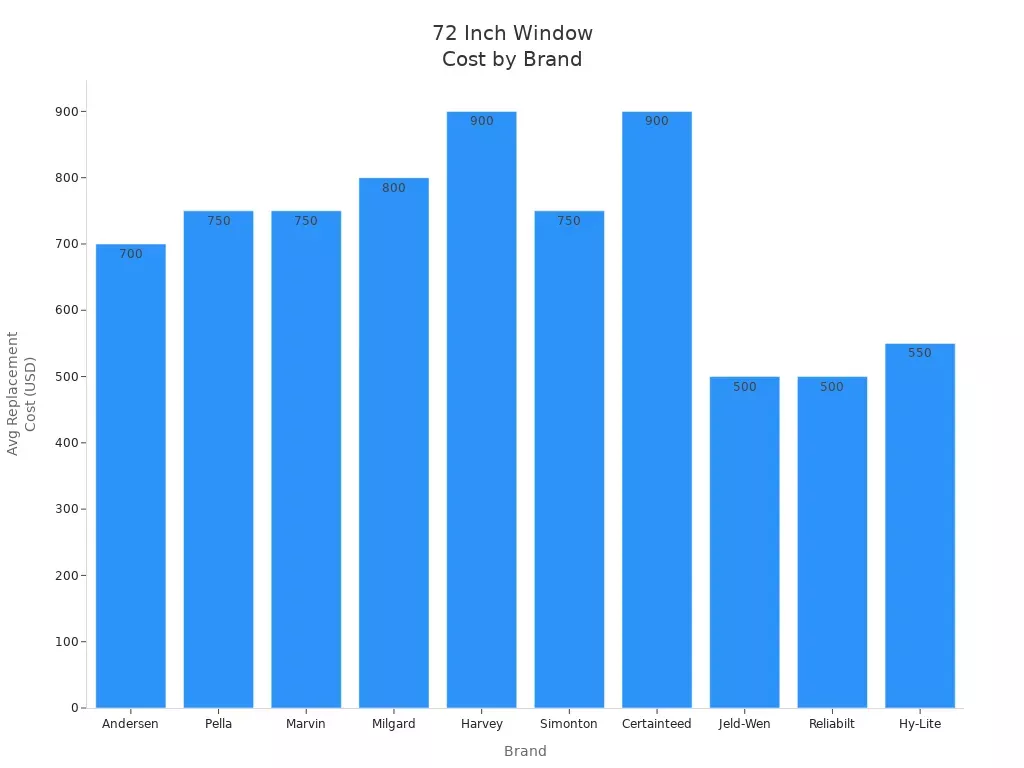
Look at this table to compare average replacement costs by brand:
Brand of Window | Average Replacement Cost (Per Window) |
|---|---|
Andersen | $700 |
Pella | $750 |
Marvin | $750 |
Milgard | $800 |
Harvey | $900 |
Simonton | $750 |
Certainteed | $900 |
Jeld-Wen | $500 |
Reliabilt | $500 |
Hy-Lite | $550 |
You see that some brands cost more because they offer extra features or longer warranties. If you want the best value, compare these prices before buying new windows.
Factors Affecting Cost
Many things change the price of replacement windows. The material matters most. Vinyl costs less, but fiberglass and aluminum last longer and save more energy. The style of window also changes the price. Sliding windows are usually cheaper than specialty designs. If you want custom colors or finishes, you pay more.
The location of your home can raise the price. If you live in a place with strict codes or need special energy features, you pay extra. Installation costs go up if your window is hard to reach or needs extra framing. You also pay more for windows with advanced energy glass, like Low-E coatings or gas fills.
Tip: Choose windows that match your climate and your needs. You save money over time with better energy performance.
Comparing Quotes and Brands
You want the best deal for your home. Start by collecting at least three bids from different companies. This helps you see if a quote is fair. Look at the details in each quote. Check the brand, the warranty, and the energy features. Some brands offer longer coverage or better service.
Use lower bids to negotiate with your favorite company. Ask about discounts or upgrades. Compare the warranties and service plans. You get more value when you know what each brand offers.
Collect at least three bids for your 72 inch window project.
Compare brands and warranties for the best value.
Use lower bids to negotiate better prices.
If you follow these steps, you make smart choices when buying new windows. You get windows that fit your budget, save energy, and add value to your home.
Financing and ROI
You want new 72 inch windows, but you worry about the cost. You do not have to wait. You can use smart financing options to get the windows you need now and enjoy the benefits right away. Many homeowners choose to finance their window projects because it makes the investment easy and affordable.
You have several ways to pay for your new windows. You can pick the plan that fits your budget and your goals. Here is a quick look at the most popular financing options:
Financing Option | Key Features |
|---|---|
PACE Loans | 100% financing, no money down, 15-20 year terms, interest rates of 6.5-8.5%. |
Manufacturer Financing | Promotional rates (0% for 12-18 months), credit score of 640-700+, fast approval. |
Home Equity Options | Use your home’s equity, usually needs good credit. |
Contractor Payment Plans | Flexible payments set up with your contractor. |
Expected ROI | Save on energy bills and insurance, boost your home’s value. |
You can use PACE loans if you want to spread payments over many years. You do not need a big down payment. You can keep your cash for other needs. Manufacturer financing gives you a chance to pay no interest for up to 18 months. You can get approved quickly if you have a good credit score. Home equity loans let you use the value in your house to pay for windows. This option often gives you lower rates. Many contractors also offer payment plans. You can break the cost into smaller pieces that fit your budget.
Tip: Ask your window company about special promotions or seasonal offers. You may qualify for zero-interest deals or extra savings.
You do not just spend money when you buy new windows. You make an investment that pays you back. New 72 inch windows can lower your energy bills every month. They keep your home warmer in winter and cooler in summer. You use your heater and air conditioner less. You save money year after year.
You also protect your home from fire and storms. Many insurance companies give you discounts if you install code-compliant, energy-efficient windows. You pay less for coverage and get peace of mind.
Your home’s value goes up when you add new windows. Buyers love homes with modern, efficient windows. You can get more money if you sell your house. Many homeowners see most of their window investment come back when they sell.
You do not have to wait to enjoy these benefits. With smart financing, you can upgrade your home now and start saving right away. Choose the plan that works for you and watch your investment grow.
Warranty and Maintenance
Warranty Types and Coverage
You want your windows to last a long time. A good warranty helps you feel safe. Most companies give different kinds of coverage. Some offer a lifetime warranty for the frame and glass. Some brands also cover glass breakage and hardware. Other companies only cover some parts and labor for a short time. Always check what the warranty covers. Look for protection against defects, seal problems, and broken glass. If you pick windows with a full warranty, you protect your money and avoid surprise bills.
Tip: Ask your installer if you need to register your warranty. Some brands make you sign up to get coverage.
Brand Differences
Each brand has its own warranty rules. You should look at these before you buy. Some brands let you transfer the warranty if you sell your house. Others only cover the first owner. Milgard gives a lifetime warranty on many windows. Andersen has strong coverage and lets new owners use the warranty. Pella gives a limited warranty with extra help for glass and hardware. Universal Windows Direct and Ply Gem have special lifetime warranties, but you must follow their rules. Always read the small print. Pick a brand that supports its windows and helps you if you need it.
Brand | Warranty Length | Transferable | Glass Breakage Coverage |
|---|---|---|---|
Milgard | Lifetime | No | Yes |
Andersen | 20 years | Yes | No |
Pella | 20 years | No | Yes |
Ply Gem | Lifetime | No | No |
Callout: Choose a brand with a warranty that works for you. You get more value and worry less.
Maintenance Tips for Large Windows
Cleaning and Track Care
Big windows need regular care to stay clear and easy to use. Clean the glass two times a year. Use mild soap and water. Do not use strong cleaners that can hurt the frame or seals. Clean on cloudy days so the sun does not dry the cleaner too fast. Use a soft cloth or squeegee for no streaks. Vacuum the tracks to get rid of dirt and dust. Put oil on the rollers and tracks so your windows slide easily.
Wash glass in spring and fall.
Clean tracks and rollers every few months.
Do not use high-pressure washers or sharp tools.
Note: Clean tracks help your windows open and close without sticking.
Seal and Hardware Checks
You need to check the seals and hardware often. Look for cracks or gaps around the frame. If you see fog between the glass panes, the seal might be broken. Tight seals keep your windows energy efficient and warm. Test locks and handles to make sure they work. Oil moving parts to stop rust and damage. If you find problems, call your installer or use your warranty.
Check seals and hardware every season.
Fix small problems before they get worse.
Use your warranty for repairs if you need to.
Tip: Regular care keeps your windows strong, saves energy, and protects your home.
You need to focus on structure, code, material, energy, style, installation, cost, and warranty when you buy a 72 inch window. Make a list of your needs before you start. Ask a professional for help with big projects. Compare brands and features to find the best fit for your home.
Take action now. Choose windows that improve comfort, safety, and value.
FAQ
What is the best material for a 72 inch window?
You should choose fiberglass or reinforced vinyl for strength and energy savings. These materials resist warping and need little upkeep. If you want a classic look, wood with exterior cladding works well. Pick the material that fits your climate and style.
Do I need a permit to install a 72 inch window?
Yes, you need a permit for most window installations, especially for large sizes. Permits protect your safety and help you meet building codes. Always check with your local building department before starting your project.
How do I make sure my new window meets energy codes?
Look for windows with NFRC and Title 24 labels. These show the window meets strict energy standards. Choose models with low U-factor and SHGC ratings. Ask your installer for proof of compliance before you buy.
Can I install a 72 inch window myself?
You can try, but hiring a pro gives you better results. Large windows are heavy and tricky to fit. A professional installer ensures a tight seal, proper support, and code compliance. You also keep your warranty safe.
What window style works best for a 72 inch opening?
Sliding (XO or XOX) and fixed picture windows work best for wide openings. Sliding windows offer easy ventilation. Fixed windows give you clear views and more light. You can also combine styles for both airflow and beauty.
How do I keep my large window clean and working well?
Clean the glass twice a year with mild soap and water. Vacuum the tracks and check seals often. Lubricate moving parts. Avoid harsh cleaners or sharp tools. Regular care keeps your window clear, smooth, and energy efficient.
Will a 72 inch window increase my home’s value?
Yes! New, energy-efficient windows boost your home’s value and curb appeal. Buyers love bright rooms and lower energy bills. You also save money on heating and cooling. Upgrade now to enjoy comfort and a higher resale price.
What warranty should I look for with large windows?
Choose a window with a lifetime or long-term warranty. Look for coverage on glass, frame, and hardware. Some brands offer glass breakage protection. A strong warranty gives you peace of mind and protects your investment.