Warm indoor air touches cold window glass. The air cools down quickly and leaves water drops behind. This process creates condensation on windows when air hits its dew point. Cold glass causes this thermal reaction. You can stop condensation on windows fast by setting indoor relative humidity lower, keeping it between 30% and 40%. Making the glass surface warmer also helps prevent it.
Dealing with condensation on windows is a common challenge, but you can manage it easily once you find its exact spot.
Key Takeaways
Keep indoor moisture low, around 30% to 40%.
This keeps window glass dry.
Run exhaust fans.
Use dehumidifiers.
They remove extra water vapor from home air.
Increase air circulation near windows.
Open your blinds.
Run ceiling fans.
Upgrade to multi-pane insulated windows.
This stops window sweating.
It also saves energy money.
What Causes Condensation on Windows?
Water drops form on cold glass through heat changes. Warm room air holds unseen water vapor inside. Cool window panes chill this warm air fast. Colder air holds much less water vapor. Air drops below its dew point quickly. Gas turns into liquid water on glass.
Moisture turns to water drops when air hits cold glass.
Causes of Interior Window Condensation
Normal home habits add water to air daily. Cooking food, hot showers, and unvented tools make steam. High humidity creates extra water vapor in winter.
Cold air outside chills the inner glass panes. Moist indoor air makes window condensation on bottom frames. Single-pane glass at 0°F gets window condensation at 12% indoor humidity. Managing humidity stops wood rot and mold growth.
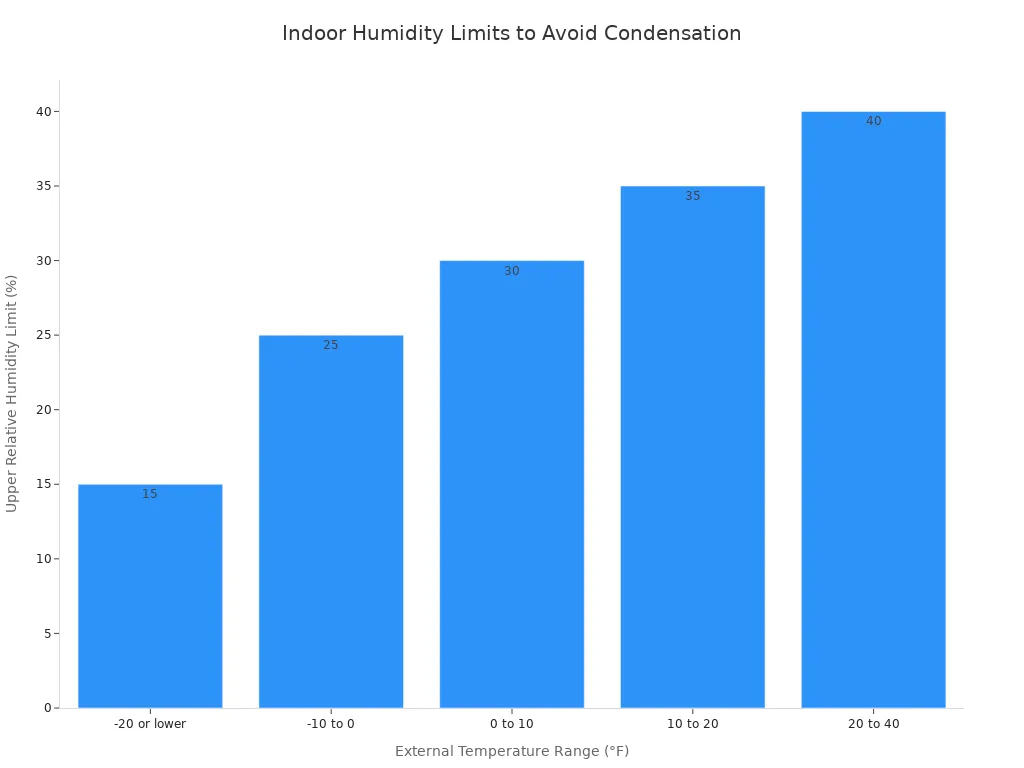
People can use winter humidity limits to guard windows:
External Temperature Range (°F) | Upper Humidity Limit to Avoid Condensation |
|---|---|
20 to 40 | 40% |
10 to 20 | 35% |
0 to 10 | 30% |
-10 to 0 | 25% |
-20 or lower | 15% |
Causes of Exterior Window Condensation
Air conditioners cool home spaces in hot summers. This cooling lowers outer glass pane temperatures a lot. Warm summer air hits the cold outer glass. Water builds on outer glass below outdoor dew points.
Good Low-E coatings trap indoor cold air inside. They cause exterior condensation under these key conditions:
Clear, cool night skies
Still air with no wind
High outdoor relative humidity levels
Outer glass stays colder than surrounding air
People see condensation on the exterior of the window at dawn. Morning sun and warm air dry these water drops fast.
Causes of Condensation Between Glass Panes
Double-pane windows use tight seals to trap gas. Old windows slowly lose their tight seals over time. Broken seals let moist air enter between glass panes. Trapped water causes window condensation inside the glass. You cannot wipe this moisture from either side.
Failed window seals show several clear warning signs:
Fog, haze, and water drops between glass panes
White mineral spots on inner glass surfaces
Frame drafts with 15–25% higher heating bills
Bent frames, cracked seals, or rusted spacers
Stuck window sashes that will not move easily
Replacing broken windows restores insulation and stops trapped condensation on windows.
Controlling Humidity to Prevent Moisture
People stop damp glass by managing indoor humidity. Air needs pathways to vent trapped water vapor. Lower humidity keeps glass dry. It protects window frames from water damage. Simple steps reduce foggy panes in cold weather.
Quick Tip: Keeping humidity between 30% and 40% ensures comfort. It keeps window glass dry.
Utilize Exhaust Fans and Dehumidifiers
Kitchens and bathrooms make much water vapor daily. Showers, baths, and cooking fill air with steam. Running fans creates strong ventilation. Fans pull damp air outside fast.
Bathroom size sets the needed fan power. Experts suggest specific CFM ratings for proper ventilation:
Bathroom Size / Fixture | Recommended Minimum CFM Rating |
|---|---|
Under 50 sq. ft. | 50 CFM (absolute minimum) |
50 to 100 sq. ft. | 1 CFM per square foot (based on 8 air changes/hr) |
Over 100 sq. ft. | Sum of fixtures: Toilet (50 CFM), Shower (50 CFM), Bathtub (50 CFM), Jetted Tub (100 CFM) |
Basements and laundry rooms hold high humidity often. A portable dehumidifier pulls extra water from air. Continuous units clear moisture in your home automatically. They stop drops before settling on cold glass.
Increase Air Circulation Near Windows
Still air lets water vapor gather near glass. Moving warm air toward frames warms the glass. This action stops drops from forming easily. Reversed ceiling fans push warm air down softly. They do not cause cold drafts.
Window covers affect glass temperatures too. Thick blinds block room heat from reaching glass. That makes window surfaces colder and increases moisture.
Smart shade habits help lower surface dampness:
Closed honeycomb shades in freezing cold trap air. This causes condensation on windows to freeze.
Raising shades boosts airflow near the glass. It prevents water from running onto window trim.
Open interior doors balance house airflow. Good air movement reduces condensation on bottom edges.
Adjust Thermostats and Daily Habits
Small daily changes lower house humidity. Chores add extra water vapor to indoor spaces. Cooking with covered pots traps steam inside. Shorter, warm showers limit bath steam. Drying laundry outside keeps water out of rooms.
Steady home heat prevents fast glass cooling. Big thermostat drops make glass cold quickly. Cold glass chills nearby air below dew points.
Consistent heat and simple habits reduce condensation. Lower indoor moisture keeps windows clear all winter.
Upgrading to Derchi Window and Door Solutions
Old glass sweats often. Old seals break down easily. Derchi windows fix these hard problems. Modern materials replace old frames now.
Thermally Broken Aluminum Frames
Derchi uses tough 6063-T5 aluminum profiles. This metal stays strong and resists rust. Regular metal moves heat very fast. Derchi puts a polyamide barrier inside frames.
Frame Type | Material Thermal Conductivity (W/m·K) | Heat Barrier Mechanism |
|---|---|---|
Solid Raw Aluminum Frame | ~160 | Heat moves straight through plain metal frames fast. |
Polyamide (PA66) Insulation Barrier | 0.25 – 0.35 | Low conduction materials stop heat from moving across. |
Thermally Broken Assembly | 0.5 – 1.5 | Smart frame designs lower heat transfer inside homes. |
This plastic barrier stops cold outdoor air. Warm indoor metal stops winter window condensation.
Multi-Pane Glass and Low-E Coatings
Derchi builds multi-pane glass units. Safe argon gas fills the inside. Argon slows down heat movement. Special Low-E coatings reflect room heat back.
Low-E glass stays warm. Warm glass prevents water drops.
These smart features keep inside glass dry. Clear views stay free of water marks.
Long-Term Prevention of Window Condensation
New windows stop window condensation permanently. NFRC-certified Derchi products maintain low U-Factor numbers.
Replacing old single-pane glass saves $366 yearly.
Certified windows save $101 to $583 annually.
Families cut total energy bills by 12%.
Derchi solutions stop window condensation. They save heating money every month.
People stop window condensation by balancing indoor humidity levels. Keep levels between 30% and 50%. Proper daily air flow removes trapped wetness quickly.
Leaving damp window glass causes heavy home damage later:
Affected Component | Structural Damage & Symptoms |
|---|---|
Window Frames | Rotten wood, swelling, and peeling paint |
Surrounding Drywall | Fungal hazards and black mold growth |
Buying modern insulated aluminum glass fixes moisture problems forever. Expert data proves smart replacement windows bring big savings. Check room dampness today to plan window upgrades.
FAQ
Does window condensation damage house frames?
Yes, water drops rot wooden frames over time. Damp air creates black mold on drywalls. Homeowners drop indoor humidity to lower moisture fast. Clear glass protects home frames from costly repairs.
Why does condensation on windows happen mostly in winter?
Cold winter air cools outer glass panes quickly. Warm indoor air touches cold glass surfaces. Air drops below its dew point fast. Liquid water forms on window glass soon.
How does ventilation stop moisture on glass?
Good air movement pushes damp air outside. Bath fans clear steam from showers fast. Ventilation keeps indoor glass dry in winter. Fresh air balances room moisture levels easily.
Can a dehumidifier eliminate glass moisture?
A reliable dehumidifier removes extra water fast.
It lowers indoor relative humidity automatically. Lower air moisture stops drops on cold glass.