You want a door that fits perfectly, looks great, and makes your home welcoming. The standard front door size in most American homes measures 36 inches wide by 80 inches tall. Over 67% of new homes use this exact size, making it the top choice for homeowners. Choosing the right standard front door size means you get a secure fit, better style, and easier access for everyone. Think about how your front door matches your home’s design, your needs for accessibility, and the material that works best for your space.
Key Takeaways
The most common front door size is 36 inches wide and 80 inches tall. This size works for most houses and helps with accessibility.
Picking standard door sizes makes shopping and installing easier. It helps you save time and money when you change doors.
Think about how your door looks and works. A bigger door can make your house look nicer and let in more sunlight.
You need to measure carefully for a good fit. Measure the door slab, the frame, and the rough opening to avoid mistakes.
Getting professionals to install your door gives a better fit and saves energy. Experts help you avoid expensive problems and make your home worth more.
Standard Front Door Size Overview
Most Common Dimensions
When you choose a new front door, you want a size that fits perfectly and meets your needs. Most homes in the United States use standard dimensions that make shopping and installation easier. The most common front door size is 36 inches wide by 80 inches tall. This size gives you plenty of space for moving furniture, welcoming guests, and meeting accessibility needs.
You can see how these standard door sizes compare in the table below:
Door Type | Minimum Width | Maximum Width | Minimum Height |
|---|---|---|---|
Commercial Door | 32 inches | 48 inches | 80 inches |
Medical Facility Door | 41.5 inches | N/A | N/A |
Standard Front Door | 36 inches | N/A | N/A |
Most newly built homes use a front door that is 36 inches wide, 80 inches tall, and 1-3/4 inches thick. You also see 32-inch doors for side or back entrances. If you want a grand entrance, you can choose a door that is 42 inches wide or even wider. These larger doors make your home look impressive and allow for easier access.
Tip: Standard door sizes help you save money and time. You can find replacement doors and hardware more easily when you stick to these common measurements.
You might notice that different regions use different measurements. In the US and Canada, you see inches and feet. In Europe and Australia, you see millimeters and meters. For example, standard door heights in Europe often range from 1980 mm to 2040 mm, while in Australia, a common width is 820 mm. This difference matters if you order a door from another country or plan a custom build.
Size Variations in Modern and Older Homes
Not every home uses the same front door size. The age and style of your house can affect what size you need. Homes built before 1980 often have smaller or shorter doors. These older homes usually feature doors that are 78 inches tall and between 30 and 36 inches wide. After 2000, most homes switched to standard door heights of 80 inches, but the width still ranges from 30 to 36 inches.
Time Period | Door Height | Door Width |
|---|---|---|
Before 1980 | 78 inches | 30-36 inches wide |
After 2000 | 80 inches | 30-36 inches wide |
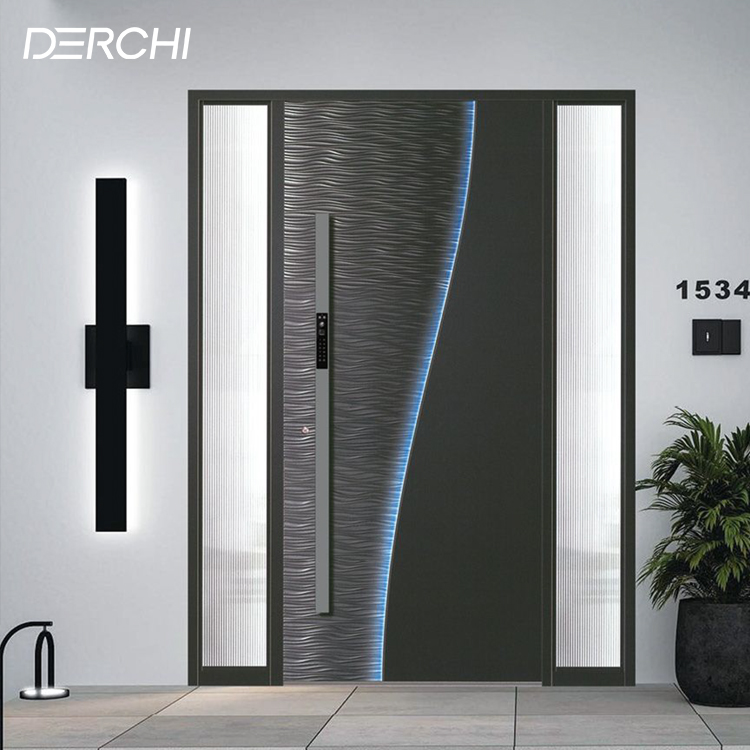
Modern homes often follow new architectural trends. You see taller and wider doors, sometimes up to 8 feet high. These oversized doors create a bold, modern look and let in more natural light. Many homeowners now want clean lines and dramatic entrances. You can choose a standard 36x80 door for a classic look, or go bigger for a modern style.
Modern homes often use:
8-foot doors for high ceilings
Wider doors for open spaces
Custom and oversized doors for a unique entrance
Over the past decade, you see a shift toward minimalist and contemporary designs. Homeowners want simple, elegant doors that make a statement. If you want your home to stand out, consider a taller or wider front door. This choice not only boosts curb appeal but also increases your home's value.
Note: When you upgrade your front door size, you improve accessibility and make your home more welcoming for everyone.
Choosing the right front door size means you get the best fit, style, and function for your home. Stick with standard dimensions for easy installation, or go bold with a custom size to match your vision.
Standard Exterior Door Sizes by Type
Picking the right exterior door size is important. It helps make your home safe and welcoming. You want a door that fits well and looks nice. The door should be strong and save energy. Let’s look at the usual sizes for single doors, double doors, and doors with sidelights.
Single Front Door Size
Single front doors are very common in homes. You see them in most neighborhoods. Standard sizes make buying and installing easy. Most single doors are 36 inches wide and 80 inches tall. Some doors are as narrow as 32 inches. Others can be as wide as 42 inches. The thickness is usually between 1 ⅜ and 1 ¾ inches.
Door Type | Standard Heights (inches) | Standard Widths (inches) |
|---|---|---|
Door Slab | 80, 96 | 32, 36, 42 |
Pre-Hung Door | 81.5, 97.5 | 33.5, 37.5, 43.5 |
Most homes use doors that are 80 inches high and 36 inches wide. Commercial buildings need bigger doors for more people and safety rules.
Tip: Fiberglass doors with glass let in more light. They also add style and keep your entry safe.
Double Front Door Size
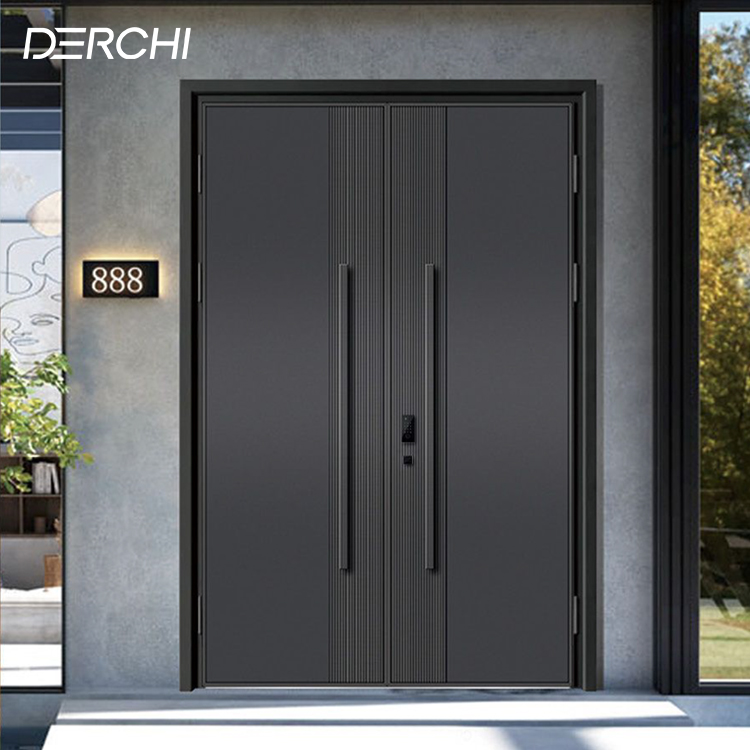
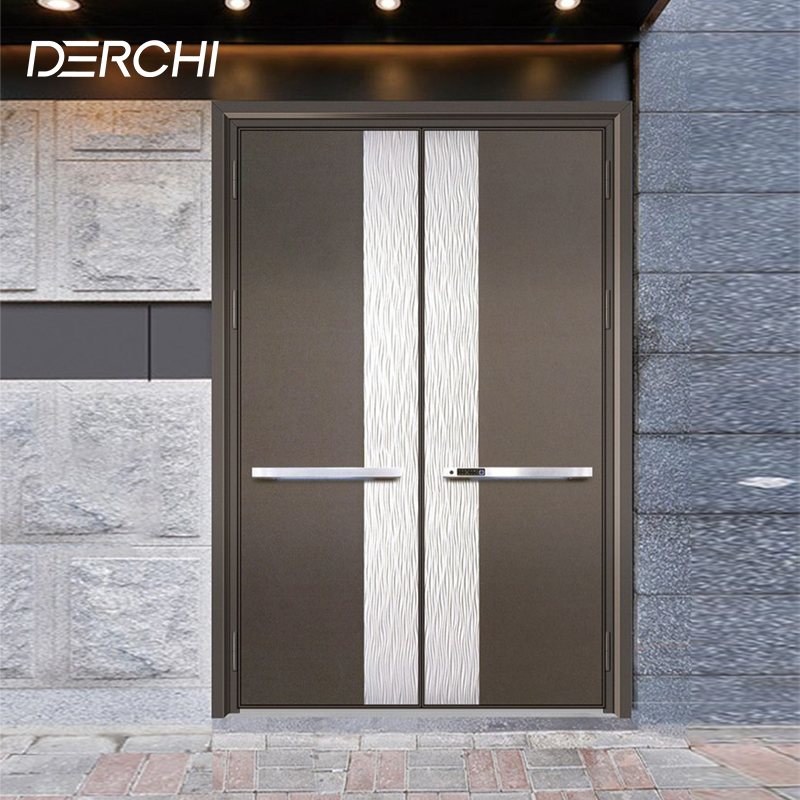
Double front doors make your entry look grand. They help you move big things easily. You see these doors in new homes and custom houses. Standard double doors are 60 to 72 inches wide and 80 to 82 inches tall. Each door panel is usually 30 to 36 inches wide.
Standard Size | Dimensions (inches) |
|---|---|
Standard Double Door | 82x68 |
Alternative Size 1 | 80x60 |
Alternative Size 2 | 80x64 |
Alternative Size 3 | 80x72 |
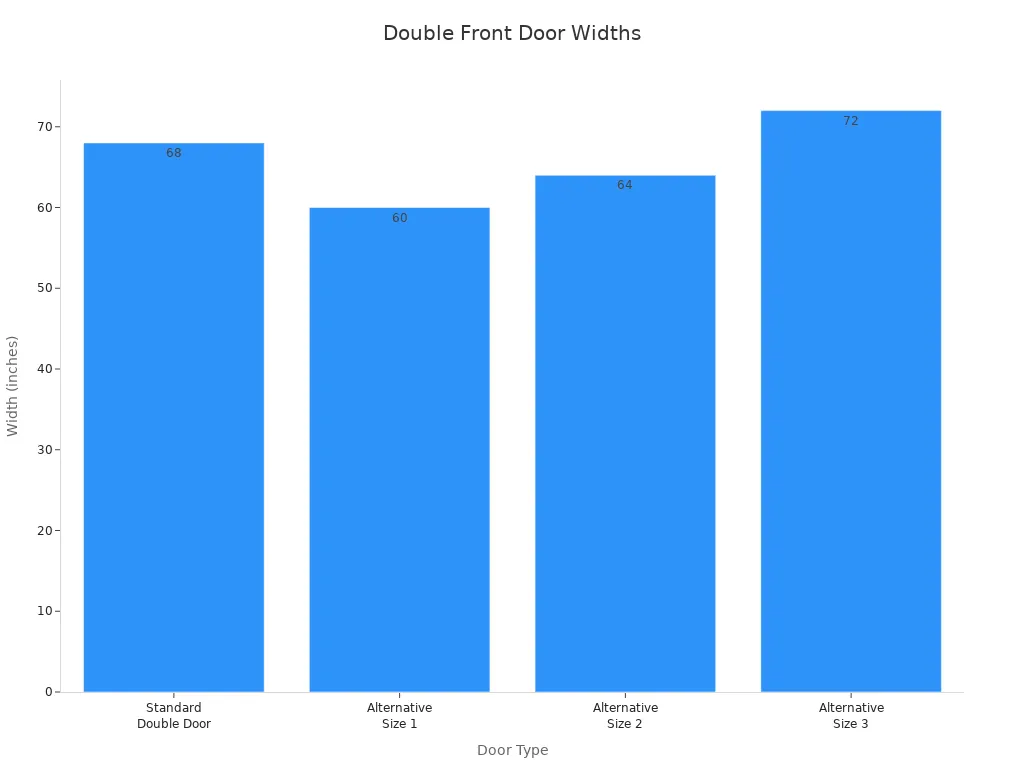
Double doors change how your entryway looks and feels. You can pick wider doors for a bigger effect. The way the doors swing and if you add sidelights will change the total size.
Doors with Sidelights
Entry doors with sidelights add style and light. The main door is usually 36 inches wide. Sidelights are 12 to 18 inches wide each. The whole entry can be 48 to 72 inches wide.
Feature | Size Range |
|---|---|
Sidelight Width | 12-18 inches |
Door Width | 36 inches (standard) |
Total Width | 48-72 inches (with sidelights) |
You need enough space for doors with sidelights. The frame might need changes for the extra glass. Sidelights make your home look better and stand out.
Note: Measure carefully before you install. This helps your door fit right and avoids problems.
Pick the standard exterior door size that works for your home. You can choose a single door, double doors, or doors with sidelights. This choice makes your entry look great and adds value to your home.
How to Measure for a Standard Front Door Size
Getting the right door measurements is the key to a perfect fit. If you want your front door to look great and work smoothly, you need to measure every part with care. Follow these steps to avoid costly mistakes and make sure your new door fits just right.
Measuring the Door Slab
You start by measuring the door slab. This is the main panel of your front door. Use a tape measure and follow these steps:
Measure the height from the bottom to the top of the slab. Check both sides and the middle to make sure the door is even.
Measure the width at the top, middle, and bottom. Doors can warp over time, so use the smallest measurement for accuracy.
Triple-check your numbers. Write them down and compare each spot.
Tip: Always use the smallest measurement. This helps prevent air leaks and ensures a snug fit.
Measuring the Frame
Next, measure the frame around your front door. Remove any trim before you start. This gives you the most accurate results.
Measure the vertical parts (jambs) from the floor to the top of the frame in several spots.
Measure the width of the frame at three points—top, middle, and bottom.
Measure the depth of the jamb from inside to outside.
Write down all numbers and use the smallest one.
Note: Skipping the trim can lead to errors. Always remove it before you measure your door opening.
Measuring the Rough Opening
You need to measure your door opening to make sure the new front door will fit. Use this table to find the right rough opening size:
Door Type | Rough Opening Width Formula | Rough Opening Height Formula |
|---|---|---|
Interior | Door Width + 2" | Door Height + 1" |
Exterior | Door Width + 4½" | Door Height + 2¼" |
For example, if your exterior door is 36 inches wide and 84 inches tall, your rough opening should be 40½ inches wide and 86¼ inches tall.
Measuring the rough opening helps you avoid installation problems and ensures your door fits perfectly.
Determining Door Thickness
Door thickness matters for insulation and security. Most front doors are between 1⅜ and 2½ inches thick. Thicker doors hold more insulation, which keeps your home warmer and quieter. When you measure, check the edge of the door slab. Make sure locks and handles will fit the thickness you choose.
Thicker doors improve thermal performance.
Insulation works best when you match it to the door’s thickness.
Raised beading and recessed panels may affect how you install hardware.
Accurate door measurements give you a front door that looks great, saves energy, and keeps your home secure. If you want to know how to measure your front door, follow these steps and double-check every number.
If you want a flawless installation, learn how to measure your front door before you buy. You will avoid common mistakes and enjoy a door that fits your style and needs.
Accessibility and ADA Compliance
It is important to make your entryway easy for everyone to use. When you pick a front door, check if it follows ADA rules. These rules help people with wheelchairs, walkers, or strollers get inside safely.
Minimum Width Requirements
The width of your door matters a lot. ADA rules say the opening must be at least 32 inches wide when the door is open all the way. This size lets most wheelchairs and other aids fit through. If you have double doors, the rule changes depending on how many panels open.
Here is a table that shows ADA minimum width rules:
Requirement | Minimum Width |
|---|---|
Clear Width | 32 inches (815 mm) |
Clearance Width | 32 inches (815 mm) |
Double Doors (one inactive) | 48 inches (1220 mm) |
Double Doors (both active) | 60 inches (1525 mm) |
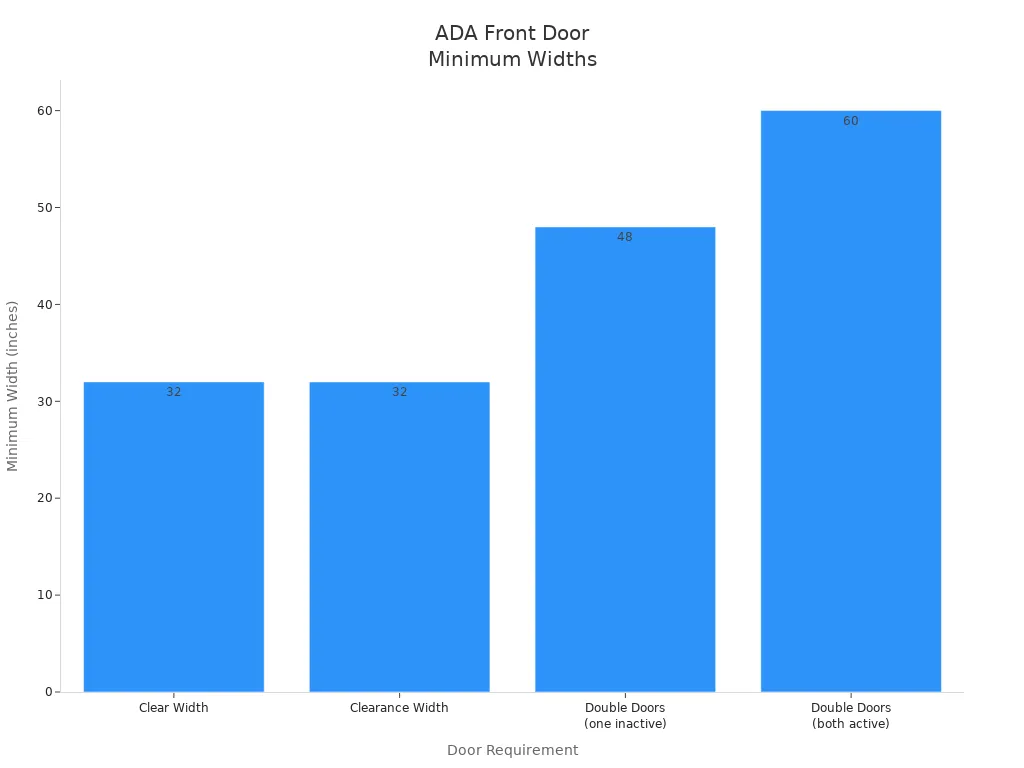
Always measure the clear space, not just the door itself, to make sure your home is easy to enter.
Threshold and Swing Considerations
Threshold height and how the door opens are also important. ADA rules say the threshold can be no higher than ½ inch. If it is more than ¼ inch high, it needs a gentle slope. This helps people in wheelchairs and those who have trouble walking.
Requirement | Specification |
|---|---|
Maximum threshold height | ½ inch |
Beveling requirement | For thresholds over ¼ inch, must be beveled with a slope not steeper than 1:2 |
Vertical threshold allowance | Thresholds not exceeding ¼ inch may be vertical |
A tall threshold can make it hard to get inside and might cause someone to trip. You want the entry to be smooth and flat so everyone can come in easily. The way the door swings matters too. If the door opens toward people, leave at least 18 inches of space next to the handle. If it opens away, 12 inches is enough. The area outside should be flat and not steep.
At least 18 inches of space if the door opens toward you
At least 12 inches of space if the door opens away
Flat ground at the entry for easy movement
If you follow these rules, your home will be easier for everyone to visit. Making your entryway accessible shows you care about all your guests.
Professional Measurement and Installation
Why Expert Help Matters
You want your new door to last a long time. It should open and close easily every day. That is why hiring experts is important. Professionals know how to measure your doorway the right way. They make sure your door fits just right. They use special methods to keep your door strong and looking nice.
Here are some things professionals do to help:
Installation Technique | Description |
|---|---|
Insulate Gaps | Fill gaps with spray foam to block drafts and keep your home comfortable. |
Apply Exterior Caulk | Seal the edges to stop water and air from getting inside. |
Check Weatherstripping | Make sure the weatherstripping touches the door to prevent leaks. |
Adjust the Threshold | Set the threshold so the door closes easily and tightly. |
Annual Inspection | Check caulk and weatherstripping every year for wear. |
Lubrication | Oil the hinges and locks twice a year for smooth use. |
Touch-up Paint | Keep the finish fresh to protect against sun and rain. |
Professionals test every part of your door before they finish. They make sure the door opens and closes without problems. Your door works well from the start and keeps working for a long time.
If you choose expert help, you will have fewer repairs. Your door will last longer. You will feel safe and worry less.
Benefits for Energy Efficiency and Security
A door put in by experts does more than look nice. It helps you save money and keeps your family safe. When you hire professionals, you get these good things:
Lower energy bills: ENERGY STAR doors can save you up to 13%.
Better security: Experts install strong locks and deadbolts to keep out intruders.
Less noise: New doors with insulation keep outside sounds away.
Stronger weather resistance: Modern doors block wind, rain, and heat or cold.
Higher home value: A new front door makes your home look better and worth more.
Professionals follow building rules and use the best materials. They make sure your door fits tight, so air and water cannot get in. Your home will be safer and more comfortable with less work needed.
Trust experts for your next door job. You will get a door that fits well, saves energy, and keeps your home safe for years.
Picking the right entry door size changes your home's look and use. You need a door that fits well and matches your style. The door should make everyone feel welcome. Always check your measurements more than once. Get help from experts for the best results. Think about these things:
Choose if your door opens in or out.
Add glass parts like a transom or sidelight for extra light.
Pick a style that matches your house and your budget.
Look for doors that save energy, last long, and keep you safe.
Benefit of Professional Help | Why It Matters |
|---|---|
Correct measurements and installation | Makes your home look better and worth more |
Stops expensive mistakes | Helps buyers feel sure about your home |
Improves your entryway's appearance | Makes your home nicer for people who want to buy it |
Go to a nearby showroom or call a trusted contractor to begin your upgrade now.
FAQ
What is the most common front door size for homes?
You will usually find a front door that measures 36 inches wide and 80 inches tall. This size fits most homes and makes moving furniture easy. It also meets many accessibility needs.
Can I install a wider or taller entry door?
Yes! You can choose a wider or taller entry door for a bold look. Larger doors create a dramatic entrance and let in more light. Always check your space and talk to a professional before you decide.
How do I know if my front door sizing is correct?
Measure your current door, frame, and rough opening. Write down each number. If you feel unsure, ask an expert to check your measurements. Accurate front door sizing ensures a perfect fit and smooth installation.
Do I need a professional to install my new entry door?
A professional gives you peace of mind. You get a secure fit, better insulation, and a door that lasts longer. Experts handle every detail, so you avoid costly mistakes and enjoy your new entry door right away.