


You want your new windows to fit perfectly, look great, and save you money. Standard home window sizes make your project simple. Double-hung windows usually measure 24–48 inches wide and 36–72 inches tall. Casement windows range from 14–36 inches wide and 29–74 inches tall. Sliding windows often span 36–84 inches wide and 24–60 inches tall. Picture, bay, and awning windows come in many sizes to match your space. Use a window size chart to plan your budget and avoid delays. Clear knowledge of standard sizes lets you choose quickly, cut costs, and enjoy hassle-free installation.
Key Takeaways
Standard window sizes make home projects easier. Knowing these sizes helps you pick fast and avoid mistakes that cost money.
Use a window size chart to look at different window types. This chart helps you find the right size for each room.
Measuring windows correctly is very important. Always measure two times and use the smallest size to make sure it fits.
Custom windows are made for special spaces or styles. Choose them if standard sizes do not work, but they cost more and take longer to get.
Ask a window expert for help with custom choices. Their advice can help you get good results and make your home look better.
Standard window sizes and window size chart by type
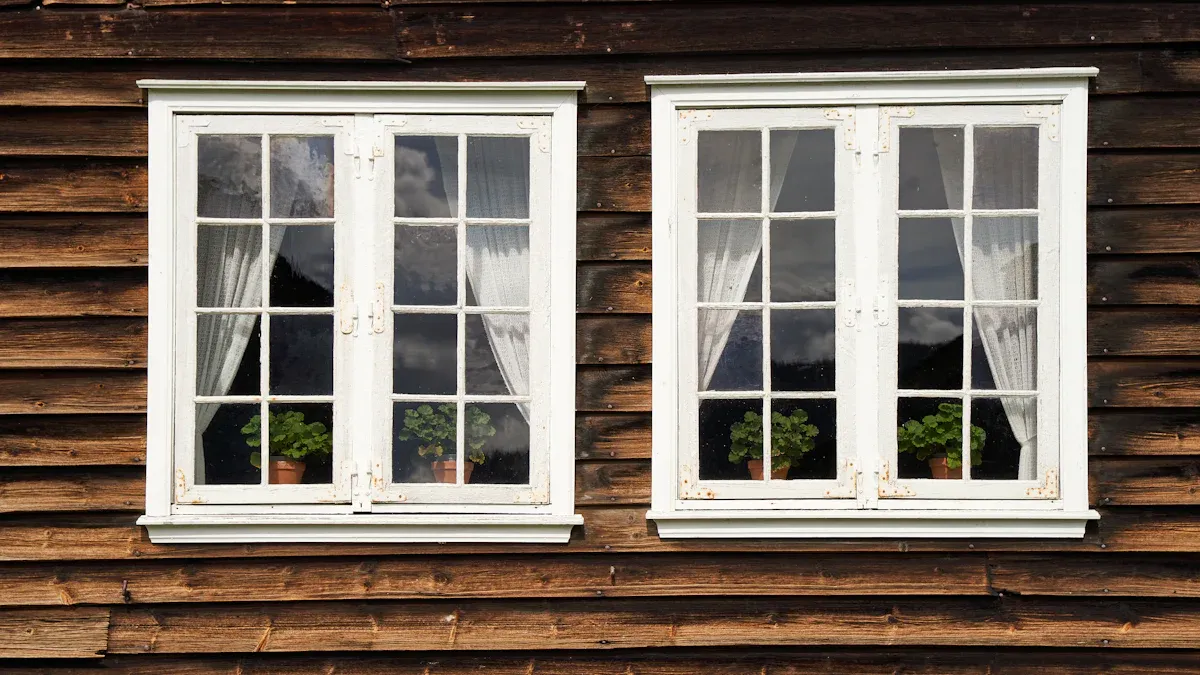
Choosing the right window size for your home starts with understanding the most common options. You can use a window size chart to compare types and find the best fit for each room. Standard home window size options make planning easier and help you avoid costly mistakes.
Double-hung window sizes
Double-hung windows are popular for bedrooms, bathrooms, and kitchens. You can open both the top and bottom sashes for ventilation. These windows fit most standard rough openings, making installation simple.
Here is a window size chart for double-hung windows:
Dimension Type | Range |
|---|---|
Width | 24″ to 48″ |
Height | 36″ to 72″ |
Most common | 36″ × 60″ |
You will see these sizes most often in different rooms:
Room | Common Size |
|---|---|
Bedroom | 36" × 48" to 36" × 60" |
Bathroom | 24" × 24" to 24" × 36" |
Kitchen | 36" × 60" |
Tip: Double-hung windows work well for rooms that need both light and airflow. You can check a window size chart to match the right size to your space.
Casement window sizes
Casement windows open outward with a crank. You get great ventilation and a modern look. These windows fit many spaces, from bathrooms to living rooms.
Here is a window size chart for casement windows:
Window Type | Typical Dimensions | Best For |
|---|---|---|
Casement Window | 18" × 36", 24" × 48" | Kitchens, bathrooms |
Casement windows in bathrooms often use frosted glass for privacy. Living rooms usually feature larger casement windows for style and airflow.
Room Type | Standard Size Options | Features |
|---|---|---|
Bathroom | 24" × 24" to 24" × 36" | Frosted glass, awning style for ventilation |
Living Room | 24" × 60" (most common) | Excellent ventilation, modern styling |
Note: Casement windows fit well in narrow spaces. You can use a window size chart to compare options for each room.
Sliding window sizes
Sliding windows move side to side. You get easy operation and a wide view. These windows are perfect for kitchens, living rooms, and hallways.
Here is a window size chart for sliding windows:
Width Range | Height Range |
|---|---|
36" – 84" | 24" – 60" |
Or in feet:
Width Range | Height Range |
|---|---|
3' – 6' | 2'5" – 5' |
Sliding windows save space and work well above counters or in tight spots. You can use a window size chart to find the best size for your needs.
Picture window sizes
Picture windows do not open. You use them to frame views and let in lots of light. These windows are common in living rooms and areas with scenic views.
Here is a window size chart for picture windows:
Size Range | Typical Applications |
|---|---|
Width: 24″ to 96″ | Framing views, maximizing natural light |
Height: 12″ to 96″ | Living rooms, scenic areas |
Most common: 48″ × 48″ | Balance of light and view, structural integrity |
Picture windows in living rooms are usually larger for dramatic effect. Bedrooms often use smaller picture windows for privacy and light.
Room Type | Window Size Description |
|---|---|
Living Room | Larger picture windows for dramatic focal points |
Bedroom | Smaller picture windows for privacy and natural light |
You can use a window size chart to compare picture window sizes for each room.
Bay and bow window sizes
Bay and bow windows create a cozy nook and add style to your home. These windows combine several panels to form a curve or angle.
Typical bay and bow window sizes:
Width: 42″ to 128″
Height: 36″ to 78″
Common sizes: 72″ × 48″, 92″ × 60″
Bay windows work well in living rooms, dining areas, and breakfast nooks. Bow windows offer a softer curve and more glass panels.
Bay and bow windows often require custom sizing. You can use a window size chart to see standard options and decide if you need a custom fit.
Awning and specialty window sizes
Awning windows hinge at the top and open outward. You get ventilation even when it rains. Specialty windows include shapes like arches, triangles, and oversized designs.
Here is a window size chart for awning and specialty windows:
Width (feet) | Height (feet) |
|---|---|
3 | 2 |
4 | 2.33 |
5 | 3 |
Specialty window sizes let you match unique architectural features. You can choose custom shapes and configurations that standard windows cannot provide. This flexibility helps you achieve your design goals and meet structural needs.
If you want a unique look or need to fit an unusual space, specialty windows are the answer. You can use a window size chart to explore standard shapes or talk to a professional about custom options.
How standard sizes relate to rough openings and window units
Standard window sizes are designed to fit common rough openings in your walls. The rough opening is usually 2–3 inches larger than the actual window unit. This extra space allows for adjustments during installation. When you use a window size chart, you can match the window unit to your rough opening and avoid costly changes.
Always measure your rough opening before you order. You can check the window size chart to confirm the right fit and make installation easy.
How to read window size charts and codes
Understanding width x height notation
Window size charts show measurements as width by height. This helps you pick the right window. The width is always listed first. You measure it from side to side inside your house. Height comes second and goes from bottom to top of the frame. Using this order makes things easy for everyone.
Measurement Type | Description |
|---|---|
Width | First, measures side to side inside |
Height | Second, measures bottom to top |
Standardization | Stops confusion when ordering |
Tip: Always check the order of measurements before buying. This step can save you time and money.
Four-digit window size codes explained
Manufacturers use four-digit codes for window sizes. You might see codes like "2436" or "3060" on labels. The first two numbers show the width in inches. The last two numbers show the height in inches. For example, "2436" means 24 inches wide and 36 inches tall. This system helps builders work fast, but you need to pay attention. Sometimes, codes use feet and inches. "3060" means 3 feet wide and 6 feet tall, which is 36 inches by 72 inches.
Note: Ask your supplier if the code means rough opening or actual window size. This helps you avoid mistakes.
Rough opening vs. actual window size
It is important to know rough opening and actual window size. The rough opening is the space in your wall for the window. It is bigger than the window itself. This extra space lets you add shims and insulation. It makes installation easier and saves energy.
The rough opening is the frame size where the window goes.
It is usually bigger than the window for easy installation.
The actual window size is the exact size of the window unit.
The rough opening should be 1/2" to 1" bigger on all sides.
Insulation fills the gap between the rough opening and window unit.
To check your measurements, do these steps:
Measure the width at the top, middle, and bottom inside the jambs. Use the smallest number.
Measure the height at the left, middle, and right from the head to the sill. Use the shortest number.
Use the smallest width and height so the window fits.
Check if the frame is square by measuring both diagonals.
Small mistakes can cause big problems, like gaps or stuck windows. Take your time and measure carefully. Precision is important.
Measuring for new or replacement windows

Steps for accurate window measurement
You want your windows to fit well. Measuring them the right way is important. Here are the steps you should follow:
Measure the width at the top, middle, and bottom. Write down each number.
Use the smallest width you find. This helps your window fit.
Measure the height on the left, center, and right side from top to bottom.
Write down the smallest height you get.
Open the window all the way. Measure the depth from inside to outside.
If there is trim or casing outside, add 1–2 inches to your numbers.
Always measure two times to make sure you are right.
Tip: Use a level to see if your window opening is square. If the diagonal lines are not the same, the opening is not square.
Here is a table that shows the difference between new and replacement windows:
Type of Window | Measurement Focus |
|---|---|
Replacement Windows | Size of the frame you already have |
New Construction Windows | Size of the rough opening |
Special tips for measuring specialty windows
Specialty windows like arches or bay windows need extra steps. You should:
Measure every side and curve very carefully.
Write down the smallest number for each side.
For round or arched windows, measure the widest and tallest points.
If the window shape is hard, draw a picture and label each size.
Note: Specialty shapes can be hard to measure. Ask a professional if you are not sure. They can help you get the right fit and custom options.
Common mistakes to avoid
Mistakes can waste time and money. Try not to make these errors:
Measuring only one time. Always check your numbers again.
Not checking if the opening is square. Uneven frames make windows fit badly.
Using the biggest number instead of the smallest. This can cause gaps and leaks.
Forgetting to measure depth. This matters for window style and how it is put in.
Not thinking about trim or casing outside.
Good measurements stop air leaks, save energy, and make installation easy. Take your time and measure carefully. If you want to be sure, ask a professional for help.
Custom window sizes: when and why
Pros and cons of standard vs. custom sizes
When you pick windows, you have two choices. You can get standard windows or custom windows. Standard windows have some good points. They cost less money than custom ones. They are easy to install because they fit most homes. You do not have to wait long since they are usually in stock. Custom windows also have their own good sides. They fit special spaces or old houses perfectly. You can choose different shapes and sizes to match your style. You can pick the materials and features you want.
Remember: Custom windows usually cost more money. They can take longer to arrive. You might need a special installer for them.
When custom windows are necessary
Some homes really need custom windows. Here are some examples:
Scenario | Explanation |
|---|---|
Historical buildings | These buildings need custom windows to keep their old look and fit each space. |
Statement architectural features | Custom windows are needed for things like corner windows or special sliding doors. |
Unusual shapes | Windows that are triangle, circle, or arch shaped need to be custom made. |
If your house has these things, custom windows help keep it working and looking nice.
Cost and design considerations
Custom windows can change your budget and how long your project takes. Fancy custom windows can cost three or four times more than standard ones. Sometimes, buying from Europe or Poland can save you up to half the price. But you should think about shipping and how to put them in.
When you plan your windows, think about these things:
Design Consideration | Description |
|---|---|
Fit | Custom windows fit your space exactly, even if your house has changed over time. |
Reliability | Custom windows are made to last and handle changes in your house. |
Aesthetic Appeal | Special shapes and styles can make your house look unique. |
Specialized Installation | You might need an expert to put in custom windows the right way. |
Pick custom windows if you want your house to look special, need to fit a strange space, or want to keep its old style. You will pay more, but you get windows that are just right for you.
Knowing standard window sizes makes your window project simple. A window size chart helps you plan fast and pick the right size. Standard sizes fit most rough openings, so you save work and time. Measuring carefully and learning window codes helps you avoid errors. If your window openings are not standard or you want a special look, do these things:
Step | Description |
|---|---|
1 | Get a custom window for special shapes or sizes. |
2 | Custom windows take more time to design and make. |
3 | Custom windows cost more money than standard ones. |
Talk to a window expert if you need custom or special windows. Their help gives you better results and can make your home look nicer and save energy. For quick help, look at the FAQ section.
FAQ
What are the most common window types for homes?
People usually pick double-hung, casement, sliding, picture, bay, and awning windows. Each window type works best in certain rooms and matches different styles. You can look at a window size chart to see your choices.
How do you measure a window opening correctly?
First, measure the width at the top, middle, and bottom. Write down the smallest number you find. Next, measure the height on the left, center, and right side. Always check your numbers two times to be sure.
Tip: Use a level to make sure your opening is square before you buy a window.
Can standard window sizes fit older homes?
Older homes sometimes have window openings that are not standard. You may need custom windows to make them fit just right. You can ask a professional for help so you do not make expensive mistakes.
Are energy-efficient options available for standard windows?
Yes! Many standard windows have double glazing, low-E coatings, and insulated frames. These features help you save money and make your home more comfortable.
Feature | Benefit |
|---|---|
Double glazing | Lower bills |
Low-E coating | Less heat loss |
Insulated frame | More comfort |


