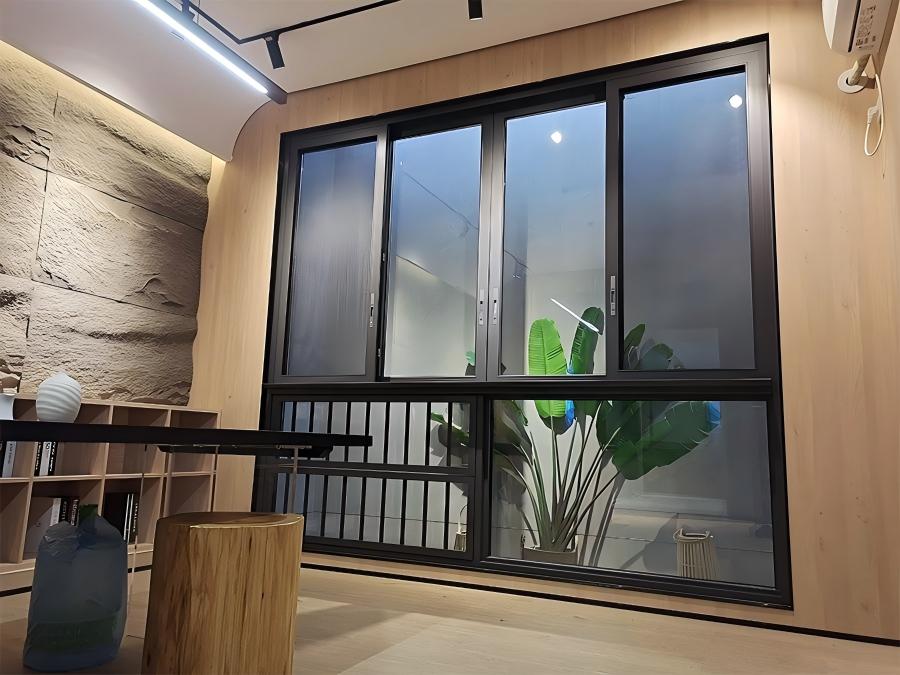
A window U-value measures the rate of non-solar heat transfer through the entire glass and frame assembly. Lower U-values signal superior thermal insulation. These advanced assemblies keep indoor heat inside during cold winter months and block ambient heat during hot summers.
Tip: Lower U-values mean better thermal performance and higher long-term utility savings.
Understanding U-values allows homeowners, architects, and commercial builders to select high-performance products that optimize climate control. Upgrading to an Energy Efficiency window cuts utility costs significantly:
Replacement Scenario | Estimated Annual Utility Bill Savings |
|---|---|
Replacing Single-Pane Windows | $126 – $465 |
Replacing Double-Pane, Clear Glass Windows | $27 – $111 |
Key Takeaways
Lower U-values mean better window insulation and significantly lower monthly energy bills.
Choosing energy-efficient windows eliminates uncomfortable room drafts and prevents messy interior glass condensation.
Triple-pane glass and insulated frames block heat transfer to keep your home comfortable year-round.
Combining low U-values with climate-matched solar ratings helps your home meet modern building codes.
What Is a Window U-Value?
A window U-value measures the rate of non-solar heat flow through a complete window assembly. Lower numbers indicate better insulation capability. Building professionals calculate this rating to evaluate overall thermal efficiency.
Understanding Thermal Transmittance
Thermal transmittance describes how easily heat moves through building materials. Heat transfers across a window assembly through three distinct physical mechanisms: conduction, convection, and radiation.
Heat Transfer Mode | Transfer Mechanism | Primary Location in Window | Mitigation Strategy |
|---|---|---|---|
Conduction | Direct thermal energy flow through solid materials | Window frame, glass, and spacer bars | Employing multi-chamber profiles and continuous thermal breaks |
Convection | Thermal movement driven by gas circulation | Gas-filled cavity (IGU) between glass panes | Optimizing the gap width geometry between panes |
Radiation | Emission and absorption of infrared energy across surfaces | Glass surfaces | Applying low-emissivity (low-E) coatings to reflect infrared energy |
Each transfer mode impacts total energy performance. Advanced engineering techniques target all three modes to reduce total thermal transmittance significantly.
U-Value vs. R-Value
Many homeowners recognize R-values from standard home insulation products. R-value measures thermal resistance, showing a material's ability to hinder heat flow. Conversely, U-value measures thermal transmittance, showing the ease with which heat moves through an assembly.
Key Takeaway: R-value and U-value function as mathematical inverses expressed by the identity $U = \frac{1}{R}$.
Metric / Relationship | Formula | Calculation Example |
|---|---|---|
Mathematical Relationship | Mathematical Reciprocals / Inverses | $U = \frac{1}{R}$ or $R = \frac{1}{U}$ |
Convert U-Value to R-Value | $R = \frac{1}{U}$ | U-value of $0.10 \rightarrow R = \frac{1}{0.10} = 10$ |
Convert R-Value to U-Value | $U = \frac{1}{R}$ | R-value of $3.45 \rightarrow U = \frac{1}{3.45} \approx 0.29$ |
Understanding this inverse relationship helps builders select the right Energy Efficiency window for maximum interior comfort and climate control.
Why U-Values Matter for Energy Efficiency Window Performance
Window assemblies feature U-values that typically range between 0.20 and 1.20. Lower ratings play a vital role in colder climate zones because they stop precious indoor heat from escaping. Understanding these numbers helps buyers select windows that manage thermal transfer effectively throughout the year.
Lowering Heating and Cooling Costs
Lower thermal transmittance directly reduces HVAC workload. When windows block unwanted thermal flow, heating and cooling systems run less frequently. This efficiency translates into substantial monthly energy savings and lowers the carbon footprint of a building. Choosing an Energy Efficiency window keeps indoor air temperatures stable without putting extra stress on equipment.
However, U-value tells only half of the thermal story. Building professionals evaluate U-value alongside the Solar Heat Gain Coefficient (SHGC) to calculate complete thermal dynamics.
Metric | Primary Measurement | Role in Total Energy Performance |
|---|---|---|
U-Value (U-Factor) | Rate of non-solar heat loss/conduction through the assembly. | Evaluates thermal insulation efficiency; lower values prevent indoor heat from escaping. |
Solar Heat Gain Coefficient (SHGC) | Amount of solar radiant heat admitted through the glass. | Measures passive solar heat intake; lower values block unwanted solar heat gain. |
Combined Relationship | Interdependent trade-off between heat loss and heat gain. | Solar heat gain (higher SHGC) can offset heat loss (higher U-Value) to balance overall energy balance depending on climate zone. |
Climate zones dictate how these two metrics work together:
Southern Climate Standards: U-Factor can be up to 0.40, but the SHGC is capped strictly at a maximum of 0.25 to minimize cooling loads.
Northern Climate Balance: Higher U-Factors are permissible if paired with a higher SHGC, allowing solar heat gain to actively offset thermal heat loss.
Eliminating Drafts and Improving Indoor Comfort
Cold glass surfaces degrade indoor comfort during winter months. When interior glass drops in temperature, it causes noticeable draft sensations and radiant body heat loss.
Comfort Mechanism | Physical Phenomenon | Effect on Human Thermal Comfort & Drafts |
|---|---|---|
Downdraft Discomfort | Warm interior air touches the cold glass surface, loses heat, becomes denser, and sinks toward the ground. | Generates cold air currents that move across the floor, causing perceived chilly drafts around the feet and ankles. |
Radiant Discomfort | The inner glass surface drops in temperature, lowering the mean radiant temperature in the space. | Alters human radiant heat exchange, making occupants feel cold based on glass surface temperature, emissivity, and field of view. |
Comfort Insight: Lowering the U-value keeps the interior glass surface warm, which stops cold downdrafts across the floor and maintains constant room comfort.
Lower U-values also eliminate messy interior window condensation. Cold glass pulls moisture out of warm indoor air, creating water droplets on frame edges and glass surfaces. High-performance window components raise surface temperatures above the dew point.
Component | Insulation Strategy / Innovation | Impact on Condensation Risk |
|---|---|---|
Glazing Unit | Integrates Low-E coatings and inert gas fills to achieve lower U-factors | Maintains higher interior glass surface temperatures, preventing moisture from reaching the dew point. |
Window Framing | Incorporates thermal breaks and insulating inserts into conductive materials like aluminum | Raises the interior frame's surface temperature above the condensation threshold. |
Edge Spacers | Utilizes advanced insulating materials between glass panes | Minimizes thermal bridging at glass boundaries, mitigating edge condensation. |
Selecting window products with the lowest affordable U-factor directly minimizes interior condensation risks.
High-performance insulated windows solve condensation at the source rather than relying on active energy consumption like dehumidifiers.
Meeting Energy Codes and Building Standards
Modern building codes require strict compliance with energy efficiency targets. Commercial energy standards like ASHRAE 90.1 enforce maximum allowable U-factors to guarantee building sustainability.
Maximum Limit Enforcement: Commercial energy standards set maximum U-factor thresholds, requiring installed windows to meet or fall below these specific numerical limits.
Performance Evaluation: Standards balance required thermal performance against cost-effectiveness, factoring in diminishing returns on energy savings.
Compliance Flexibility: Projects meet code requirements by specifying window assemblies with lower U-factors or by utilizing integrated building energy modeling and tradeoff paths when individual components exceed prescriptive limits.
Selecting a certified Energy Efficiency window allows architects and builders to meet regional energy codes seamlessly while securing long-term economic benefits.
Key Components in an Energy Efficiency Window
Several core structural components work together to lower a window assembly's total U-value:
Glass pane type and quantity
Frame material composition
Low-E microscopic surface coatings
Insulating gas fills between glass panes
Warm-edge window spacers around perimeter edges
Double and Triple Glazing Options
Building designers lower heat transfer by upgrading from single glass panes to insulated glass units. Adding extra glass panes creates sealed air chambers that trap heat effectively.
Glazing Configuration | Whole-Window U-Factor Range (BTU/hr·ft²·°F) |
|---|---|
Standard Double-Pane | 0.30 – 0.35 |
Low-E Argon Double-Pane | 0.25 – 0.30 |
General Triple-Pane Units | 0.10 – 0.20 |
High-Performance Triple-Pane | 0.14 – 0.26 |
Choosing triple-pane units cuts heat loss nearly in half compared to basic double-pane options.
Low-E Coatings and Argon Gas Fills
Manufacturers apply ultra-thin Low-Emissivity (Low-E) metallic coatings directly to interior glass surfaces. These invisible layers reflect infrared heat back toward its thermal source. Homes retain interior furnace heat during cold winters, while blocking scorching sun rays during hot summers.
Inside the glass cavity, heavy inert gases like argon replace regular ambient air. Argon conducts far less heat than oxygen or nitrogen. This dense gas fill stops thermal convection currents between glass layers, making your Energy Efficiency window perform reliably year-round.
Thermally Broken Frames and Spacers
Frame materials play a massive role in overall thermal conduction. Raw metal profiles transfer heat rapidly, whereas non-metallic materials resist thermal flow naturally.
Frame Material | Thermal Conductivity & Performance |
|---|---|
Fiberglass | Lowest thermal conductivity, offering top-tier insulation. |
Vinyl (PVC) | Low thermal conductivity with multi-chamber insulation options. |
Wood | Effective natural insulator due to its organic cellular structure. |
High thermal conductivity unless engineers install a structural thermal break. |
Polyamide compositions offer significantly lower thermal transmission values than raw aluminum. Integrating them into the frame delivers a combined structural and thermal advantage, yielding performance improvements of up to a 20% reduction in U-factor.
Engineers insert PA66 GF25 polyamide strips between inner and outer aluminum frame profiles. These insulating barriers cut frame heat transmittance by 50% to 70%, creating a high-performance Energy Efficiency window system that blocks severe outdoor weather. Warm-edge spacer bars seal the glass edges to prevent cold perimeter thermal bridging.
High-Performance Solutions by Derchi Window and Door
Derchi Window and Door leads the global market with over 25 years of aluminum manufacturing expertise. The company crafts premium building envelope systems that deliver unmatched thermal control for modern architectural projects.
Commercial and Architectural Engineering
Derchi designs thermally broken 6063-T5 aluminum profiles that handle demanding structural projects effortlessly. These advanced systems achieve impressive U-factors between 0.27 and 0.32 through clever thermal engineering:
Multi-Cavity Construction: A 1.8mm profile wall features internal chambers that slow down heat transfer.
Expanded Thermal Barrier: A 44mm wide insulation strip isolates the exterior metal from interior surfaces.
Triple-Sealing System: Three distinct EPDM gasket layers stop air infiltration and seal out moisture.
Feature Category | Design Mechanism | Air Infiltration Defense |
|---|---|---|
Multi-Point Locking | Four-Side Six-Point Lock System | Secures six points around the frame edge to press sashes tightly against perimeter seals. |
Weather-Stripping | Three-Layer EPDM Gaskets | Form continuous physical barriers that block wind, draft intrusion, and unwanted sound. |
These structural elements support expansive glass facades and large multi-track sliding doors. Derchi window systems seamlessly integrate with curtain wall structures while withstanding design wind pressures up to 5 kPa and water tightness up to 700 Pa.
Quality Assurance: Global testing bodies certify Derchi products under NFRC, CE, AS2047, and CSA standards. Each Energy Efficiency window undergoes 42 factory inspections and comes with a 10-year performance warranty.
Selecting the Right U-Value for Your Climate
Architects select specific window U-values and SHGC ratings based on regional climate zones and building orientation.
Climate Region | Target Window U-Value | Primary Goal |
|---|---|---|
Cold Northern Climates | ≤ 0.22 Btu/h·ft²·°F | Stop heat loss and reduce winter heating loads. |
Warm Southern Climates | 0.30 – 0.45 W/m²·K | Prevent solar heat conduction and lower cooling costs. |
Strategic window placement further optimizes whole-building energy performance:
West-Facing Windows: Low SHGC glass prevents harsh afternoon solar heat buildup.
South-Facing Windows: Moderate SHGC glass captures helpful winter warmth when paired with exterior shading.
North-Facing Windows: Selecting an Energy Efficiency window with the lowest U-value takes priority because these facades receive little direct solar heat.
Window U-values control total thermal performance and long-term utility savings. Selecting a certified Energy Efficiency window cuts monthly energy bills, improves daily indoor comfort, and satisfies strict regional building codes. Modern insulated aluminum assemblies maintain cozy indoor temperatures through every season while delivering continuous financial payback.
Take Action: Building professionals and homeowners can contact Derchi window and door today to explore certified architectural solutions and request custom project consultations.
FAQ
What is a good U-value for energy-efficient windows?
A good window U-value generally ranges between 0.20 and 0.30. Lower numbers indicate superior insulation. Homeowners in colder regions should select U-values below 0.25 to maximize indoor heat retention and reduce winter heating bills.
Does a lower U-value always mean a better window?
A lower U-value guarantees better thermal insulation. However, buyers must also evaluate the Solar Heat Gain Coefficient (SHGC). Warmer southern climates require low SHGC ratings to block solar heat, while northern climates benefit from passive solar heat gain.
Quick Note: Balance low U-values with climate-appropriate SHGC ratings for total energy efficiency.
How do frame materials affect a window's U-value?
Frame materials strongly influence overall thermal transmittance. Raw aluminum frames conduct heat rapidly. However, engineered aluminum profiles with polyamide thermal breaks block heat transfer effectively. This smart design creates strong, highly energy-efficient window systems.
Can triple-pane glass significantly lower U-values?
Yes! Adding a third glass pane creates two insulated gas chambers. Triple-pane units reduce heat loss by nearly 50% compared to standard double-pane windows. They drive whole-window U-values down to impressive levels between 0.10 and 0.20.
Glazing Type | Average U-Value Range |
|---|---|
Double-Pane | 0.25 – 0.30 |
Triple-Pane | 0.10 – 0.20 |