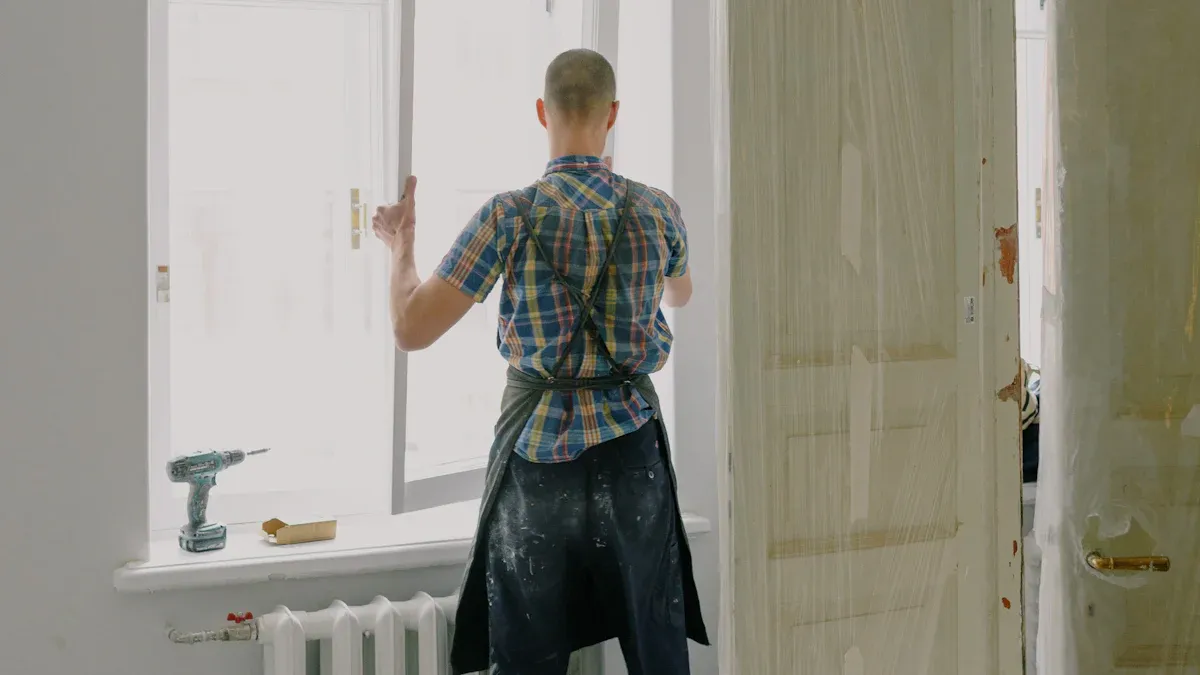
Homeowners care for their home windows in simple ways. They clean the glass often. They check the frames for damage. They add weatherproofing to block leaks. They also oil the moving parts.
The U.S. Department of Energy shares facts. Bad home windows waste energy. They cause 30% of heating loss. They cause cooling loss, too.
Good care keeps your home safe. It saves energy costs daily. It makes your home windows last twice as long.
System Condition | Expected Lifespan |
|---|---|
Neglected Systems | 15–25 years |
Well-Maintained Systems | 30–50 years |
Key Takeaways
Clean glass and tracks often. Use mild soap.
Microfiber cloths prevent damage. Clean them regularly.
Check weather stripping every season. Check frame joints.
Stop air leaks. This saves energy for you.
Apply fresh exterior caulk. Replace old weather stripping.
This blocks cold drafts well. It works great.
Lubricate locks and hinges each year.
Use dry silicone spray. Parts will slide smoothly.
Choose durable aluminum frames like Derchi systems.
They lower maintenance needs. They prevent frame rot.
Clean Glass, Frames, and Tracks of Home Windows
Good care keeps home windows shiny. It helps them work well. Dirt gathers on the glass. Dust fills the tracks fast. Regular care protects window parts. It prevents early wear and tear.
Tip: Wash on cloudy days. Soap dries too fast in sun. Direct sunlight dries liquid quickly. It leaves ugly spots behind!
Wash Glass Panes Without Streaking
People fight tough spots on glass. Proper tools make it easy. Warm water works great. Add mild dish soap, too.
Use microfiber glass cloths. They work better than paper towels. Soft threads grab dirt fast. They trap tiny dust particles. They do not push dirt. This prevents streaks and marks.
Feature / Attribute | Paper Towels | Microfiber Glass Cloths |
|---|---|---|
Material Structure | Weak paper fibers break easily | Soft threads are very fine |
Mechanism | Leaves bits of paper behind | Traps dirt, dust, and germs |
Moisture Handling | Spreads liquid and leaves streaks | Holds lots of liquid easily |
Final Surface Result | Leaves streaks and tiny lint | Leaves glass clear and clean |
Weather and age stress glass. Know common causes of damage. This helps protect your glass.
Primary Cause | Mechanism of Degradation / Damage | Specific Examples or Factors |
|---|---|---|
Aging Window Materials | Natural wear over time | Rotting wood or shifting house |
Accidental Impacts | Direct hits damage the glass | Balls or furniture hitting glass |
Severe Weather Conditions | Storms, heat, and cold harm glass | Hail, strong winds, and heat |
Improper Installation | Bad setups cause big problems | Poor fitting or bad seals |
Thermal Stress | Hot and cold sides crack glass | Hot outside air and cold inside |
Wash glass in spring and fall. This removes bad dirt film.
Clean Wood and Vinyl Frame Materials
Frames need gentle cleaning care. This keeps them very strong. Vinyl frames like mild soap. A soft sponge clears marks. It will not scratch vinyl.
Wood frames need extra care. Water ruins wood quickly.
Use a slightly damp cloth: Wipe wood frames gently. This removes dust easily.
Avoid heavy soaking: Use very little water. This stops mold and rot.
Dry immediately: Wipe dry right away. Use a towel on corners.
Proper wiping protects wood grain. It protects paint for years.
Clear Dirt From Tracks and Weep Holes
Dirty tracks stop window movement. Grit builds up inside them. Use simple tools to clean:
Handheld Steam Cleaner: Loosens hard dirt fast.
Track Brushes with Flexible Plastic Bristles: Bends into tight grooves easily.
Vacuum Cleaner with a Narrow Nozzle: Sucks out loose dust.
Small Detail Brushes and Old Toothbrushes: Scrubs tight, dirty spots well.
Cotton Swabs or Cloth-Wrapped Butter Knives: Reaches deep track edges easily.
Drain holes need clear space. They drain rain outside fast. People call them weep holes. Blocked holes cause big problems:
Blockage Occurs: Dirt blocks small bottom holes.
Water Accumulation: Rain gathers in the track. Water sits on the sill.
Overflow and Interior Damage: Water spills inside the home. It ruins walls and floors.
Structural Rot: Trapped water ruins window seals. It rots wooden home frames.
Clear weep holes with air. A small brush works, too. Water drains outside easily now. Cleaning windows protects your home. It prevents costly water damage.
Inspect Home Windows for Damage and Seal Failures
Check your glass often. It helps parts work well. Inspect every season. This finds small issues fast.
Tip: Move each sash today. Easy slides show straight frames. Stuck sashes show shifted walls.
Check Weather Stripping for Degradation
Harsh weather harms window seals. Hot sun bakes soft parts. Cold air makes seals brittle. Damaged foam creates small gaps. Drafty air enters home windows.
Air Loss Impact: Bad seals leak conditioned air. Leaks reach 30% quickly.
Increased HVAC Strain: Drafts force heaters to work. Cooling units run non-stop too.
Financial Consequences: Good seals save cash yearly. They lower monthly energy bills.
Pull off dry old foam. Press new seals down firmly.
Inspect Frame Joints and Wood for Rot
Strong forces push window frames. Daily temperature shifts expand parts. Materials shrink in cold air. Moving parts loosen tight corners.
Stress Factor | Physical Mechanism | Resulting Frame Damage |
|---|---|---|
Thermal Cycles | Hot and cold shifts expand parts | Loose joints and split corners |
Wind Pressure | Strong gusts flex outer frames | Weakened anchors and screws |
Frame Deflection | Bending moves break glue bonds | Broken seals and water leaks |
Check corner joints for gaps. Feel for wet wood spots. Soft wood shows bad rot. Push a small tool gently. Soft spots need fast fixes.
Detect Condensation and Broken Glass Seals
Multi-pane glass holds insulation gas. Tight seals hold gas inside. Foggy panes show seal failure.
[Outer Glass Pane] <--- Trapped Moisture / Fog ---> [Inner Glass Pane]
                             ^
                             |
                   [Failed Perimeter Seal]
Seals fail from simple reasons:
Natural Aging: Sun breaks down old rubber.
Structural Movement: Moving houses stress glass corners.
Subpar Materials: Cheap units use thin glass.
Faulty Installation: Bad fits trap heavy rain.
+-----------------------------------------------------------------------+
|                        REPAIR VS REPLACEMENT                          |
+-----------------------------------------------------------------------+
|  Defogging Service                    |  Full Glass Replacement       |
|  • Drills tiny holes into glass       |  • Installs new factory unit  |
|  • Cleans interior glass surfaces     |  • Restores original insulation|
|  • Fails on tempered safety glass     |  • Provides long-term warranty|
|  • Cannot restore thermal gas layers  |  • Eliminates future fogging  |
+-----------------------------------------------------------------------+
Techs drill small glass holes. They spray clean liquids inside. Then rubber plugs seal holes. This fix cannot save gas. Replacing glass saves more cash.
Seal Gaps and Restore Insulation
Small cracks let cold air in. People fix gaps right away. This keeps your home warm.
Apply Fresh Exterior Caulking
Old seals break down over time. Put fresh caulk on outside frames. This simple job blocks bad drafts. It saves energy costs quickly. You save 10% on power.
Caulk/Sealant Type | Estimated Lifespan | Notable Characteristics |
|---|---|---|
100% Silicone Sealants | 20–25 years | Provides maximum service life outdoors |
MS Polymer Sealants | 15–20 years | Offers durable weatherproofing and accepts paint |
Check the weather before you start:
Standard Silicone Caulk: Use this in warm weather. Apply from 40°F to 80°F.
General Threshold: Use standard caulk above 40°F.
Specialty Cold-Weather Caulk: Warm it inside first. Then use it down to 20°F.
Replace Worn Weather Stripping
Bad seals make rooms feel cold. Swap old strips on moving parts. This protects home windows from drafts.
Material | Durability | Insulation Efficiency |
|---|---|---|
Felt | Lowest durability | Lowest effectiveness |
Foam | Low in tape form | Moderate effectiveness |
Silicone | High durability | High effectiveness |
Felt Weather Stripping: Replace this every two years.
Silicone Weather Stripping: This flexible barrier stays soft. It works great on busy frames.
Install Seasonal Insulation Films
Put plastic cover kits on glass. Do this during cold winter months.
Material / Insulation Type | Approximate R-Value |
|---|---|
Insulated Wall | 12.0 – 19.0 |
Standard Double-Pane Glass | 2.0 |
Plastic Shrink-Wrap Kit | Substantially below 0.85 |
Note: Thin plastic adds very little heat protection. Ads promise big energy savings. These claims are usually false.
Maintain Hardware and Upgrade to Derchi Window and Door Systems
Lubricate Moving Parts and Casement Operators
Oil home windows parts yearly. Smooth parts protect window frames. Techs spray dry silicone lubricant. They spray locks and hinges. Dry sprays work best. Oil sprays attract dirt. Dirt clogs tracks fast. Oiling makes handles turn. It protects metal parts.
Tip: Avoid thick grease now. Grease traps heavy dust. Clean tracks before spraying.
Protect and Refinish Wooden Frames
Wood needs sun protection. Check wood for peeling paint. Sand rough spots gently. Apply fresh coat paint. Sealants block bad water. This care stops mold.
Maintain Durable Derchi Aluminum Windows
People buy new Derchi systems. Aluminum offers weather defense. People save time daily. Modern profiles need simple care. Mild soap restores finish.
Window Frame Type | Maintenance Requirements | Susceptibility to Environmental Damage |
|---|---|---|
Aluminum Frames | Needs easy basic care. No paint needed ever. | Resists rust in harsh weather easily. |
Traditional Wood Frames | Needs regular painting jobs. Demands frequent checking routines. | Rots fast when water enters. |
Simple care aids Derchi units. Strong metal blocks rust. It withstands ocean air. Frames keep homes stylish. Enjoy long performance now.
Homeowners keep a easy window care list each spring. They work again every single fall season. First, they clear out dirty weep holes quickly. Next, people put new caulk on outside frames. They also oil stiff window hardware parts today. Regular washing protects home windows from fast damage.
Easy fixes fit simple home projects very well. Yet, high tasks cause dangerous fall risks today. Tall roofs make these jobs very unsafe. Thus, people hire pros for dangerous upper spots. Others buy new Derchi units for total safety.
FAQ
How often should homeowners clean window tracks?
Quick Schedule: Clean tracks twice yearly to stop dirt!
Owners clear window tracks two times every year. Spring and fall give great weather for tasks. Sucking up dust stops big dirt piles. Clean tracks let sashes slide without sticking.
What sprays work best for sticky window locks?
Dry silicone sprays oil sticky window locks best. Owners avoid thick oils that draw dirt fast.
Dry Silicone: Blocks dust and helps parts move.
Heavy Grease: Traps dirt and jams metal parts.
A quick spray helps hinges turn in seconds.
Can homeowners fix foggy glass panes at home?
Foggy glass shows broken inside seals. Drill kits rarely bring back old heat protection. Owners usually swap the glass to stop fog.
Why do people choose Derchi aluminum windows?
Owners choose Derchi aluminum windows for strength and style. Strong frames fight bad weather and rust easily. Easy care keeps them looking bright for years.