


Casement window glass-edge guide
Warm edge spacer windows: specify the glass edge your quote needs.
Turn the project location, proposed glass build and visible-edge requirements into a clear casement-window brief—then review the quoted spacer, cavity and supporting documents with DERCHI.
This page defines the insulated-glass edge conversation. Whole-window performance still depends on the selected frame, glass, seals and installation.
Define the decision
Keep the glass edge in scope—and the whole window in view.
A spacer keeps the panes apart and forms part of the IGU edge. It does not replace the decisions made for the frame, glass package, perimeter sealing or installation.
Review whole-window energy efficiencyGlass-edge configuration
- Spacer construction route
- Cavity and spacer width inputs
- Double- or triple-glazed edge build
- Visible edge and colour coordination
- Edge-seal and document questions
Whole-window selection
- Frame and opening system
- Low-E and solar-control strategy
- Complete-window ratings
- Air, water and structural requirements
- Installation and building-envelope coordination
Three roles, one specification
Move one clear brief from concern to quotation.
The strongest enquiry does not ask only for “warm edge.” It records the concern, the project conditions and the proposed IGU before the dealer requests a confirmed build.
Owner defines the concern
Describe the room, visible edge preference and comfort issue without turning the desired outcome into an assumed product claim.
Consultant records the conditions
Set out the proposed glass build, project exposure, review basis and documents needed for the applicable window package.
Dealer prepares the request
Attach the opening schedule, sizes, quantities and required edge inputs so the quoted casement-window build can be compared.
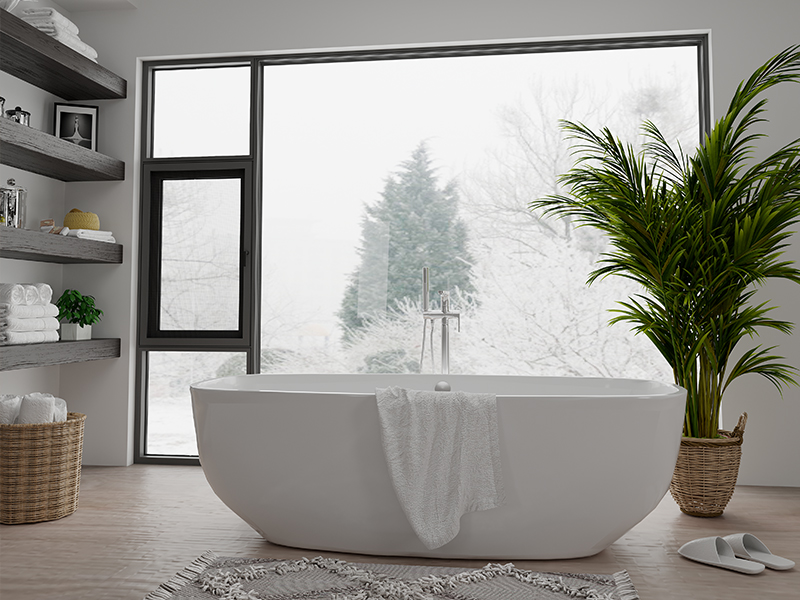
Project context changes the questions. Record the location and exposure before discussing the glass-edge route.
Start with project inputs
Country is an input—not the spacer specification.
Add the city, building, exposure and proposed casement-window build. These details give the dealer and DERCHI a usable basis for review.
United States, Canada, Barbados, The Bahamas, Panama, Belgium, Germany, Denmark, the United Kingdom, Romania, Australia, Israel and the UAE. Final inputs should still be based on the project city, exposure, building type and applicable documents.
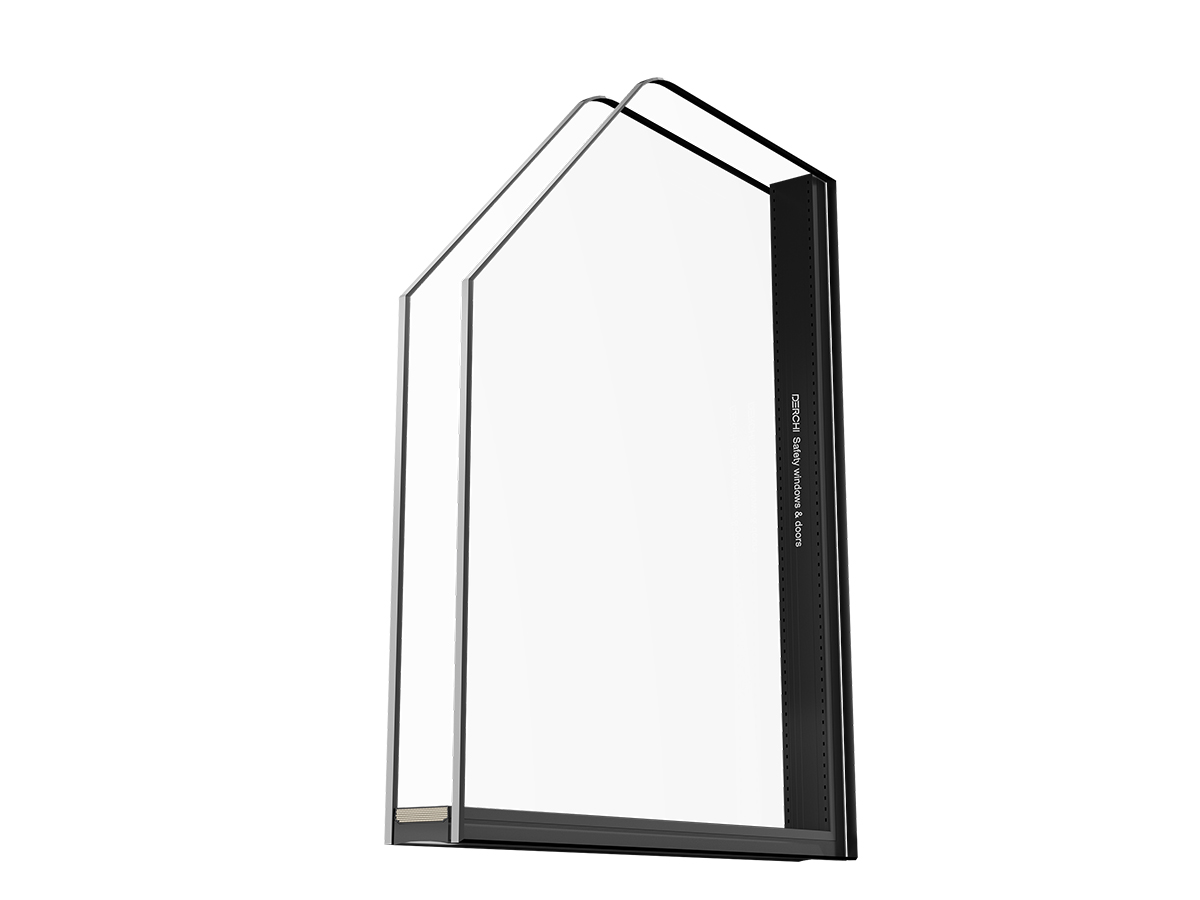
The spacer is part of a sealed IGU. The image establishes the component location; the route matrix defines what the quotation must identify.
Choose a construction route
Compare the edge system—not a single marketing label.
Use these industry route names to frame the enquiry. They are comparison categories, not a fixed DERCHI product menu.
Scroll horizontally to compare all routes
| Decision input | Conventional metal | Thermally improved / hybrid | Non-metal / flexible |
|---|---|---|---|
| Construction | Metallic bar forming the cavity perimeter. | Combined materials intended to reduce the conductive path. | Low-conductivity flexible or polymer-led edge system. |
| Ask about | Material, finish, corner route and edge-seal build. | Material combination, rigidity, corner route and processing. | Application method, line compatibility and seal dependency. |
| Visible result | Confirm reflectivity, colour and sightline. | Confirm colour, surface finish and visible width. | Confirm surface appearance, colour and sightline. |
| Record | Quoted spacer identification and relevant IGU documents. | Quoted construction and the documents used for comparison. | Quoted system, seal arrangement and applicable build conditions. |
Selection ruleShortlist a route only after the proposed glass build, casement system, appearance and document requirements are on the same page.

Official DERCHI glass-direction board. Treat embedded build-ups as page examples; the quoted casement system and glass package still require project review.
Fit the casement system
The edge build must fit the sash around it.
Spacer and cavity inputs sit inside a complete glass-and-frame assembly. Coordinate the finished IGU with the selected sash before the quotation is treated as comparable.
Build the IGU configuration
Write the complete build—not only “warm edge.”
Double and triple glazing create different edge records. Each cavity, spacer and overall thickness belongs in the quotation brief.
Low-E selection and climate-led glass strategy remain part of the whole-window discussion. Use the Energy Efficiency page for that decision, then return here to record the edge inputs.
Double-glazed route
Two panes / one cavity- Record
- Both panes, the single cavity, proposed spacer route and total IGU thickness.
- Coordinate
- Glass dimensions, cavity request, gas-fill request and edge-seal arrangement.
- Confirm
- Quoted build identification and documents required for project review.
Triple-glazed route
Three panes / two cavities- Record
- All three panes, both cavities, both spacer positions and total IGU thickness.
- Coordinate
- Combined thickness, size/weight implications, gas request and sash compatibility.
- Confirm
- Whether the proposed build fits the selected casement system and document scope.
Decide sightline and colour
Review what remains visible at the glass edge.
The edge can read as bright, dark, reflective or low contrast. Ask the quotation to identify the spacer appearance, then coordinate it with the glass and selected frame finish.
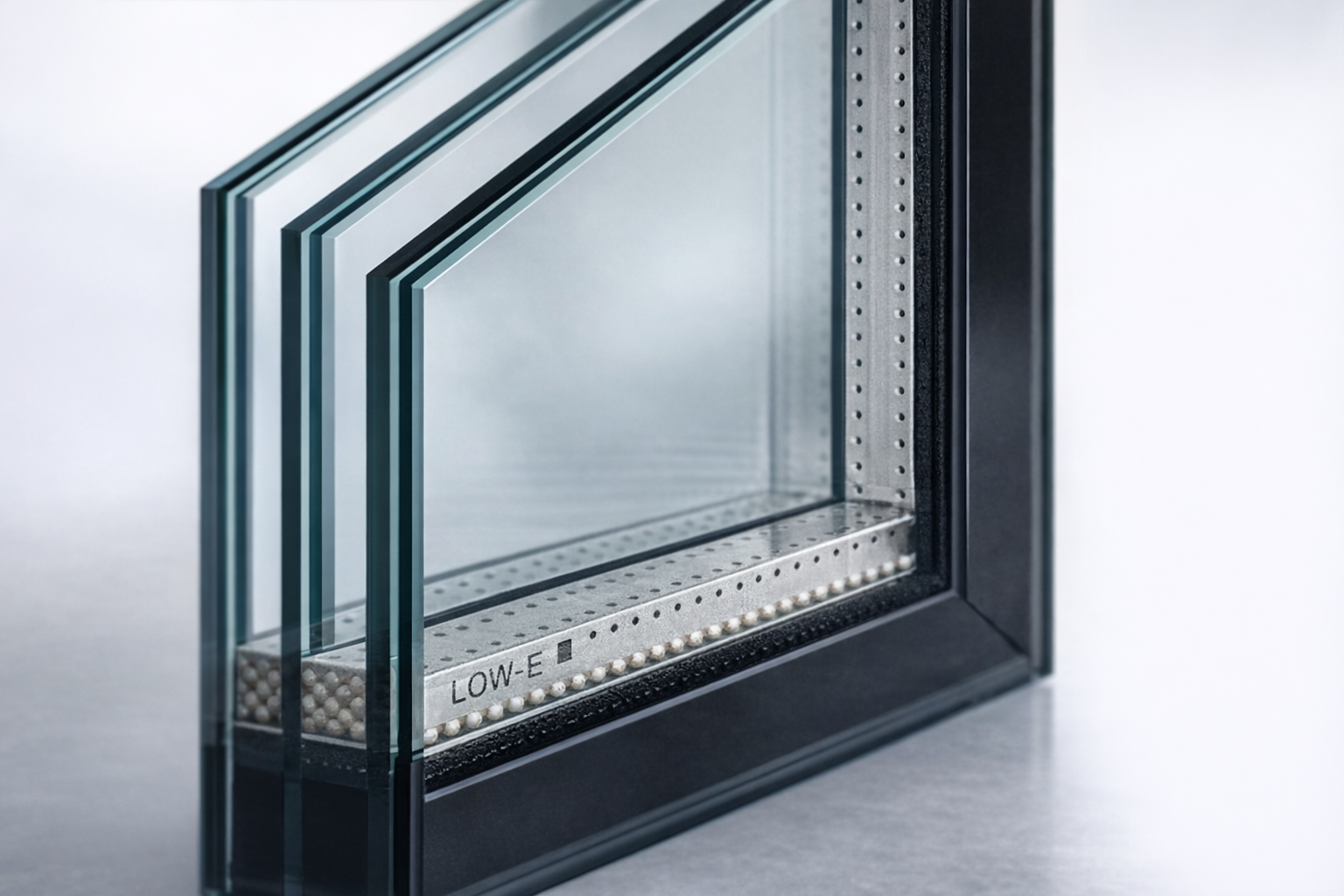
Edge viewUse the real edge close-up to discuss sightline, colour and reflectivity—not to assume a material or performance result.

Frame contextCoordinate the confirmed spacer appearance with the selected casement frame finish.
Identify the quoted edge build.
A document is useful when it ties the spacer and seal description to the same IGU and window schedule being quoted.
Pane sequence, cavities, total thickness and relevant glass notes.
Quoted construction route, visible finish and any build-specific conditions.
Requested or quoted seal arrangement for the proposed unit.
Documents and verification
Ask for evidence that identifies the quoted configuration.
A logo wall does not define the glass build. Request documents that let the dealer, consultant and project team compare the same proposed unit.
Connect the edge description to the window mark, opening size and quantity.
Request the applicable document scope required by the project rather than assuming one certificate covers every build.
List the standard, review basis, substitution rule or approval stage that applies to the quotation.
Keep any accepted change to spacer, glass, cavity, colour or seal with the revised quotation.
Create a quote-ready brief
Give every reviewer the same set of inputs.
Use this structure for the schedule note, enquiry email or project worksheet. The proposed build remains subject to casement-system review.
Casement window glass-edge brief
Copy into your enquiryAttach the schedule and any proposed glass detail. Do not rely on the phrase “warm edge” as the complete specification.
Send Your Casement Window Schedule
Manufacturing context from DERCHI. The final spacer and IGU build are recorded against the project inputs rather than inferred from this image.
DERCHI configuration review
Move from a proposed edge to a quoted window build.
The enquiry becomes useful when the schedule, glass proposal and document requirements arrive together.
Share the schedule and project inputs
Include location, opening marks, dimensions, quantities, proposed glass build and outstanding edge questions.
Check the IGU against the casement system
Review the proposed total thickness, cavity/spacer inputs and visible-edge requirements with the selected window configuration.
Keep the confirmed build with the quotation
Use the quoted configuration and applicable document follow-up as the basis for comparison and later revisions.
Decision FAQ
Resolve the last inputs before quotation.

Ready for review
Send your casement window schedule for glass-edge review.
Include the project location, opening sizes, proposed glass build and required documents. DERCHI can then review the edge inputs with the selected casement-window configuration.
- Location
- Schedule
- Glass build
- Documents
