


Clear glass
Clear glass is one of the front entry door glass panel options described by DERCHI.
Use it where view and daylight matter more than screening, or where the entry is already shielded by landscaping, a porch, or distance from the street.


A front door should use safety glazing that is appropriate for architectural door locations, not ordinary glass chosen only for appearance. In U.S. regulatory terminology, glazing material includes tempered and laminated glass, and doors can include pivoting, sliding, hinged, or revolving assemblies.
For U.S. projects, 16 CFR § 1201.1 describes a safety standard for architectural glazing materials used in doors and other listed products, with the stated purpose of reducing injury risks from broken glazing. Other countries and local authorities may use different code routes, so the U.S. text should not be treated as worldwide approval.
| Glass choice | What it helps with | Buyer check |
|---|---|---|
| Tempered glass | Tempered glass is specially treated and, when highly tempered, breaks into small particles. | Ask whether the door glass is specified and labeled for the applicable door location in your jurisdiction. |
| Laminated glass | Laminated glass is bonded to resilient plastic interlayers. | Ask whether laminated or security glazing is needed for the entrance, especially near locks or sidelights. |
| Insulating glass unit | DERCHI describes the W-Z3 aluminum glass pivot entry door with double tempered glass and argon gas in an 8 mm + 21A + 8 mm configuration. | Confirm that the exact glass build-up, size, and installation details meet the project’s code and performance needs. |
The terminology matters because 16 CFR § 1201.2 defines doors broadly and separately defines tempered and laminated glass. That helps buyers ask for the right type of evidence instead of relying on a generic phrase such as “strong glass.”
Glass does not decide security by itself; security should be evaluated at the complete doorset level, including the door, frame, leaf, hardware, locks, and any integral side panel or fanlight.
For homeowners, the practical question is not “Is there glass?” but “What is the whole entrance designed to resist?” A large clear pane beside a weak latch is different from a well-specified doorset with suitable framing, locking, and documented glazing choices.
| Security concern | What to evaluate | What to ask for |
|---|---|---|
| Breakage near the lock | Security glazing may be tested under BS EN 356:2000 for resistance against manual attack. | Ask whether the selected glass has security-glazing test evidence for the required application. |
| Weak frame or door leaf | Secured by Design explains security standards in terms of complete doorsets. | Ask for evidence covering the full doorset, not only the glass pane. |
| Locking strength | DERCHI’s front entry door category page describes security-related options such as reinforced frames and multi-point locking systems. | Match lock type, frame, hinges or pivot hardware, and glass location before finalizing the specification. |
| Pivot-door hardware | DERCHI describes the W-Z3 pivot entry door with concealed floor and header pivot hardware and commercial-grade multi-point locking options. | Confirm hardware compatibility with the selected size, glass weight, threshold, and opening direction. |
Secured by Design door guidance frames security around doorsets rather than an isolated panel. Its windows and glazing guidance also treats security glazing as a tested component within the wider security approach.
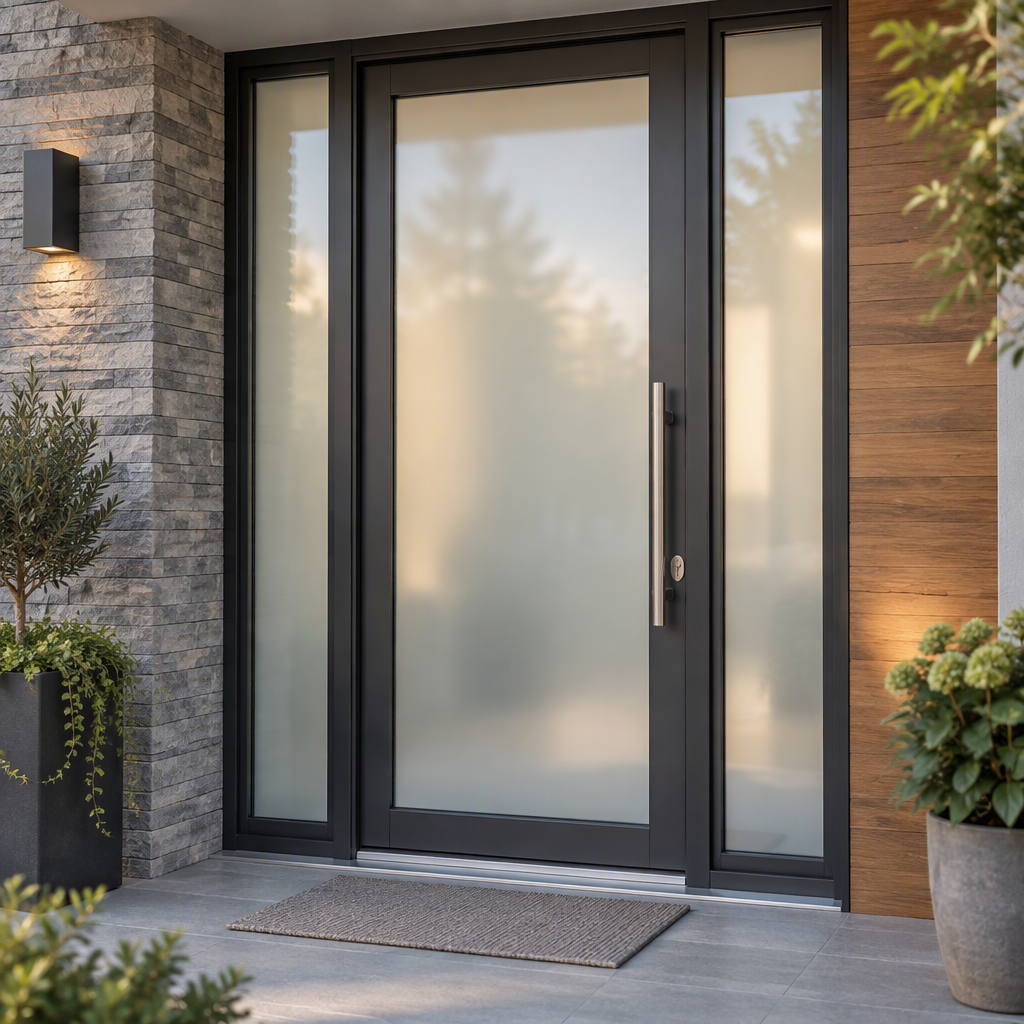
Privacy is usually handled by choosing the right glass visibility level: DERCHI describes clear, textured, and frosted glass panels for balancing natural light and privacy.
Clear glass is one of the front entry door glass panel options described by DERCHI.
Use it where view and daylight matter more than screening, or where the entry is already shielded by landscaping, a porch, or distance from the street.
Textured glass is another listed option for front entry doors.
It can soften the view while still admitting daylight, making it useful for busy walkways or sidelights near the handle area.
Frosted glass is also described as a privacy-related front entry door option.
It is often the simplest direction when the door faces neighbors, a shared corridor, or a street-facing entry.
Everyday safety depends on the whole door assembly and movement path, whether the door pivots, swings, slides, or uses another door movement. For a pivot example, DERCHI describes the W-Z3 as using concealed floor and header pivot hardware with inswing or outswing configurations available.
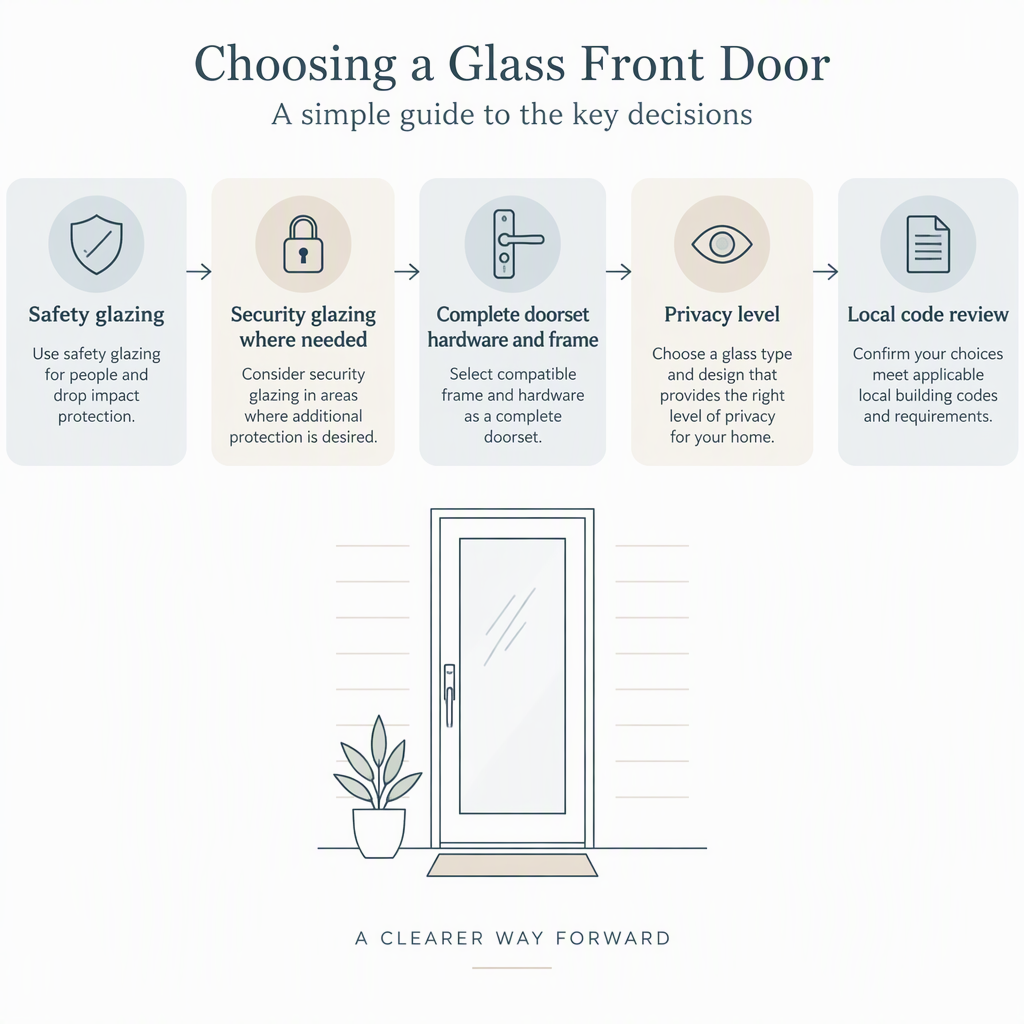
Before ordering, confirm the safety-glazing requirement, security expectation, privacy level, weather exposure, operating clearance, hardware package, installation scope, and local approval path for the exact door configuration.
| If your priority is... | Choose or request... | Do not rely on... |
|---|---|---|
| Injury safety | Safety glazing intended for door locations and accepted by the local authority. | A visual claim that the glass “looks thick.” |
| Security | A complete-doorset security approach with compatible frame, lock, hardware, and glazing. | A lock upgrade without checking glass and frame design. |
| Privacy | Clear, textured, or frosted glass selected for the actual sightlines. | Daytime-only privacy checks. |
| Pivot operation | Confirmed pivot hardware, clearance, opening direction, and installation support for the chosen size. | Assuming a pivot door fits like a standard hinged slab. |
A glass front door is a safe choice when the specification is built around safety glazing, complete-doorset security, privacy needs, exposure, operation, and local code review.
These short answers cover the common safety, security, privacy, maintenance, and ordering questions buyers ask before choosing a glass front door.
Yes, they can be safe when the door uses appropriate safety glazing and is installed for the entrance conditions. Safety should be verified for the project location, not assumed from appearance.
Tempered glass is treated to break into small particles when highly tempered, while laminated glass is bonded to resilient plastic interlayers. Where security glazing matters, ask for the relevant security-glazing test evidence.
Yes. DERCHI describes clear, textured, and frosted glass panels as front entry door options, so privacy can be adjusted by glass selection and placement.
They can be appropriate when the pivot hardware, clearance, size, glass package, and installation are matched to the project. DERCHI describes the W-Z3 with concealed floor and header pivot hardware, but the final configuration still needs project review.
Not automatically. Security depends on the complete doorset, including the door leaf, frame, hardware, locks, and any side panel or fanlight.
Check safety glazing, privacy level, lock and frame compatibility, weather exposure, operating clearance, installation scope, and local approval documents. If a supplier claims a rating, ask for documents matched to the exact model and configuration.
Some door systems may be designed for severe exposure, but do not assume hurricane or impact approval without configuration-specific test reports and local approval documents for the exact project.


