


Single door example
If the hinges are on the left and the chart uses the regular swing direction for that reference side, mark the door LH.


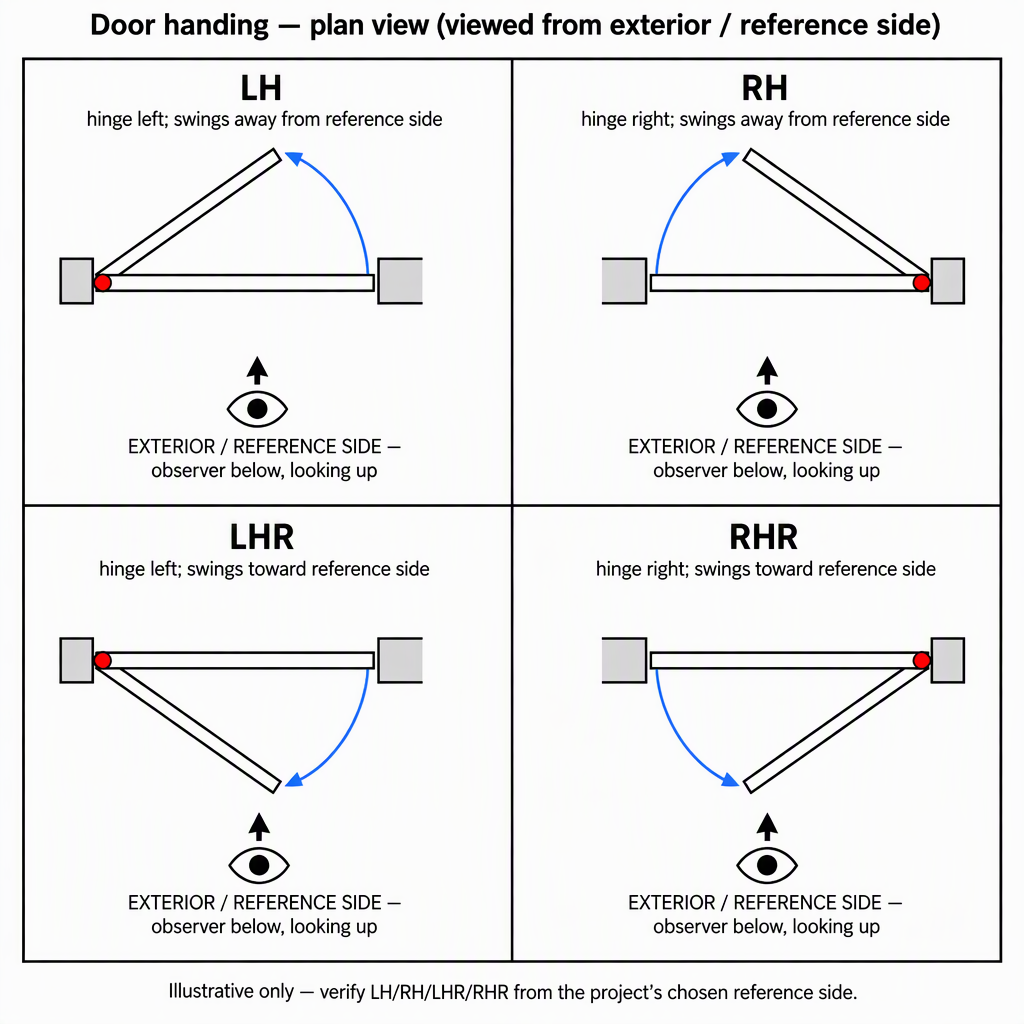
A door swing chart shows the hinge side and swing direction so the door, frame and hardware can be scheduled together; the Steel Door Institute describes handing charts and door, frame and hardware schedule coordination in SDI 111 door details.
| Chart mark | Practical way to read it | What to confirm |
|---|---|---|
| LH, left hand | Hinges are on the left when you face the reference side and the panel swings in the regular direction used by the schedule. | Confirm which side the supplier uses as the reference side. |
| RH, right hand | Hinges are on the right when you face the same reference side and the panel swings in the regular direction used by the schedule. | Confirm lock, pull, lever and closer positions. |
| LHR, left hand reverse | The hinge side is left, but the swing is treated as reverse in the door or hardware schedule. | Confirm whether the door is outswinging, inswinging, or named differently by the supplier. |
| RHR, right hand reverse | The hinge side is right, but the swing is treated as reverse in the door or hardware schedule. | Confirm exterior side, opening side and hardware preparation. |
To identify a left-hand door, stand on the agreed reference side, face the opening, and check whether the hinges are on your left before you record the swing.
If the hinges are on the left and the chart uses the regular swing direction for that reference side, mark the door LH.
For paired leaves, identify the active leaf first. Then mark that leaf’s handing instead of naming the whole pair only as “double doors.”
Left-hand does not automatically tell you the room side, weather side, or lock side. Those details still belong on the door schedule or supplier drawing.
To identify a right-hand door, use the same reference side and ask the same hinge-side question; if the hinges are on your right, the handing starts with RH.
A right-hand mark refers to hinge position in the handing chart. The pull, lever, lock cylinder and closer still need separate coordination.
If one person stands outside and another stands inside, the same door can appear opposite. Choose the reference side first, then keep it consistent.
Reverse handing means the hinge side is still left or right, but the swing is treated as the reverse of the regular chart direction used for that schedule.
| If the chart says | Keep this fixed | Double-check this |
|---|---|---|
| LHR | Left hinge side | Which side is considered reverse and where the secure or exterior face is located |
| RHR | Right hinge side | Latch bevel, closer arm, threshold, weatherstrip and lock preparation |
The easiest method is to pick one reference side, mark the hinge side, then draw the swing arc before assigning LH, RH, LHR or RHR.
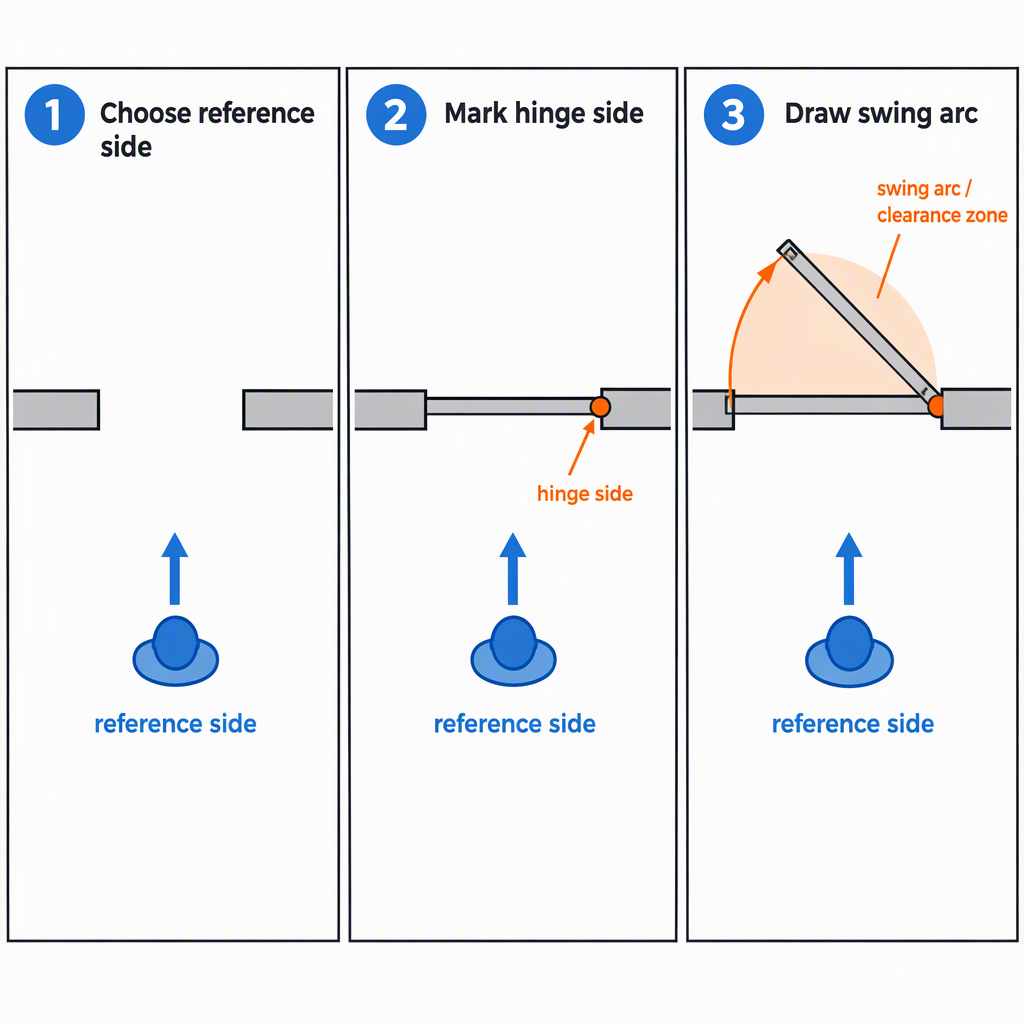
A swinging door needs room for its hinge rotation and swing arc; on U.S. accessible routes, the U.S. Access Board explains that maneuvering clearances vary by approach direction, door swing and certain hardware conditions in its entrances, doors and gates guidance.
| Check | Why it matters | Buyer action |
|---|---|---|
| Swing arc | DERCHI’s swing-door category explains that swinging doors rotate on hinges and need clearance, unlike sliding doors. | Keep furniture, walls and adjacent panels outside the arc. |
| Accessible approach | Clear floor space may change with front, hinge-side or latch-side approach and with door swing. | Check the applicable accessibility rules for the project location and use case. |
| Threshold and hardware operation | The same official guidance discusses thresholds, clear width and door hardware operation. | Coordinate handing with threshold, handle height, closer and latch-side clearance. |
Do not choose an exterior or egress-related swing only by preference; accessibility guidance shows that approach, clear width, thresholds, hardware and opening force can affect a regulated doorway.
Handing affects more than the abbreviation on the order: for the DERCHI P103 Series Swing Door, the product page describes customization options and inward, outward, double and mother-and-child opening configurations.
| Decision | What handing changes | What to confirm |
|---|---|---|
| Opening configuration | Single, double and related swing configurations may require different active-leaf and hardware notes. | Use the exact configuration shown on the supplier drawing. |
| Glass and privacy | The P103 page describes glass customization options for that product page. | Confirm which side faces the room, street, patio or neighbor view. |
| Hidden hinge and entry hardware | DERCHI’s Thermal Break Hidden Hinge Entry Door page describes hidden hinge hardware, finish options and smart or traditional hardware choices. | Match handing to hinge preparation, lock side and access-control hardware. |
| Interior or exterior use | DERCHI describes swing doors for interior and exterior applications on its swing door category page. | Confirm weather exposure, threshold, drainage and maintenance access for the chosen opening. |
Before ordering aluminum swing doors, confirm the handing, opening type, active leaf, hardware side, glass orientation and clearance on the same drawing.
Ready to compare configurations against your drawing?
Review P103 swing door configurationsA clear door swing chart prevents wrong-hand orders by tying the hinge side, swing direction and hardware preparation to one shared reference point.
These quick answers cover the most common follow-up questions buyers ask before ordering a left, right, or reverse-hand swing door.
It shows how a door is handed so the door, frame and hardware can be coordinated in a schedule.
In a practical handing check, left hand starts with the hinges on the left from the agreed reference side, but you still need to confirm the swing direction.
Reverse hand keeps the left or right hinge side but treats the swing as reverse under the schedule convention being used.
Identify the active leaf first, then mark that leaf’s hinge side and swing direction. Note the inactive leaf separately if the order requires it.
Yes. A hinged swing door needs space for the panel arc, while sliding systems move differently and do not use the same swing clearance.
It can. U.S. accessibility guidance ties maneuvering clearance to approach direction, swing and certain hardware conditions, so accessible openings need careful review.
Send the plan-view swing, handing mark, dimensions, opening configuration, glass choice, finish and hardware requirements for the exact door configuration.


