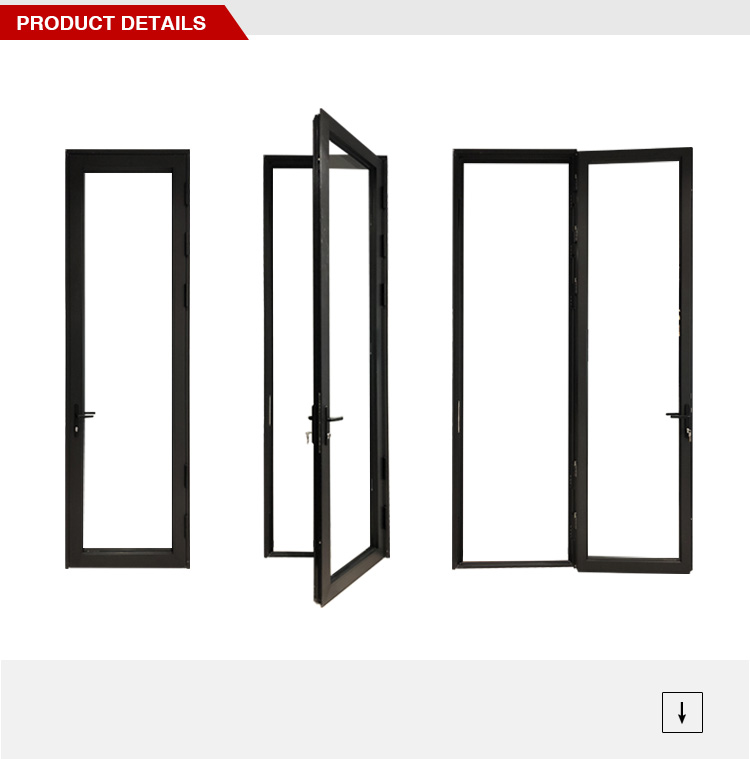
Interior use
An interior aluminum glass swing door can work as a room divider, office door or corridor door where inward-opening layouts and project-specific sizing are appropriate.


Choose an interior glass swing door when the opening mainly divides rooms and the swing arc fits the plan. Choose an exterior glass swing-door system when the opening is part of the building envelope and must be reviewed for glazing, frame, sealing, drainage, energy labels, water exposure, wind exposure and installation quality.
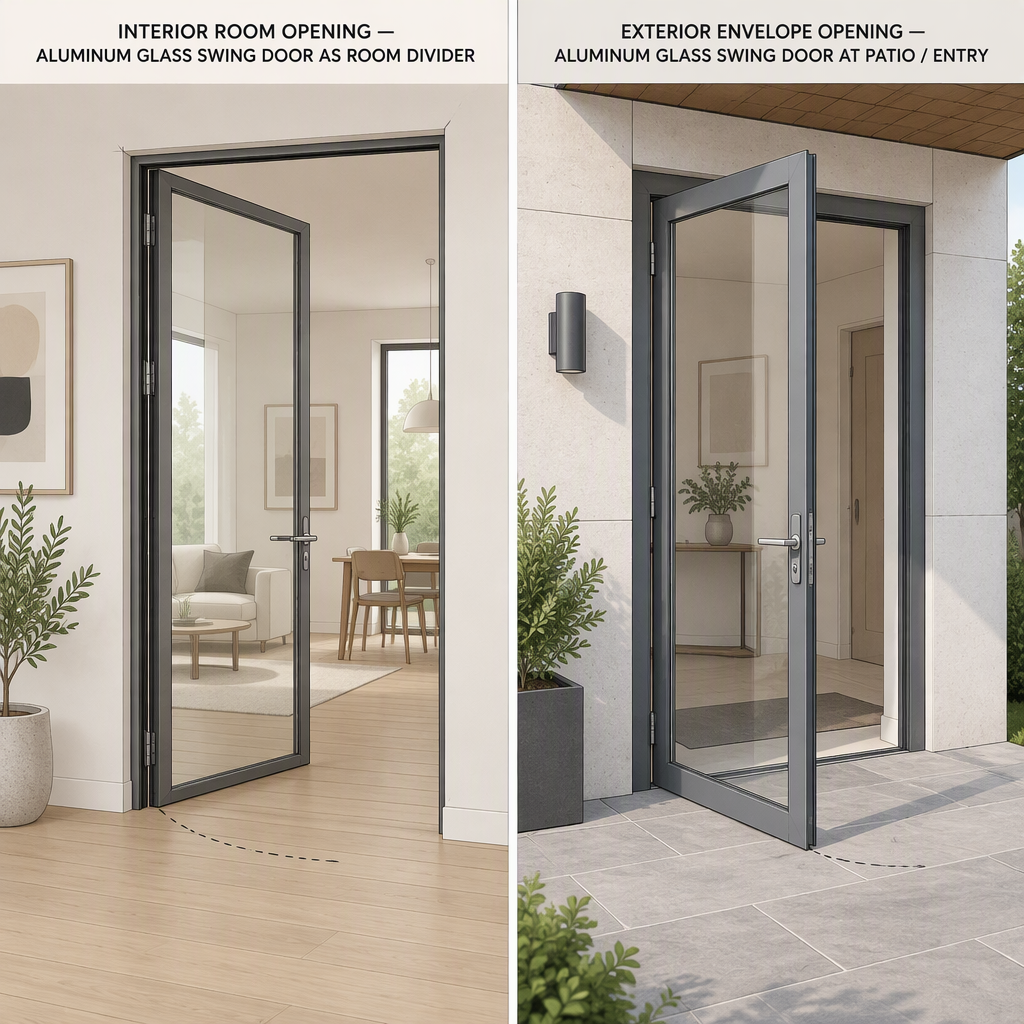
An interior aluminum glass swing door can work as a room divider, office door or corridor door where inward-opening layouts and project-specific sizing are appropriate.
An exterior swing door is still a hinged door, but it must be planned for the outside conditions around the entry, patio or balcony opening.
The main difference is not that one has glass and the other does not; it is the job of the opening. Interior systems focus on room separation, light and circulation, while exterior systems must be treated as part of the thermal and weather-control assembly.
A glass swing door is a hinged door, so it needs a clear arc to open and close. That makes it different from a sliding door, which moves along a track, and from a folding door, which stacks panels. For a swing door, the buyer should start with how people will move through the opening, then decide whether the door is protecting a conditioned space from outdoor exposure.
| Decision point | Interior glass swing door | Exterior glass swing-door system |
|---|---|---|
| Primary role | Room division with light transfer and inward-opening layout options. | Entry, patio or balcony access where the hinged opening also faces outdoor conditions. |
| Frame and glass priority | Fit, appearance, safety glass selection and hardware compatibility usually lead the review. | Glazing, thermal break, sealing, drainage and installation quality become larger system decisions. |
| Best early question | Will the door arc conflict with furniture, cabinets or circulation? | Will the complete door assembly meet the project’s energy, water, air and wind expectations? |
A glass swing door needs enough open floor area for the door arc, handle reach and safe user movement. For U.S. accessible routes, approach direction and whether the door swings toward or away from the user affect the required maneuvering clearance.
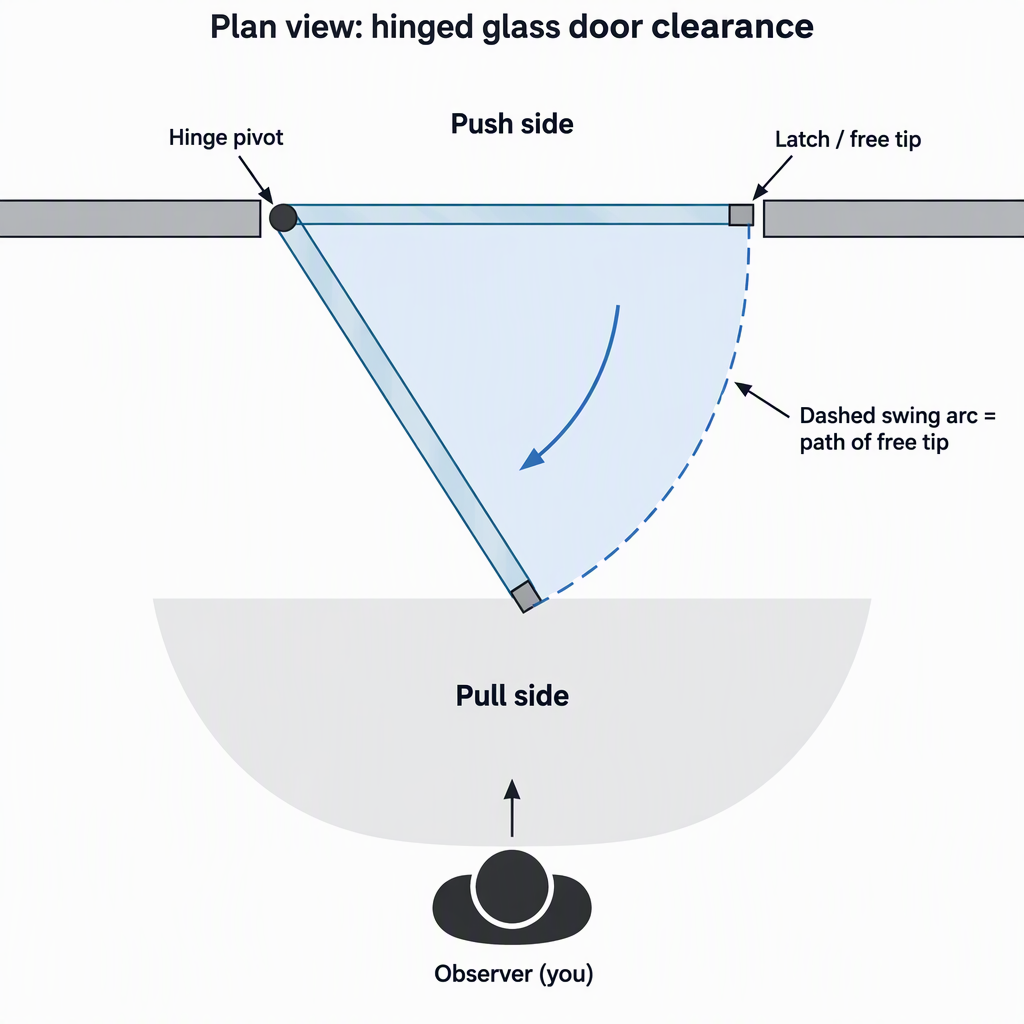
On U.S. projects that include accessible routes, review the U.S. Access Board guide to entrances, doors and gates before fixing the opening direction, because door swing and approach direction change the clearance check.
| If the opening is... | Check this before specifying a hinged glass door | Typical decision |
|---|---|---|
| Between compact rooms | Confirm the full swing arc will not hit furniture, partitions or fixtures. | Use the direction that keeps the arc out of the main walking path. |
| On an accessible route in the U.S. | Check clear width, maneuvering clearance, approach side and latch-side conditions. | Coordinate with the project accessibility reviewer before ordering. |
| At an exterior entry | Remember that exterior hinged-door opening force is affected by exterior conditions and closure needs. | Do not assume an interior hardware feel will match an exterior entry. |
Glazing should be selected by location, privacy need, glass options available for the model and the opening size. For U.S. projects, glazing used in doors is also a safety-compliance item to verify against the applicable architectural glazing rules.
For an interior door, transparent glass can keep rooms bright and connected. Frosted, patterned or tinted options may be considered when privacy matters, but availability must be confirmed for the exact product and configuration. For an exterior glass swing door, the glass choice also affects heat gain, visibility, comfort and the overall envelope review.
| Goal | Interior consideration | Exterior consideration |
|---|---|---|
| Daylight | Double tempered glass is listed on DERCHI’s WP-103 interior swing-door page. | Exterior glazing should be reviewed as part of the complete energy and comfort assembly. |
| Privacy | Ask which glass customization choices are available for the exact swing-door model. | Balance privacy with visible transmittance, solar heat gain and the project’s daylight goals. |
| Safety | Do not treat a glass description alone as a final compliance decision. | Confirm the required safety glazing documentation for the market and building use. |
Energy and weather performance matter most when the glass swing door is part of the exterior envelope. Whole-product comparisons should use independent rating categories such as U-factor, SHGC, visible transmittance and air leakage where applicable.
The NFRC residential certification program describes third-party verification for windows, doors and skylights, including U-factor, SHGC, visible transmittance, air leakage and condensation index.
ENERGY STAR’s residential windows, doors and skylights guidance explains that qualifying doors are evaluated by climate zone and glazing level using U-factor and, where applicable, SHGC requirements.
| Question | Why it matters | Buyer action |
|---|---|---|
| Is the door exterior? | Exterior doors affect heat transfer, air leakage, water tightness, wind resistance and sound insulation. | Request the complete door-system performance information, not only a glass description. |
| Is an energy label required? | ENERGY STAR criteria depend on climate zone and glazing level. | Verify the exact configuration instead of assuming a family-wide label. |
| Is the product independently rated? | NFRC certification is a product-rating framework, not a generic material claim. | Ask for the exact rating record for the ordered configuration. |
Interior and exterior glass swing doors both rely on hinges and hardware, but exterior systems need more attention to sealing, drainage and envelope performance.
| Item | Interior priority | Exterior priority |
|---|---|---|
| Hinges and handles | Match the inward-opening configuration and room layout. | Confirm the opening layout and hardware choices offered for the selected swing-door model. |
| Locks | Privacy or passage function may be enough for many interior rooms. | Entry applications need hardware choices that fit the project’s security and access plan. |
| Seals | Interior sealing may support comfort, sound control and door fit. | Exterior sealing must be reviewed with frame, glazing, drainage and installation quality. |
| Maintenance | Keep the swing path clear and check hardware movement. | Inspect weather-exposed seals, drainage paths and installation joints as part of the exterior assembly. |
Glass swing doors can be used on accessible routes only when the required clear width, maneuvering clearance and door operation conditions are satisfied for the project. Safety glazing requirements should also be verified for door locations before purchase.
Use the Access Board door guidance early on U.S. public or commercial projects. For private homes and non-U.S. markets, confirm the applicable local standard, building code and inspection process.
For glass in door locations, request safety glazing documentation that matches the installed product, glass make-up and market.
DERCHI’s P103 Series Swing Door page is useful for reviewing a swing aluminum door with customization options. DERCHI’s WP-103 Interior Swing Door page is useful for reviewing an interior aluminum glass swing-door example.
| DERCHI page | Useful for | Configuration to confirm |
|---|---|---|
| P103 Series Swing Door | Reviewing customization areas such as glass, hardware, colors, opening sizes and inward, outward, double or mother-and-child opening layouts. | Confirm the glass, hardware, finish, opening size and layout on the supplier's quotation. |
| WP-103 Interior Swing Door | Reviewing a 103 mm frame-depth interior aluminum swing-door system with inward-opening language and single, double and parent-child configurations. | Check the WP-103 frame depth, opening direction and leaf arrangement against your interior opening. |
| DERCHI swing-door category | Comparing interior and exterior hinged-door applications at the category level. | Choose a specific model for your interior or exterior opening, then confirm its options with the supplier. |
| DERCHI energy-efficiency guide | Understanding how insulated glazing, thermal breaks, sealing, drainage and installation quality fit together. | Request the rating label or test report for the exact glazing and frame assembly you intend to order. |
Before ordering, confirm the whole opening: size, swing direction, glass, frame, hardware, sealing, drainage, energy needs, accessibility and installation conditions.
The right glass swing door is the one that fits the opening’s job, not just the preferred look.
Use an interior system when room division, light and swing clearance are the main issues. Use an exterior system when the door must perform as part of the weather and energy envelope. For public, commercial or accessible routes, confirm clearance and operation requirements before ordering.
These quick answers address the most common buyer questions before a glass swing door is specified.
An interior door mainly divides rooms and manages circulation. An exterior door must also be reviewed for frame, glass, sealing, drainage, energy and installation performance.
It needs enough clear floor area for the full swing arc, the handle side and the way people approach the opening.
Choose the direction that protects circulation and avoids conflicts with furniture or fixtures. On accessible U.S. routes, check the approach and maneuvering clearance before deciding.
No. NFRC ratings apply through a product certification framework. ENERGY STAR qualification depends on the product, climate zone and glazing level.
Choose glass that is available for the selected model and fits the size, privacy and appearance goal. For door locations, also verify safety glazing requirements for the project market.
The P103 page helps review swing-door customization options. The WP-103 page helps review an interior aluminum glass swing-door example.
Exterior doors usually need more attention to seals, drainage paths and installation joints because they are part of the weather-exposed envelope.