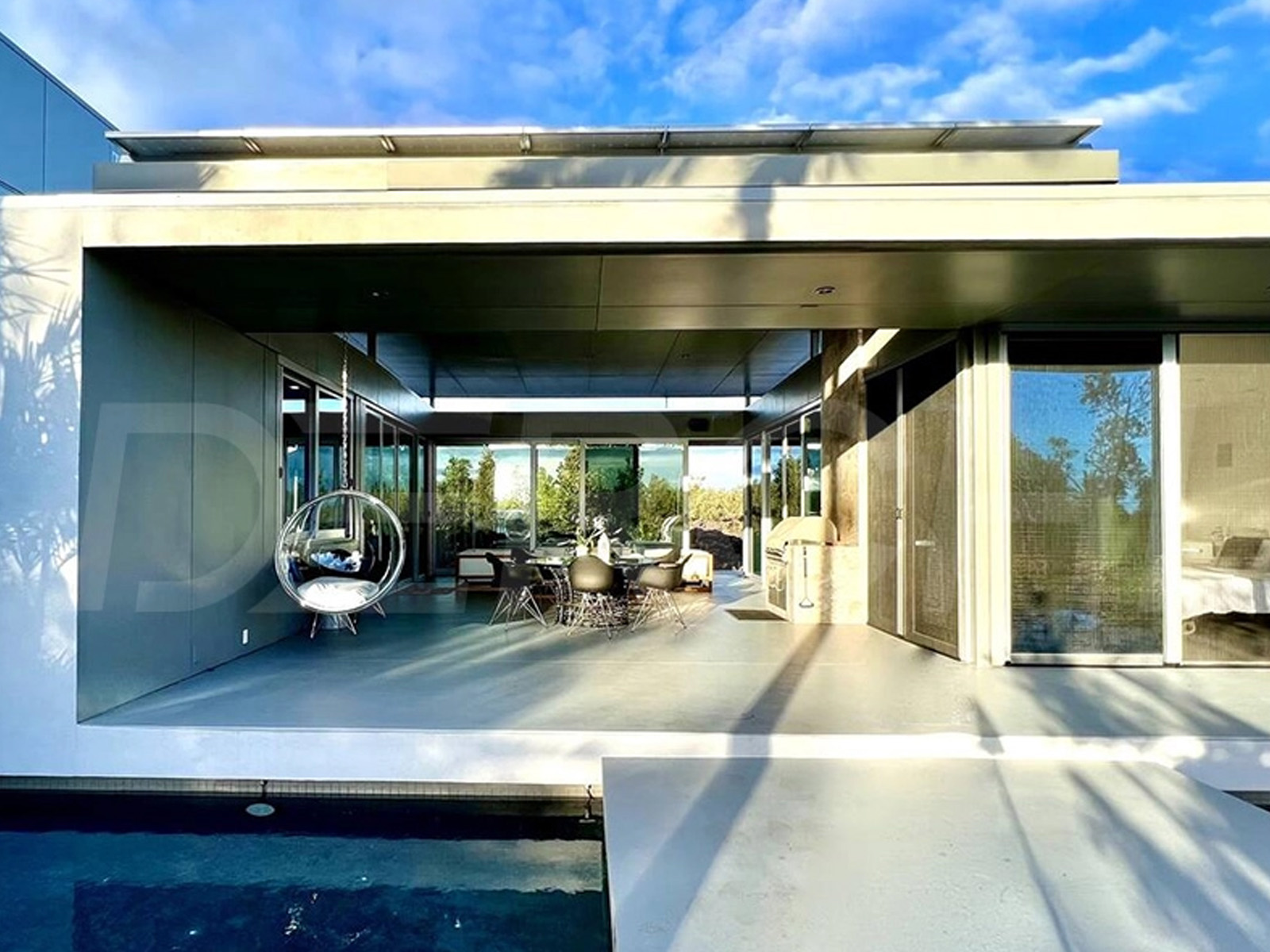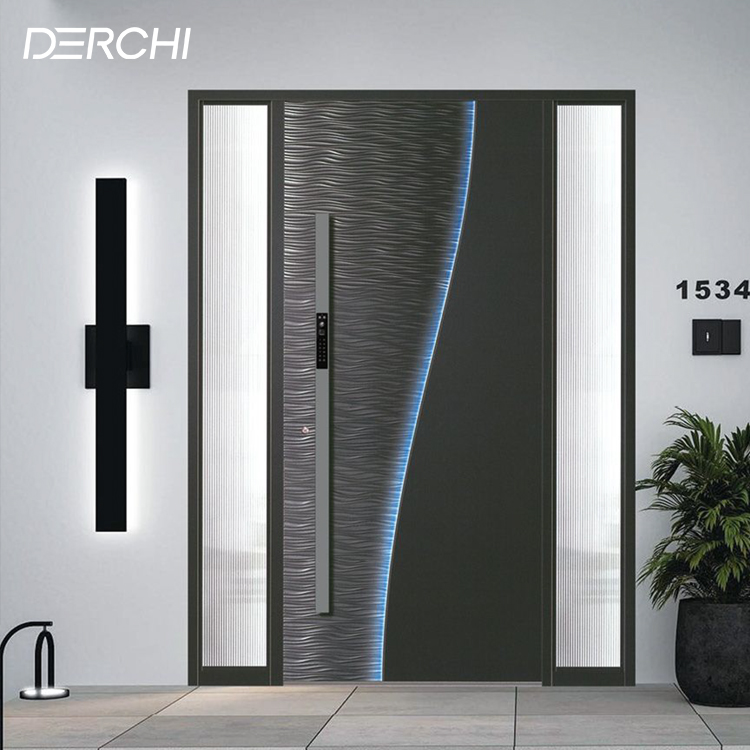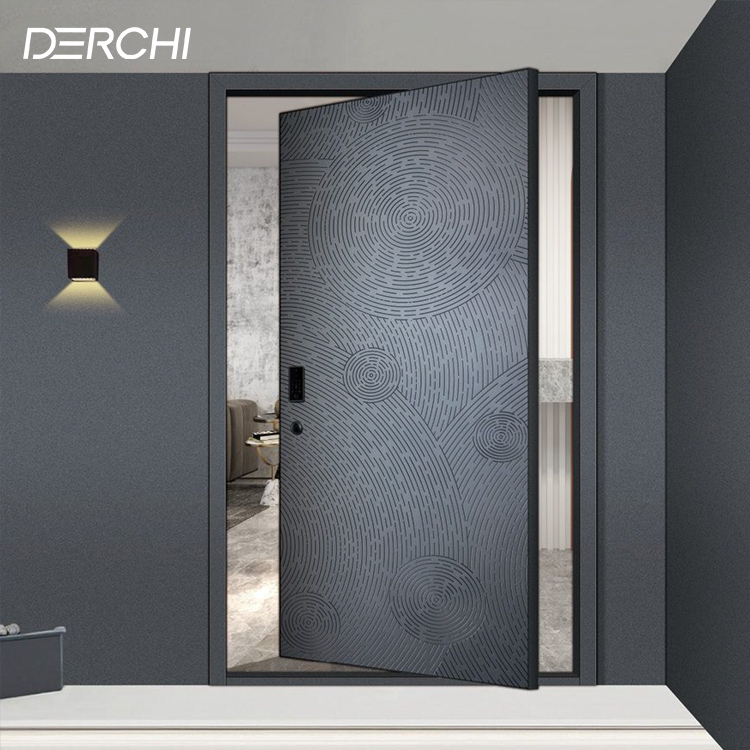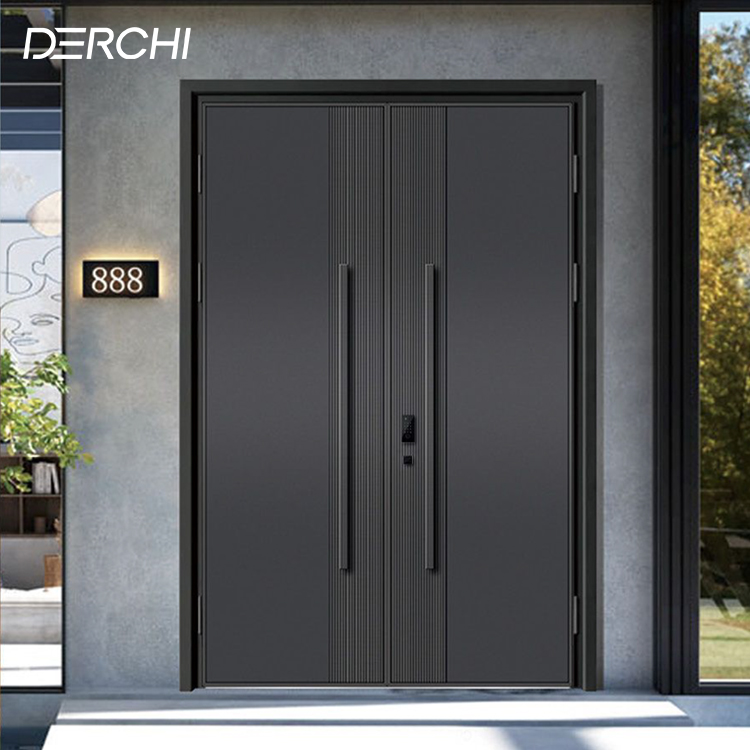


Product Details
The DERCHI W-Z3 is an aluminum pivot door system that combines structural strength with energy-conscious engineering. Unlike conventional hinged entry doors, this model uses a pivot mechanism concealed within the top and bottom of the door panel, which allows it to support the weight of heavy double tempered glass without placing stress on a side-mounted frame. The door leaf profile measures 3.0mm in thickness, while the frame profile is 2.5mm, creating a rigid assembly that resists sagging when specified in larger dimensions. This distinction between leaf and frame thickness is important for structural calculations — buyers should confirm the exact profile dimensions against their engineering requirements before placing an order.
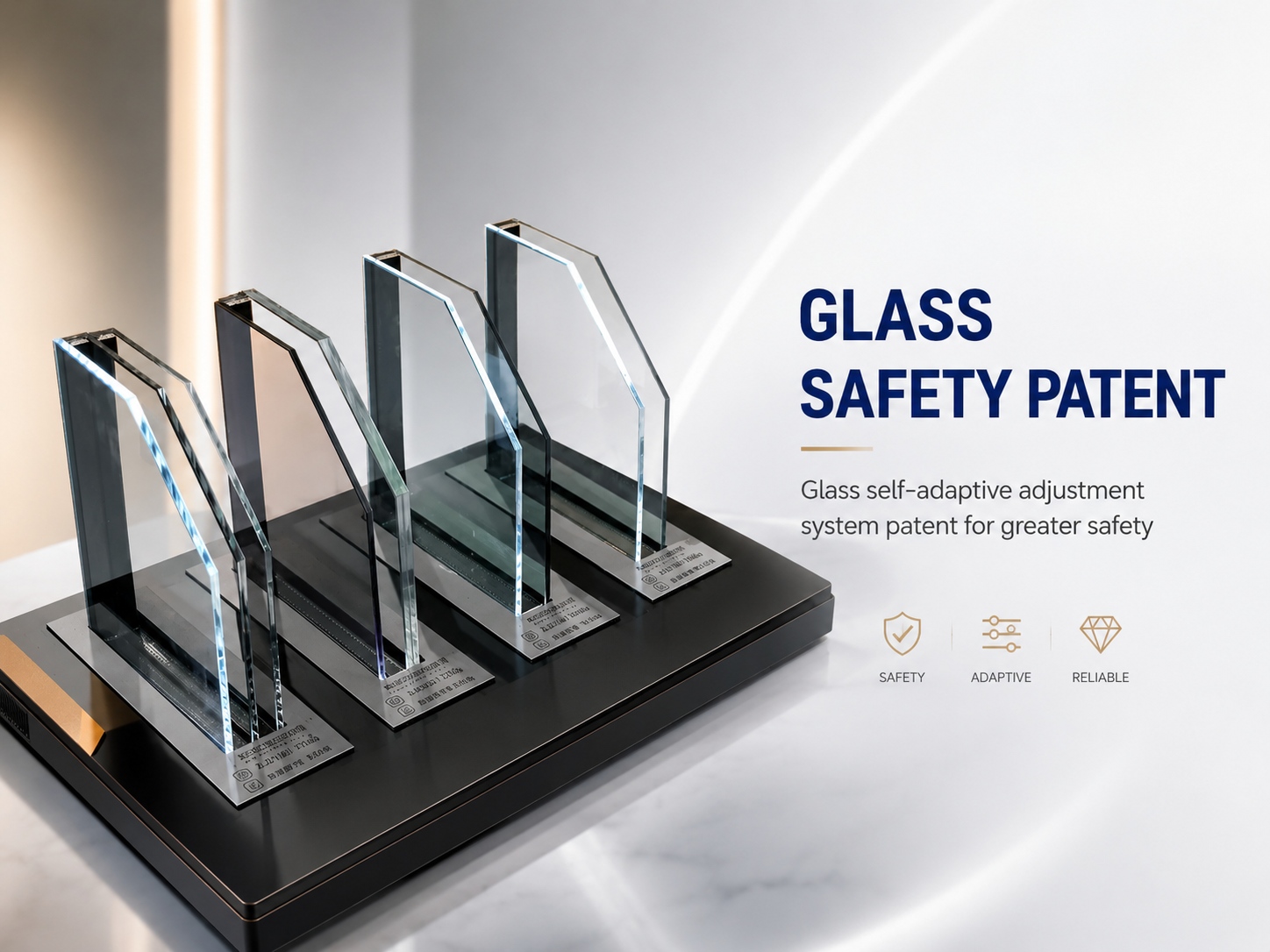
The glass configuration consists of 8mm tempered glass on both the exterior and interior panes, separated by a 21mm argon-filled airspace. Argon gas fills the gap between the panes to reduce convective heat transfer, contributing to the door's U-Factor of 0.38 and SHGC of 0.22. PVDF-coated black aluminum spacers separate the glass panes, offering corrosion resistance and a visually consistent edge finish that aligns with contemporary architectural preferences. For projects requiring specific solar control or privacy performance, buyers should discuss additional glass coating or tinting options with the supplier during the specification phase.
Frame construction uses pin-injected glue technology at the 45-degree corner joints rather than mechanical screws. Sealant fills these joints to create a continuous barrier against water infiltration and air leakage. Combined with EPDM rubber sealing strips that form a multi-layer barrier around the door panel, this construction method supports the door's air tightness rating of 1.2 m³/(m·h) and water tightness rating of 700 Pa. These are measurable performance attributes that architects and specifiers can use directly in project documentation, though buyers should request test report numbers from the supplier to verify compliance with local building codes.
Product Features
Impact-Resistant Double Tempered Glass: The 8mm+21A+8mm double tempered glass configuration provides enhanced resistance to wind pressure and impact compared to standard annealed glass. The 21mm argon-filled airspace between the panes acts as an insulating layer, reducing both heat transfer and sound transmission. PVDF black aluminum spacers maintain the gap between panes while resisting corrosion, which is particularly relevant in coastal or high-humidity environments. Buyers evaluating this door for projects in storm-prone regions should confirm whether additional impact-rated glass configurations are available to meet local building code requirements.
Heavy-Duty Aluminum Profile with Thermal Break: The door leaf profile thickness of 3.0mm provides structural rigidity for large door panels, while the 2.5mm frame profile balances strength with efficient material use. A thermal break structure within the profile interrupts the aluminum's natural conductivity, creating a barrier that significantly reduces heat transfer between the exterior and interior surfaces. This directly contributes to the door's U-Factor of 0.38. Architects working on energy-certified projects should verify that this thermal performance meets the specific rating requirements of their target certification standard.
Pin-Injected Glue Corner Joints: Rather than relying on mechanical screws that can loosen over time or create thermal bridges, the W-Z3 frame uses pin-injected glue technology at the 45-degree mitered corners. Sealant fills the joints to create a continuous, rigid connection that resists water penetration and air leakage. This construction method produces a cleaner visual appearance at the frame corners, which matters for architectural applications where joint quality is visible. Buyers should confirm that the adhesive and sealant materials are compatible with their project's environmental conditions and maintenance expectations.
Concealed Pivot Hardware System: The pivot mechanism is hidden within the top and bottom of the door panel, eliminating visible hinges and creating an unbroken line along the door edge. This concealed design serves both aesthetic and functional purposes: it delivers a minimalist appearance preferred in contemporary architecture, and it allows the door to rotate smoothly on a central axis. The system supports both center and off-center pivot installation, giving designers flexibility in how the door sweeps within a space. Buyers should confirm the maximum weight capacity of the pivot hardware relative to their specified door dimensions and glass configuration.
Multi-Layer EPDM Sealing System: EPDM rubber strips form multiple sealing barriers around the door panel, blocking air drafts, water ingress, and noise transmission. EPDM is chosen for its durability under UV exposure, temperature extremes, and compression cycles, making it suitable for exterior door applications where seal longevity directly affects performance over time. The multi-layer arrangement ensures that even if one seal experiences minor compression set, secondary barriers maintain the door's air tightness and water tightness ratings. Buyers with specific chemical exposure concerns should verify EPDM compatibility with their project environment.
Flexible Pivot Installation Options: The W-Z3 system supports both center-pivot and off-center pivot configurations, which directly impacts how the door interacts with the surrounding space. A center pivot creates a symmetrical opening where the door divides equally on both sides, suited for grand entryways where visual balance is important. An off-center pivot positions the rotation point closer to one edge, allowing a wider clear opening on one side and making the door easier to maneuver in tighter spaces. This flexibility allows the same door system to serve different floor plans without hardware changes. Buyers should discuss their preferred pivot location and clear opening requirements during the specification process.
Customizable Styles
Glass Options: The standard glass configuration for the W-Z3 is 8mm+21A+8mm double tempered glass with argon fill and PVDF black aluminum spacers. This setup balances thermal insulation, sound reduction, and impact resistance for most commercial and residential applications. However, project requirements vary — some buildings may need laminated glass for additional security, low-E coatings for enhanced solar control, or tinted glass for privacy and glare reduction. Buyers should discuss alternative glass compositions with the supplier, as availability may depend on the target market's building code requirements and the supplier's production capabilities for custom configurations.
Frame Options: The W-Z3 uses an aluminum frame with a thermal break structure as its standard configuration. The thermal break is essential for projects in climates with significant temperature differences between interior and exterior environments, as it prevents condensation and energy loss through the frame. For buyers in milder climate zones who may not require thermal break performance, alternative frame configurations might be worth discussing with the supplier to optimize cost. The frame width is 129mm, which buyers should factor into their wall depth and reveal calculations when preparing project documentation.
Size Options: While the W-Z3 is engineered to accommodate large door dimensions thanks to its 3.0mm door leaf profile and concealed pivot hardware, specific maximum size limits are not listed in the standard product data. Architects and builders working with oversized openings should contact the supplier directly to confirm the maximum width and height available for this system, as well as any structural reinforcement requirements at larger scales. Providing the supplier with project drawings and opening dimensions during the inquiry stage will facilitate accurate quoting and engineering review.
Color/Finish Options: Specific color and surface treatment options for the W-Z3 aluminum frame are not included in the current product specifications. Aluminum doors typically accept powder coating, anodizing, or PVDF finishes in a range of colors, but the available options for this model should be confirmed with the supplier. Buyers should specify their project's color requirements — including RAL or Pantone references if available — early in the specification process to ensure the supplier can match the desired aesthetic and that the chosen finish meets the project's durability and weather resistance expectations.
Track or Opening Configuration: The W-Z3 operates as a horizontally rotating pivot door, and the system accommodates both center-pivot and off-center-pivot installation. There is no bottom floor track, which eliminates a common trip hazard and simplifies accessibility compliance — an important consideration for commercial projects subject to accessibility regulations. The absence of a floor track also means the threshold detail must be carefully coordinated with the floor finish on site. Buyers should discuss threshold options, weatherstripping details, and any sub-floor requirements with the supplier to ensure proper integration with the building's entrance design.
Project Customization: For large-scale commercial or residential projects, the W-Z3 can be discussed for customization in terms of glass specification, hardware selection, finish options, and dimensional adjustments. B2B buyers such as architects, contractors, and distributors should provide project-specific requirements including opening sizes, performance targets, aesthetic preferences, and compliance needs during the initial inquiry. The supplier's R&D team may be able to develop tailored configurations based on project demands, though customization scope, lead times, and minimum order quantities should be confirmed on a case-by-case basis.
Hardware Accessories
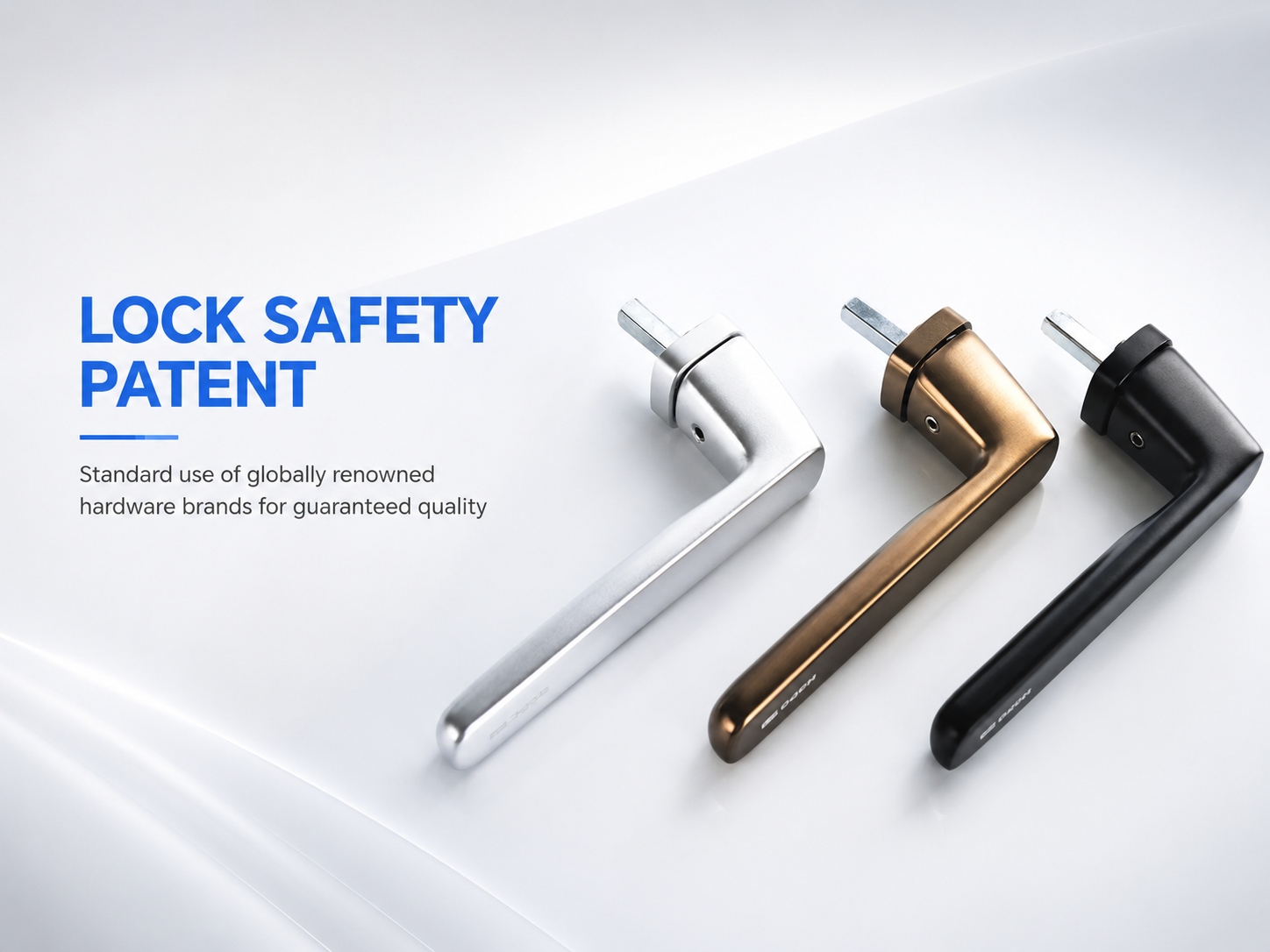
Handle: The W-Z3 is equipped with a Guangqi handle featuring an integrated armrest design. This configuration combines the grip function with a horizontal armrest bar, allowing users to pull the large pivot door open comfortably without needing to grip a traditional lever handle. The integrated design also contributes to the door's clean visual profile by reducing the number of protruding elements. For projects with specific hardware brand requirements or accessibility standards that mandate certain handle types and operating forces, buyers should confirm whether alternative handle options are available and whether the Guangqi handle meets the applicable accessibility criteria for their target market.
Pivot Hardware: The pivot mechanism uses customized central axis accessories concealed within the top and bottom of the door panel. This concealed design eliminates visible hinge hardware and allows the door to rotate smoothly on its vertical axis. The pivot point location can be adjusted between center and off-center positions to suit different spatial requirements. Since the pivot hardware bears the entire weight of the door panel and glass, its load capacity is a critical specification for structural engineers. Buyers should request the maximum weight capacity rating from the supplier and verify it against their specified door size and glass configuration before finalizing the order.
Sealing Components: EPDM rubber strips provide the primary sealing function around the door panel perimeter. EPDM offers strong resistance to UV degradation, ozone exposure, and temperature cycling, which makes it a reliable choice for exterior door applications where the seal must perform consistently across seasons. The multi-layer arrangement creates redundant barriers against air and water infiltration. Buyers should verify that the EPDM compound used meets any specific environmental or health regulations applicable in their project's jurisdiction, and confirm the expected service life of the seals under local climate conditions.
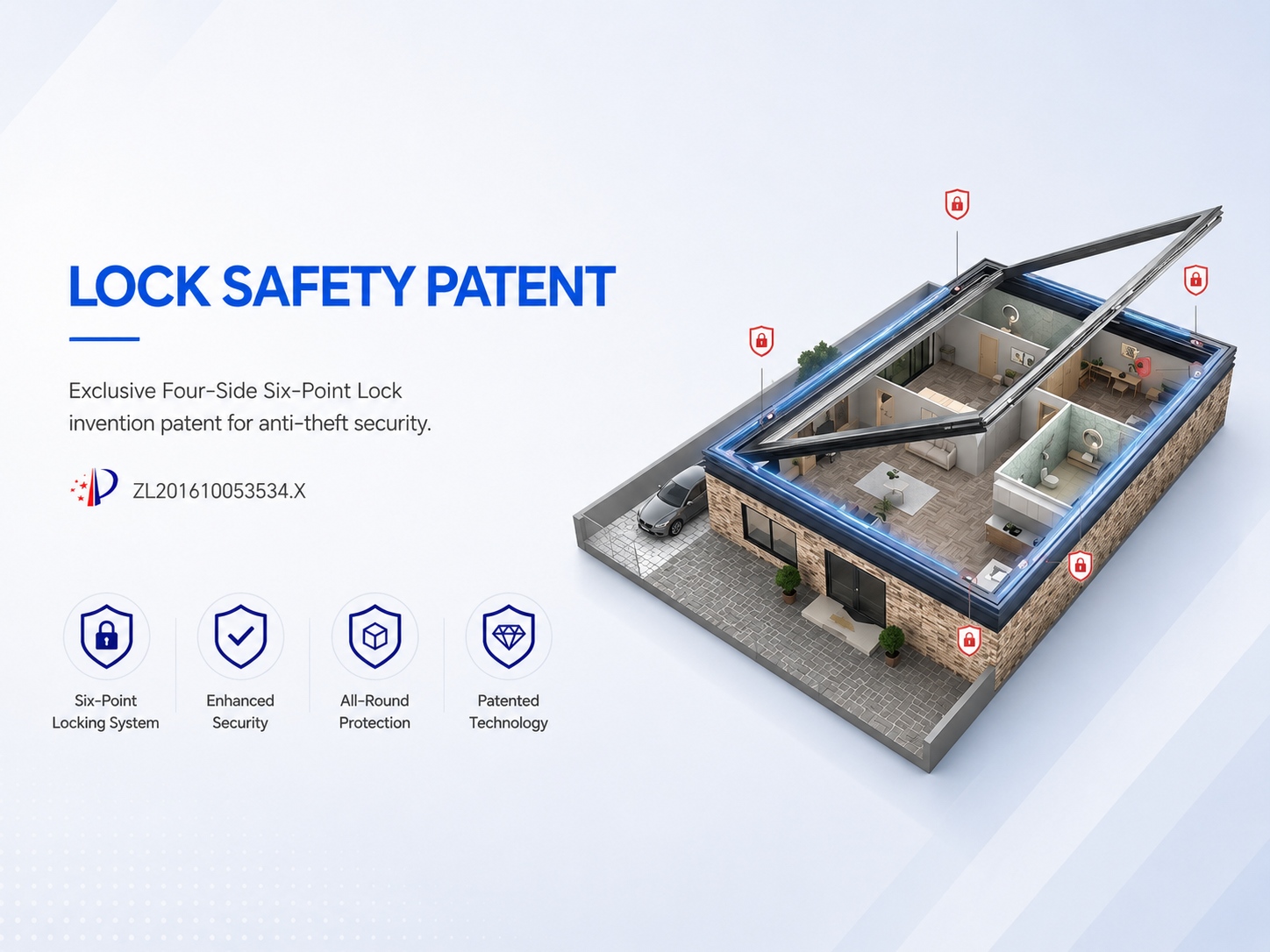
Lock Mechanism: Lock specifications for the W-Z3 are not detailed in the current product data. Pivot doors typically use multi-point locking systems or specialized pivot-integrated locks that engage at multiple points along the door edge to secure the panel against the frame. Given the size and weight of glass pivot doors, the lock mechanism must withstand significant prying forces. Buyers should request detailed lock specifications from the supplier, including the lock type, number of locking points, cylinder options, and any relevant security ratings or certifications that apply to the target market.
Frame Connection Hardware: The frame corners are assembled using pin-injected glue technology rather than screws, with sealant filling the 45-degree mitered joints. This method creates a rigid, thermally unbroken corner connection that resists water penetration and air leakage more effectively than mechanically fastened joints. The adhesive and sealant materials are integral to the frame's structural and weatherproofing performance, so buyers should confirm that these materials are compatible with the environmental conditions at the installation site, including temperature extremes, humidity levels, and any chemical exposures that could affect adhesive bond strength over time.
Threshold and Weathering Components: Threshold details for the W-Z3 are not specified in the current product documentation. The threshold plays a critical role in water management at the door base, accessibility compliance, and thermal continuity between the floor and door assembly. Buyers should discuss threshold options with the supplier, including the profile shape, height above finished floor, drainage provisions, and thermal break integration. For commercial projects subject to accessibility codes, the threshold height and profile must typically not exceed specified limits, which should be confirmed against local regulations before ordering.
Basic Parameters
Performance Item | Available Information | Buyer Notes |
|---|---|---|
Thermal Insulation | U-Factor: 0.38; SHGC: 0.22; Thermal break structure in aluminum profile | U-Factor and SHGC values support energy modeling and code compliance. Buyers should request test report numbers to verify these values against their project's certification requirements and local energy codes. |
Wind Pressure Resistance | 5 kPa | This rating indicates the door can withstand significant wind loads. Buyers in hurricane or cyclone zones should confirm whether this rating meets local building code wind load requirements for their specific building height and exposure category. |
Water Tightness | 700 Pa | A 700 Pa rating indicates strong resistance to water penetration under pressure. Buyers should verify this rating against the water penetration resistance required by their local building code, particularly for exposed or high-rise installations. |
Air Tightness | 1.2 m³/(m·h) | This value quantifies air leakage through the door assembly. Buyers should confirm the testing standard used and whether this rating meets the air tightness class required by their project specifications and local energy code. |
Sound Insulation | 35 dB | A 35 dB rating provides meaningful noise reduction for most urban environments. Buyers with specific acoustic requirements — such as proximity to airports, railways, or highways — should confirm whether this rating meets the project's acoustic design criteria. |
Product Specifications
Item | Details |
|---|---|
Product Name | DERCHI W-Z3 Pivot Door |
Product Type | Aluminum Pivot Door with Double Tempered Glass |
Material | Aluminum with thermal break structure |
Glass Type | Double Tempered Glass with argon gas fill |
Glass Thickness | 8mm + 21A + 8mm (21mm argon-filled airspace) |
Frame Option | Aluminum, 129mm frame width, 2.5mm profile thickness, thermal break |
Hardware | Customized central axis pivot accessories (concealed), Guangqi handle with integrated armrest |
Opening Style | Horizontal pivot rotation (center or off-center installation) |
Size Range | Confirm with supplier before production — maximum dimensions subject to engineering review |
Application | Commercial (hotels, retail, offices) and residential (villas, apartments, private homes) |
Customization | Glass configuration, pivot location, finish options — available upon request, subject to confirmation |
Notes | Performance parameters (U-Factor, wind pressure, water tightness, air tightness, sound insulation) are documented. Test report numbers should be requested from supplier for project compliance verification. |
Advantages
Brand Strength: DERCHI reports 15 years of manufacturing experience in the aluminum door industry, which provides institutional knowledge in production processes, material selection, and quality control. The brand holds 100 national patents covering invention and design, indicating sustained investment in product development. Over 50 professional honors and awards have been received, which may serve as reference points for buyers evaluating supplier credibility. However, brand-level achievements should be distinguished from product-specific certifications — buyers should verify which patents and awards directly relate to the W-Z3 model and its technologies when making procurement decisions.
Factory Capability: DERCHI operates a 70,000 ㎡ factory and a 4,000 ㎡ showroom, which supports both large-scale production and professional product display for visiting buyers. The factory's physical scale suggests capacity for handling substantial order volumes, while the showroom allows distributors and contractors to inspect finished products before committing to purchases. Buyers planning facility visits should coordinate with the supplier to schedule inspections during production runs relevant to their order specifications, so they can observe the manufacturing processes and quality checks firsthand.
Production Capacity: The company produces approximately 600,000 ㎡ of doors annually across its product lines. This volume indicates the factory operates at a scale capable of serving large commercial projects and distributor networks. However, production capacity is shared across all product models, so buyers with time-sensitive orders should confirm available production slots and lead times for the W-Z3 specifically, particularly during peak construction seasons when factory scheduling may be constrained by multiple concurrent orders.
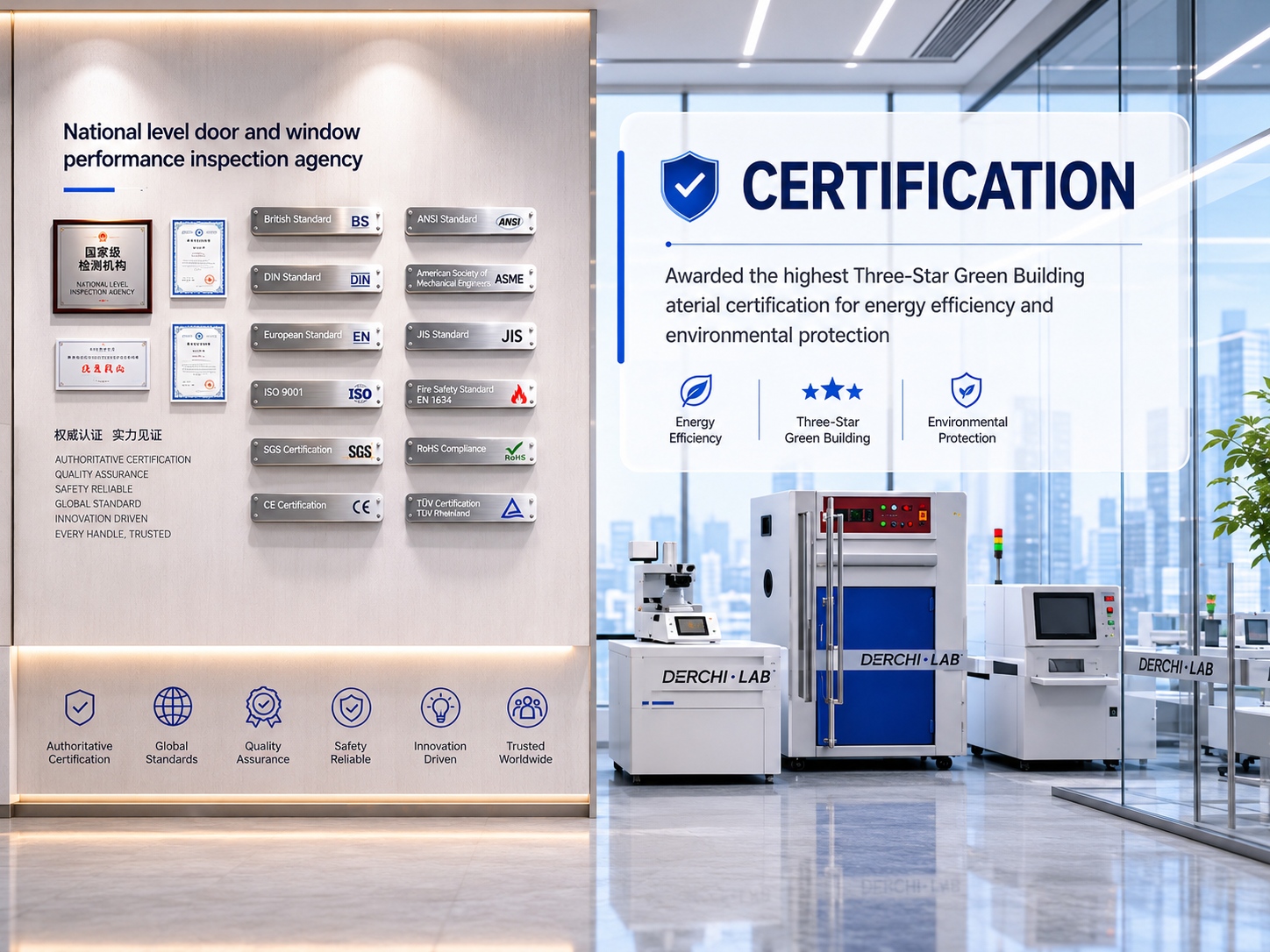
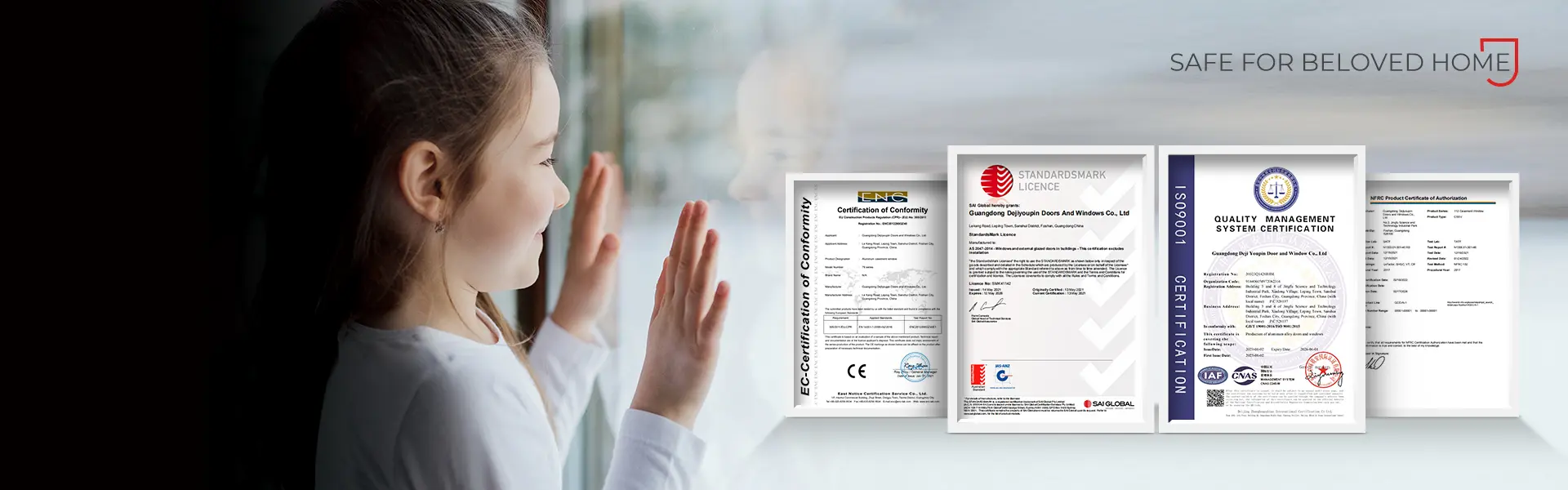
Certifications: Product materials reference NFRC, CE, AS2047, CSA, and ISO9001 standards, though it is not confirmed whether the W-Z3 model specifically holds certifications for all of these standards. Certification applicability depends on the product configuration, glass type, and target market. Buyers should confirm whether the required certification documents apply to the selected product configuration and target market, and request certificate numbers and test reports for independent verification. Different markets have different compliance pathways, and a certification valid in one jurisdiction may not automatically transfer to another.
Service Capability: DERCHI serves customers in approximately 100 countries through a network of 700 distributors, suggesting established logistics channels and after-sales support infrastructure in multiple regions. This global presence may reduce lead times and simplify import processes for buyers in markets where local distributors operate. Buyers should verify whether a distributor operates in their specific region and what services that distributor provides — including local installation support, warranty service, and spare parts availability — as distributor capabilities can vary significantly between markets.
Customization Capability: The W-Z3 platform supports customization in glass configuration, pivot installation method, and potentially in finish and hardware selections. The company's team of 20 R&D experts may be available to develop project-specific configurations based on architectural requirements. Customization scope, engineering feasibility, and production lead times should be confirmed with the supplier for each project. Buyers should provide detailed specifications early in the process, including performance requirements, aesthetic references, and compliance needs, to allow the R&D team sufficient time to evaluate and propose solutions.
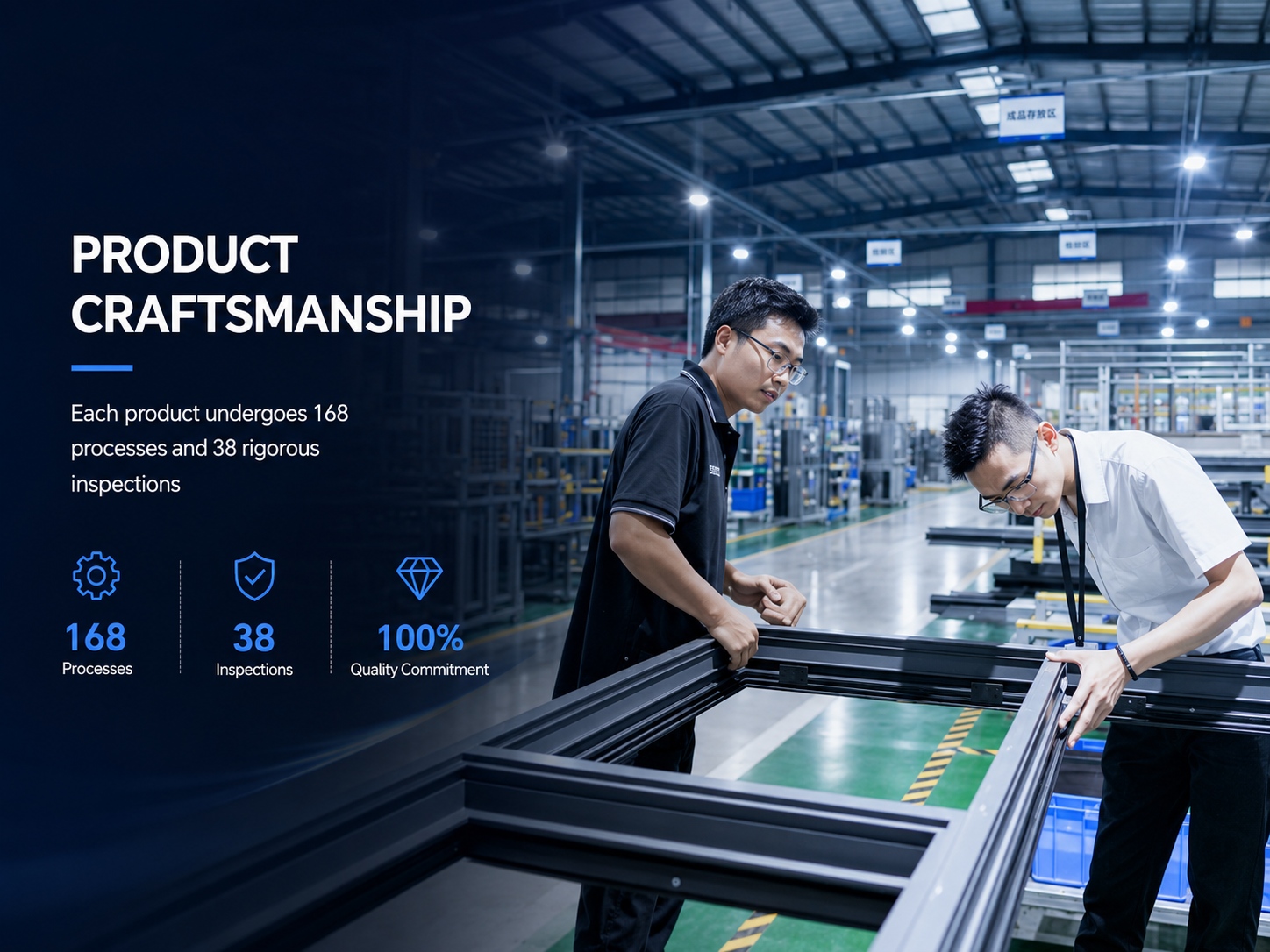
B2B Support: Every W-Z3 pivot door undergoes a full inspection before leaving the facility, which provides buyers with a baseline quality assurance checkpoint. For B2B projects, this inspection process can be discussed in terms of specific quality criteria, inspection documentation, and third-party witness options. Buyers managing large projects or government contracts should inquire about inspection protocols, documentation formats, and whether the supplier can accommodate project-specific quality plan requirements or independent inspection agency oversight during production and before shipment.
Application Scenarios
Apartment: In multi-unit residential buildings, the W-Z3 exterior front doors glass can serve as a striking main entrance that allows natural light into shared lobbies while maintaining thermal performance and acoustic separation from street noise. The 35 dB sound insulation rating helps create a quieter interior environment for residents, while the thermal break structure and U-Factor of 0.38 support the building's overall energy performance. Property developers should confirm that the door's fire rating, if required by local codes for apartment building entrances, meets the applicable standard, as fire performance is not specified in the current product data.
Home Office: For residential properties with dedicated home office spaces near the entrance, the W-Z3 provides both aesthetic appeal and functional separation. The double tempered argon-filled glass allows daylight to penetrate deep into the interior, reducing reliance on artificial lighting during working hours, while the sound insulation limits disruption from outdoor activity. The pivot mechanism's smooth operation and lack of a floor track create a professional, uncluttered threshold. Buyers should discuss glass privacy options — such as frosted or switchable glass — with the supplier if visual privacy from the exterior is a concern for the home office layout.
Hotel: Hotels require entrance doors that manage heavy foot traffic, create a strong first impression, and maintain interior climate control. The W-Z3's concealed pivot hardware and integrated armrest handle support easy manual operation even for large panels, which is important for guests carrying luggage. The 700 Pa water tightness and 5 kPa wind pressure resistance ensure the door performs reliably in exposed hotel entrances. Hospitality project buyers should verify that the door's hardware and operation comply with accessibility regulations, and discuss finish customization to match the hotel's interior design language.
Office Building: Commercial office buildings demand entrance systems that balance security, energy efficiency, and visual impact. The W-Z3's thermal break structure and low SHGC of 0.22 help reduce solar heat gain through the entrance, which lowers cooling loads in lobby areas — a significant operational cost factor in large buildings. The pin-injected glue corner joints and EPDM sealing system maintain air and water tightness over years of daily use. Facility managers should confirm lock and access control integration options with the supplier, as office buildings typically require electronic access systems that must interface with the door hardware.
Outdoor: For outdoor or exterior-related projects, buyers should confirm weather resistance, water tightness, wind pressure requirements, surface finish, and installation conditions before ordering. The W-Z3's 5 kPa wind pressure resistance and 700 Pa water tightness provide a strong baseline for exterior exposure, but projects in extreme climate zones may require additional performance verification. The PVDF-coated aluminum spacers resist corrosion, which is relevant for coastal installations, and the thermal break prevents condensation on interior surfaces in cold weather. Buyers should discuss surface finish durability with the supplier, particularly for installations facing direct sun, salt spray, or industrial pollution exposure.
Residential Building: In residential building applications, the W-Z3 serves as a full-glass front door that maximizes natural light at the building entry while maintaining security and energy performance. The double tempered glass provides impact resistance for occupant safety, and the argon fill with thermal break structure helps maintain comfortable interior temperatures year-round. The absence of a floor track simplifies threshold transitions for residents of all ages and mobility levels. Developers should confirm that the door system's security features — including lock type and multi-point engagement — meet the residential security standards applicable in the project's jurisdiction.
Exterior: As an exterior door, the W-Z3 must perform against wind-driven rain, temperature extremes, and UV exposure continuously. The documented performance parameters — 700 Pa water tightness, 5 kPa wind resistance, and U-Factor of 0.38 — provide quantifiable benchmarks for these demands. The EPDM sealing system resists UV degradation, and the PVDF spacer coating prevents corrosion at the glass edge. For exterior installations in regions with specific building code requirements for wind load, water penetration, or energy performance, buyers should request test reports referenced to the applicable testing standards to confirm compliance before ordering.
Villa: Luxury villa projects often feature the front door as a focal architectural element, where the W-Z3's full-glass aesthetic and concealed pivot mechanism create a clean, contemporary entrance statement. The flexibility of center or off-center pivot installation allows architects to position the door rotation point to maximize the visual drama of the opening sweep while maintaining practical clearances. The thermal break and argon-filled glass ensure that the large glass area does not compromise interior comfort. Buyers should discuss custom finish options, oversized dimensions, and any privacy glass alternatives with the supplier to align the door specification with the villa's design intent.
Request a Quote
To receive an accurate quotation for the DERCHI W-Z3 exterior front doors glass, please provide the following details so our team can match the specification to your project requirements:
Product title and model (W-Z3 Pivot Door) and the required quantity
Opening dimensions: exact width and height for each door unit
Glass requirements: standard 8mm+21A+8mm double tempered argon-filled glass, or alternative configuration if needed
Hardware requirements: pivot location preference (center or off-center), handle and lock specifications
Material or configuration preferences: frame finish, color, any surface treatment requirements
Target market and destination country or port for logistics planning
Certification or compliance document requirements for your project jurisdiction
Project drawings or architectural specifications, if available
Submit your inquiry with these details, and our team will prepare a specification-aligned quotation covering product configuration, production timeline, and delivery logistics.
What to Confirm Before Ordering
Maximum Size Limits: Confirm the maximum width and height available for the W-Z3 system with the supplier, as this information is not listed in standard product data and is critical for architects and builders working with oversized openings.
Color and Finish Options: Available surface treatments and color selections are not specified in the current documentation. Buyers should request a finish sample or color chart from the supplier to match project aesthetic requirements.
Pivot Hardware Weight Capacity: The maximum load rating of the concealed pivot hardware is not provided. Engineers should confirm this value against the calculated weight of the specified door dimensions and glass configuration.
Lock Specifications: Lock type, number of locking points, and cylinder options are not detailed. Buyers should request lock specifications and confirm compatibility with any electronic access control systems required for the project.
Test Report Numbers: Performance parameters are documented, but test report numbers and testing laboratory details are not provided. Buyers requiring compliance verification should request these documents.
Warranty Terms: Warranty coverage for the door, hardware, and sealing components is not specified. Buyers should confirm warranty duration, coverage scope, and claim procedures before placing an order.
Certification Applicability: Confirm whether the required certification documents (NFRC, CE, AS2047, CSA, ISO9001) apply to the selected product configuration and target market.
Installation and Maintenance Notes
The W-Z3 pivot door requires professional installation due to the weight of the double tempered glass panels and the precision needed to align the concealed pivot mechanism. The pivot hardware must be accurately positioned at both the top and bottom anchor points to ensure smooth rotation and proper sealing engagement. The absence of a floor track simplifies threshold installation but requires careful coordination between the door frame, threshold, and finished floor levels to maintain water management and accessibility compliance. Installers should verify that the structural opening provides adequate support for the pivot hardware loads at the head and floor connections. Routine maintenance includes cleaning glass surfaces with non-abrasive cleaners, periodic inspection of EPDM seals for compression set or damage, and verification that the pivot mechanism operates without resistance or unusual noise. Specific maintenance intervals and any recommended lubrication procedures should be confirmed with the supplier. Warranty terms covering installation-related issues should be discussed before purchase.
Compliance and Documentation Notes
Product document