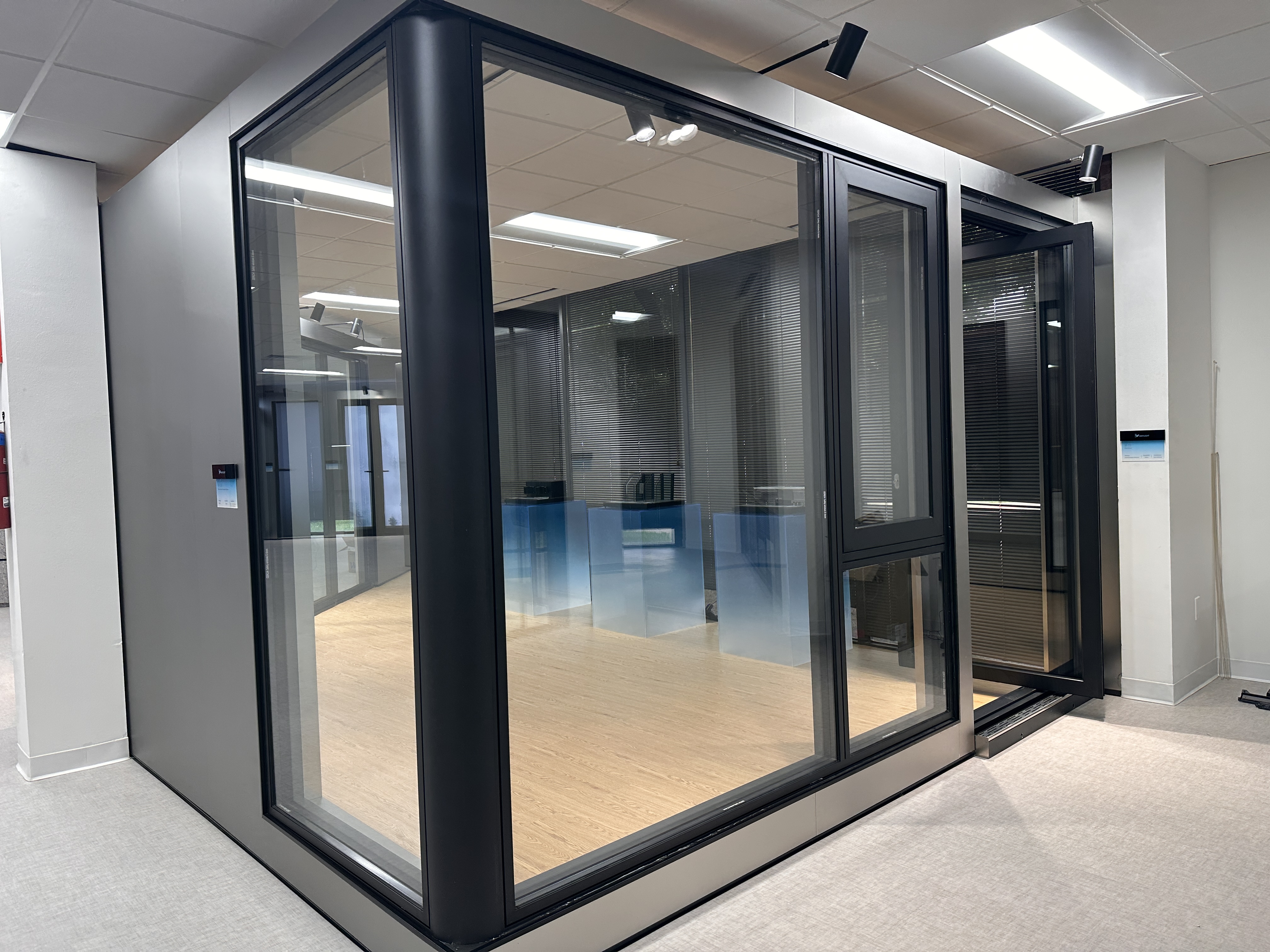
When a curtain is enough
A curtain can be enough when the door already works well and the need is adjustable privacy, softer daylight, or glare control.


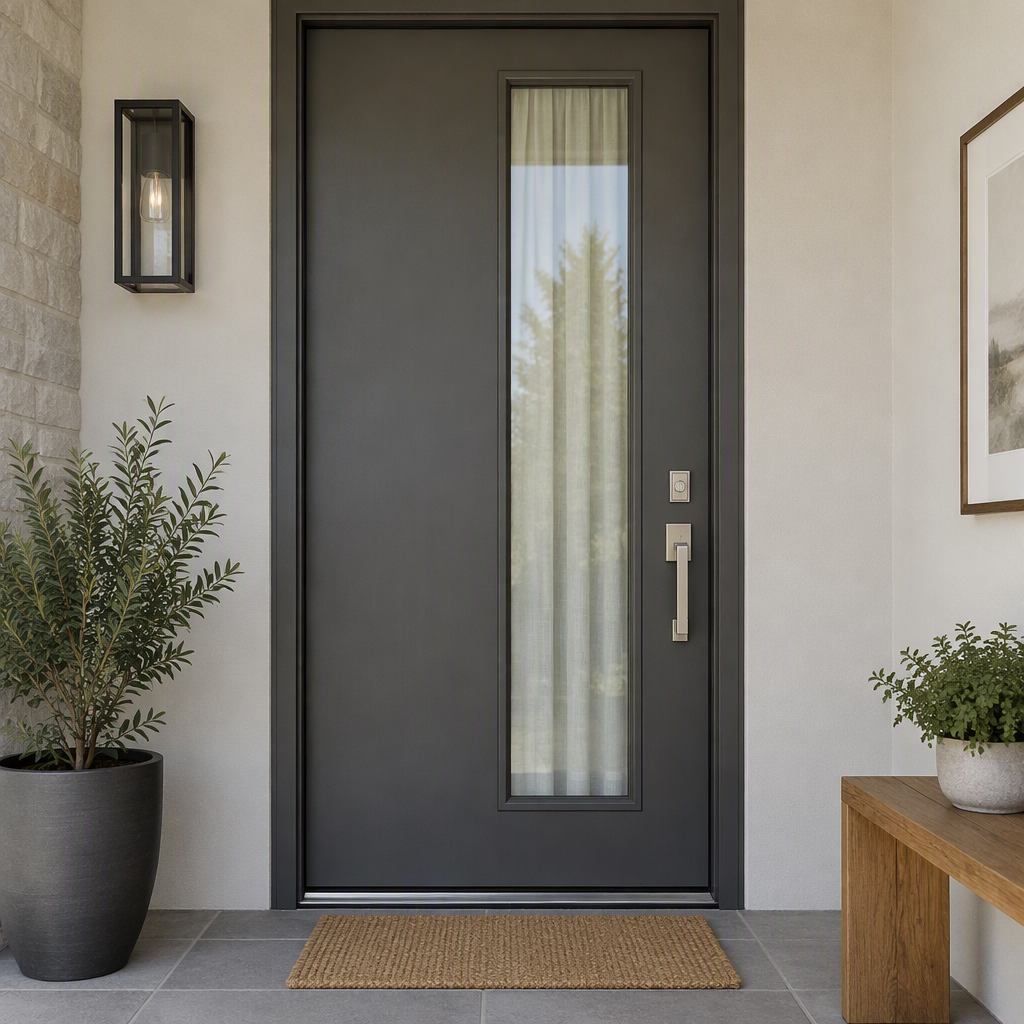
For privacy, choose the least opaque curtain that solves the actual view problem: sheer fabric softens daytime views, lined fabric gives stronger privacy, and blackout fabric can make an entry feel darker unless it is opened during the day.
Window attachments are commonly used for privacy, glare control, comfort, and appearance. At a front door, that means the curtain decision should start with the view: a street-facing glass insert needs a different treatment than a sidelight beside a covered porch.
| Privacy need | Practical curtain choice | Tradeoff to check |
|---|---|---|
| Soften daytime views | Sheer or semi-sheer panel | Usually less private at night when indoor lights are on |
| Block direct view through door glass | Lined or medium-weight fabric | May reduce daylight in a small entry |
| Darken a bright entry or reduce glare | Room-darkening or blackout fabric | Can feel heavy near a frequently used door |
| Cover sidelights rather than the moving door | Wall-mounted side panels | Needs enough wall space and clear access to trim and hardware |
If the goal is privacy without a dark foyer, use fabric density in steps. Start with the lightest layer that blocks the problem view, then increase lining only if the entry still feels too exposed.
A front door curtain can help comfort by adding a removable layer over glass, but do not rely on heat-savings numbers unless a specific rated product is verified; generic drapes and curtains do not have a consistent thermal performance standard in the observed evidence.
Be careful with claims such as “cuts heat loss by a fixed percent” or “blocks a fixed amount of solar heat” for an ordinary front door curtain. Fabric weight, fit, air gaps, glass size, door exposure, and how often the curtain is opened all change the result.
The Attachments Energy Rating Council describes window attachments as products that can support energy performance, comfort, glare control, privacy, and appearance. Use that idea as a product-by-product check, not as proof that every curtain has a rated thermal result.
For a front entry, the safer buying question is simple: will the curtain cover enough glass to improve comfort while still staying dry, clean, and clear of the moving door?
Swing clearance is the make-or-break detail: before buying fabric or a rod, open the door through its normal travel and check whether the curtain would touch the hinge side, pivot path, handle, lock, closer, floor, or weatherstrip.
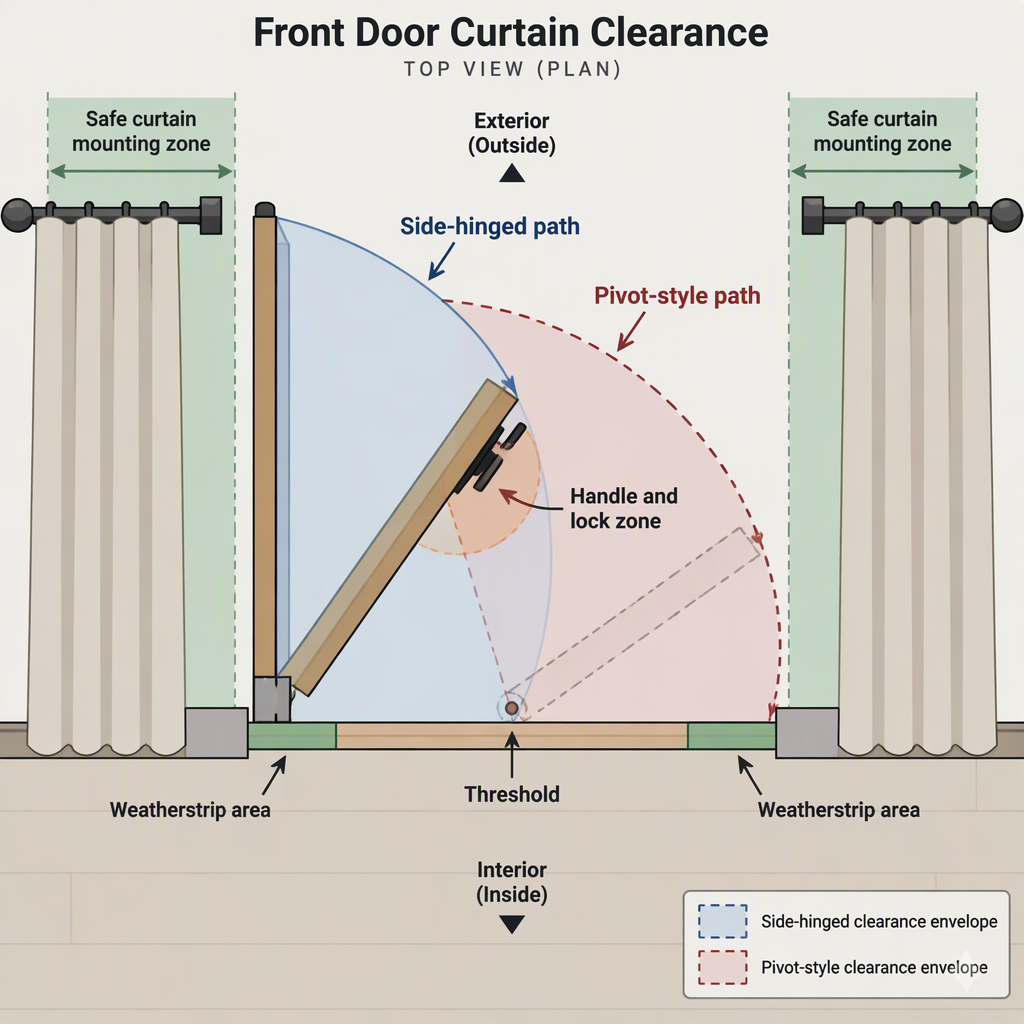
If the curtain catches during this test, change the mount before changing the fabric. A sidelight panel or wall-mounted drape may work better than fabric attached to the moving door.
The best curtain style depends on the door: door-mounted panels suit small glass inserts, wall-mounted drapes suit sidelights or wide entries, and heavy blackout fabric is best reserved for openings where it will not drag, snag, or trap moisture.
| Door or entry layout | Likely curtain approach | Best for | Main caution |
|---|---|---|---|
| Small glass insert in a hinged door | Low-profile door-mounted panel | Privacy at the glass only | Must stay clear of locks, latch, hinges, and weatherstripping |
| Full-lite glass door | Rod-mounted or track-mounted panel | Privacy and glare control | Avoid unsupported thermal claims unless the exact product is rated |
| Sidelights beside the door | Fixed side panels or narrow drapes | Privacy without covering the moving slab | Needs enough wall or trim space for mounting |
| Pivot front door | Wall-mounted treatment set outside the pivot path | Keeping fabric off the moving door | Pivot operation changes the clearance zone compared with a simple side-hinged door |
| Wet or exposed entry | Washable, removable, quick-drying fabric | Maintenance and seasonal use | Fabric should not trap moisture against the door or threshold |
| Home with young children | Cordless or safer-control design | Reducing cord and loop hazards | Check current window covering safety requirements before selecting operating hardware |
Sometimes the better long-term solution is the door design itself: glazing layout, thermal-break frames, hidden hinges, and pivot operation can affect privacy planning, heat transfer, and where a curtain can safely sit.
A curtain can be enough when the door already works well and the need is adjustable privacy, softer daylight, or glare control.
If you are replacing the entry door anyway, review glass size, frame design, sealing details, and hardware before planning fabric.
DERCHI’s Aluminum Thermal Break Hidden Hinge Entry Door page describes custom sizing, EPDM sealing strip, polyurethane foam board filler, and residential or project applications.
DERCHI’s W-Z3 Aluminum Glass Pivot Entry Door page describes concealed top and bottom pivot hardware, custom size, color, and glass options, and thermally broken frames.
These door details do not prove curtain compatibility. They help you ask the right clearance and hardware questions before ordering a front door curtain.
Install a front door curtain only after checking child-safety requirements for operating cords, latch and lock access, cleaning needs, wet exposure, and whether the curtain can stay clear of the threshold and weatherstripping.
The Window Covering Manufacturers Association identifies ANSI/WCMA A100.1-2022 as the current window covering product safety standard with an effective date of June 1, 2024. Treat corded or looped operating parts as a safety issue, not just a design detail.
A front door curtain is worth considering when it improves privacy and comfort without interfering with door operation, safety, cleaning, or the entry-door system itself.
Choose fabric after you check the door, not before. Start with privacy, then test heat and glare needs, swing clearance, handle access, moisture exposure, and child-safety requirements. If the door is being replaced, decide whether glass layout, thermal-break framing, hinge design, or pivot operation should solve part of the problem before you add a curtain.
Use these quick answers to resolve common edge cases: glass inserts, sidelights, renters, exterior exposure, pets, pivot doors, and whether a rated product is needed.
Yes, if the door has glass and you need adjustable privacy, glare control, or a softer entry feel. Avoid it if the fabric blocks the handle, latch, swing path, threshold, or safe exit use.
The best choice is usually the lightest fabric that solves the privacy problem. Sheer fabric is better for daylight, lined fabric is better for stronger privacy, and blackout fabric is best used only where weight and darkness are acceptable.
It may improve comfort by adding a layer over glass, but do not assume a specific heat-saving result for a generic curtain. Look for product-specific ratings if thermal performance is a major buying reason.
Not for ordinary curtains unless the exact product has a verified rating. The observed evidence notes that drapes and curtains do not have a consistent thermal performance standard.
They can work only if the mount stays secure and does not affect the door finish, latch, weatherstrip, glass, or hardware. Test clearance through the full swing before relying on magnets.
Sidelight curtains are often easier than door-mounted fabric because they can improve privacy without riding on the moving door. Check trim depth, wall space, and cleaning access.
Corded or looped controls need special care, especially around children and pets. Check current window covering safety requirements and choose safer-control hardware where reachable cords could create a hazard.
Yes. A pivot door rotates on a different path than a typical side-hinged door, and hidden-hinge or concealed-hardware designs need their own clearance check. Keep fabric outside the movement path and away from locks, seals, and hardware.