HomeBlogsBlogsFront Door Handles: Levers, Pulls and Lock Compatibility
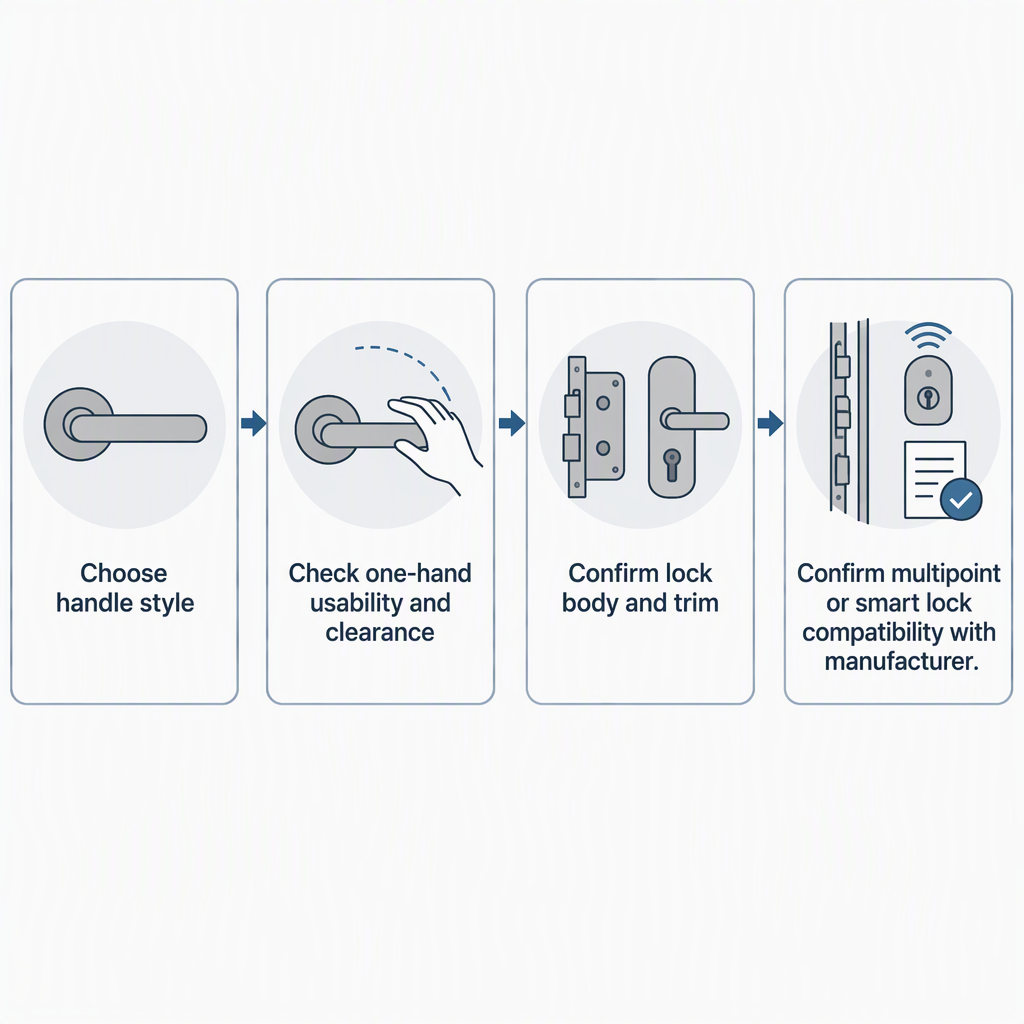
Choose a front door handle by matching user needs with the lock package: levers suit one-hand operation, pulls work when the latch or lock is specified separately, and multipoint or smart systems need manufacturer confirmation before ordering.
Lever, Pull or Integrated Hardware: Which Front Door Handle Fits?
The right front door handle is the one that fits the door operation, user needs and lock type; for multipoint-lock entry doors, confirm the trim, inside and outside operation, electrical options, finish and features with the manufacturer before ordering.
Handle route
Best fit
Compatibility check
Lever handle
Useful where one-hand operation and broad usability matter.
Confirm handing, latch, cylinder, hinge side and closer needs for the selected door configuration.
Pull handle
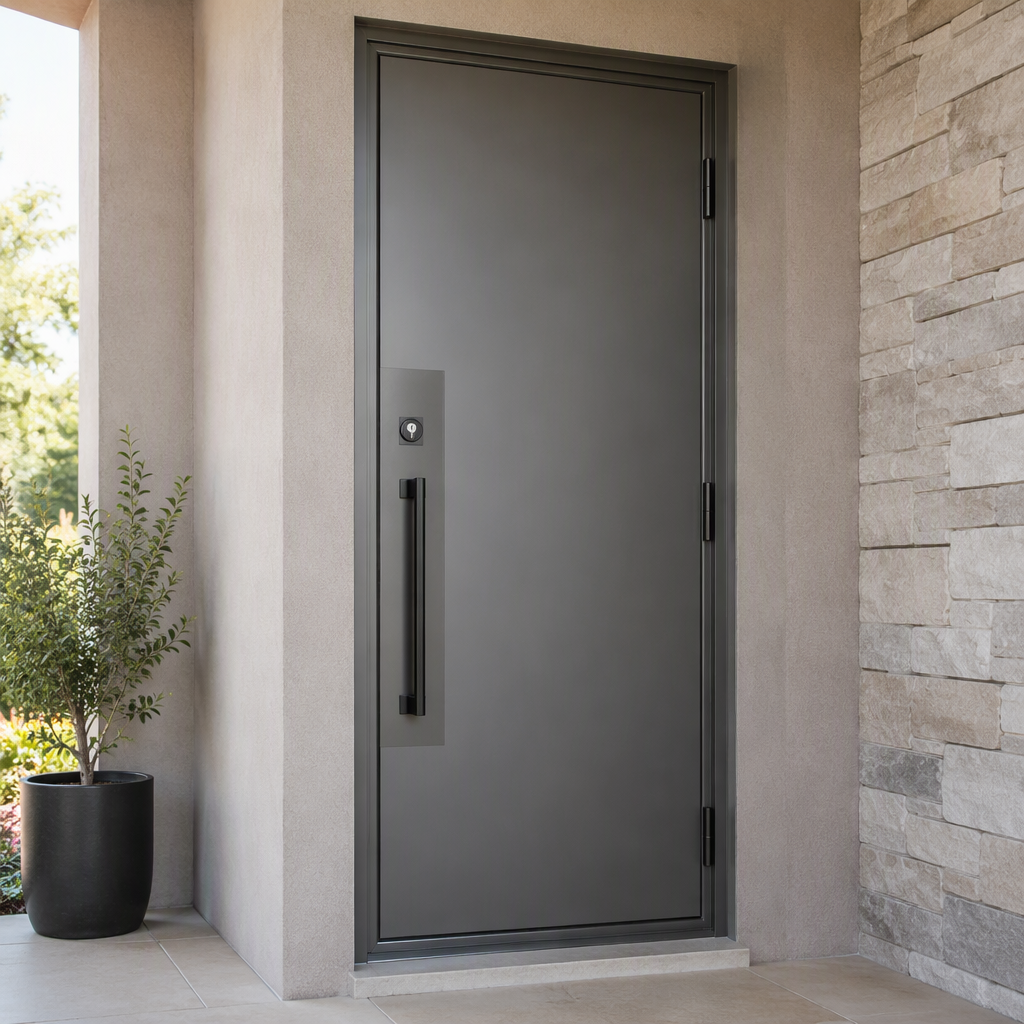
Good for a clean exterior look when the lock body, cylinder cover and latch set are specified as a system.
Check how the pull works with the lock operation from both sides.
Integrated smart or multipoint hardware
Best when the door uses a coordinated lock package rather than a simple single-point latch.
Confirm grade, operating trim, electrical options and manufacturer-approved combinations.
When Lever Handles Make Sense
Lever handles make sense when the door should be easy to operate with one hand and without wrist twisting, especially on entrances that must follow accessible-route requirements.
Choose a lever when
The entrance is expected to serve a broad range of users. The U.S. Access Board ADA guide identifies lever-shaped hardware as a type that can accommodate many users and notes that round knobs do not comply where twisting is required.
Check before ordering
For a hinged aluminum entry door, confirm opening direction, handle position, latch, cylinder, hinge, anti-theft lock catch and closer choices with the selected door model.
For U.S. accessible routes, hardware guidance is not only about appearance. It addresses how the user grips and operates the door, and it notes that exterior hinged doors have no ADA maximum opening-force value specified in that guide.
When Pull Handles Work Best
A pull handle works best when the entrance design needs a strong vertical or horizontal grip, and the latch, cylinder, lock body and interior operating trim are selected as compatible parts.
Confirm whether the selected entry door package includes stainless steel handles, zinc alloy handles, smart locks, lock cylinder covers or electric lock bodies.
Check whether the pull-side hardware matches the swing direction and the inside trim required for the door.
If the lock is multipoint, ask the manufacturer how the outside pull, inside operation and electrical options work together.
Make sure the grip location does not interfere with glazing, sidelites, weatherstripping, screen doors or exterior wall returns.
Lock Compatibility Checks for Multipoint and Smart Entry Doors
Lock compatibility means the handle, trim, cylinder, lock body, latch points, electrical options and inside/outside operation are approved to work together on the exact door configuration.
Item to confirm
Why it matters
Multipoint-lock grade and standard scope
The ANSI/BHMA A156.37-2025 summary states that multipoint locks are covered by operational, strength, cycle, security and related tests and are categorized by grades 1, 2 and 3.
Inside and outside trim operation
BHMA’s summary says operation by inside and outside trim should be confirmed with the manufacturer.
Smart lock and electric lock body options
DERCHI’s hidden-hinge entry door page lists smart locks and electric lock bodies among hardware accessory options for that product page.
Latch, cylinder and closer choices
DERCHI’s thermal break aluminum hinge entry door page lists handles, lock bodies, latches, cylinders, hinges and door closers among hardware choices.
Use standards language carefully: the BHMA page explains the scope of the multipoint-lock standard, but it is not proof that a specific door-and-hardware package has a listed certification.
Swing, Handing and Operating Clearance
Swing direction and handing affect whether the handle is comfortable, reachable and compatible with the selected latch, cylinder, closer and lock-side hardware.
Start with the door’s opening direction and handing because DERCHI’s hinge entry door page describes customizable swing and opening configurations.
Check the latch side from the approach direction, not only from the elevation drawing.
For accessible-route work in the United States, review maneuvering clearance and one-hand hardware requirements before fixing the handle location.
Look for conflicts with wall returns, exterior steps, railings, storm exposure, screens and nearby glass panels.
Give the installer the final hardware schedule before fabrication so cutouts, lock prep and electrical routing are not guessed on site.
Weather Exposure, Glazing and Privacy Considerations
Weather exposure, glass layout and privacy goals should shape the handle finish, grip position and lock package, but they do not replace project-specific hardware confirmation.
For an entry exposed to wind and rain, consider door systems that describe sealing and thermal break design, then confirm the finish and maintenance instructions for the chosen handle.
If the front entry door uses custom finishes or design options, keep handle finish, hinge finish and cylinder trim visually consistent.
With full-height or partial glazing, place the handle where it supports comfortable use without reducing privacy more than intended.
For sidelites or narrow stiles, verify the available stile width before selecting a deep lock body or oversized pull.
For coastal or high-traffic entrances, ask for finish, cleaning and corrosion-care guidance for the exact hardware material rather than assuming all handles age the same way.
Hardware Checklist for Homeowners, Builders and Dealers
Before ordering, build a hardware schedule that connects the handle style to the door model, handing, lock body, cylinder, latch, hinges, closer and any smart or electric function.
Choose the door category and style first; DERCHI’s front entry doors page presents customizable finishes and hardware options across the category.
For the hidden-hinge thermal break entry door, review the listed hardware accessories, including smart locks, handle materials, lock cylinder covers and lock bodies.
For the thermal break aluminum hinge entry door, review handles, lock bodies, latches, cylinders, hinges, anti-theft lock catches and door closers as a coordinated package.
Record exterior handle type, interior operation, cylinder type, finish, door swing, handing and any access-control wiring.
Ask whether substitutions are allowed if a preferred handle finish or smart lock changes after shop drawings are approved.
Buyer
Most important confirmation
Homeowner
Comfort, privacy, finish durability and whether the lock is simple to use every day.
Architect
Accessible operation, clearance and code-sensitive notes for the project location.
Builder or contractor
Door prep, handing, lock body, cylinder, closer and installation responsibility.
Dealer
Manufacturer-approved combinations for trim, electrical options, finishes and multipoint-lock features.
Specifier Checks: Accessibility, Egress and Local Code Boundaries
For accessible, commercial or code-sensitive entrances, treat handle selection as part of the whole opening, then verify local code, accessibility rules and manufacturer documentation before approval.
For U.S. accessible routes, confirm one-hand operation and avoid hardware that requires tight grasping, pinching or wrist twisting.
Where lever-shaped handles or U-shaped pulls are being considered, check them against the actual accessible-route requirements for the project.
For multipoint locks, confirm standard scope, grade, inside/outside trim operation, electrical options, finishes and features with the manufacturer.
For egress, fire, impact, security or jurisdiction-specific approvals, request the applicable code review and product documents for the exact project location.
Do not claim a specific certification, security rating, impact rating or accessibility approval unless the door, lock and handle configuration is documented for that purpose.
The multipoint-lock standard summary is useful for asking better questions, but the full approval decision still depends on the specified lock, trim, door, installation and project authority.
Installation Scope and Final Approval
Approve the handle, lock body, cylinder cover, smart lock option, swing direction and door prep before fabrication or installation.
Confirm the selected door model, opening direction and hardware package with the supplier.
Approve shop drawings, handle height, lock prep, cylinder placement, closer location and any electrical routing before the door is made.
Use qualified installers for lock prep, wiring and final adjustment; do not cut, drill or alter a finished entry door unless the manufacturer has approved the change.
For maintenance, follow the hardware supplier’s cleaning instructions and avoid abrasive methods or unapproved chemicals.
At handover, test everyday operation from both sides and keep the product documents for future service or replacement decisions.
Conclusion
The best front door handle is not just the best-looking part; it is the handle, lock and door package that fits the opening, users, weather exposure, privacy needs and approval path.
These quick answers help buyers narrow the handle style before confirming the final door and lock package.
Is a lever better than a knob for a front door?
For accessible-route work in the United States, lever-shaped hardware is favored because it can support one-hand operation, while round knobs do not comply where wrist twisting is required.
Can I use a pull handle with a multipoint lock?
Yes, but only if the pull, inside trim, cylinder and multipoint lock operation are approved to work together by the manufacturer.
Do smart locks fit every aluminum entry door?
No universal fit should be assumed. DERCHI lists smart locks and electric lock bodies as options on one entry door page, but the exact smart lock must still match the door and lock configuration.
What should I check before choosing a front door handle finish?
Check the door finish, hardware finish options, weather exposure and maintenance guidance so the handle, hinges, cylinder trim and visible accessories look coordinated.
Does a multipoint lock automatically mean a higher security rating?
No. BHMA’s summary explains grades and test categories for multipoint locks, but a specific security rating depends on documented hardware and product approval.
Who should approve hardware for a commercial or accessible entrance?
The project team should confirm accessibility and code requirements with the responsible professional and local authority, then match those requirements to manufacturer-approved hardware.
When should I choose DERCHI entry door pages for the next step?
Use the entry door category and product pages when you are ready to compare aluminum entry door styles, finishes and hardware-option categories before requesting project-specific confirmation.
Address: Building 19, Shenke Chuangzhi Park, No. 6 Xingye East Road, Shishan Town, Nanhai District, Foshan City China
DERCHI window and door is one of top 10 windows and doors in China. We are professional high quality aluminum doors and windows manufacturer with professional team for more than 25 years.