


A front door with a side panel is a good fit when you want more daylight and a wider-looking entrance, but the best choice depends on the opening, the door swing, privacy needs, glass safety checks, energy-rating evidence, and how people will pass through the entry every day.
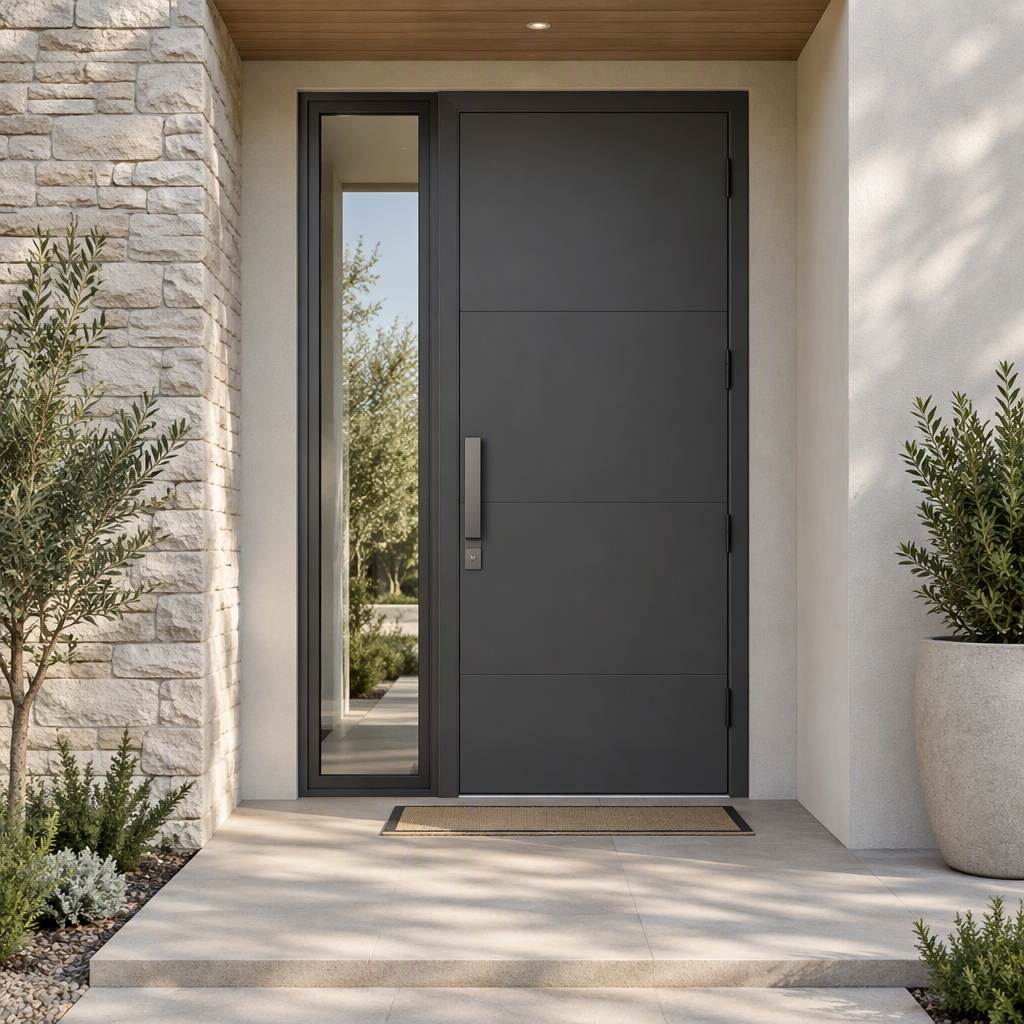
Choose the layout around the opening, not just the look
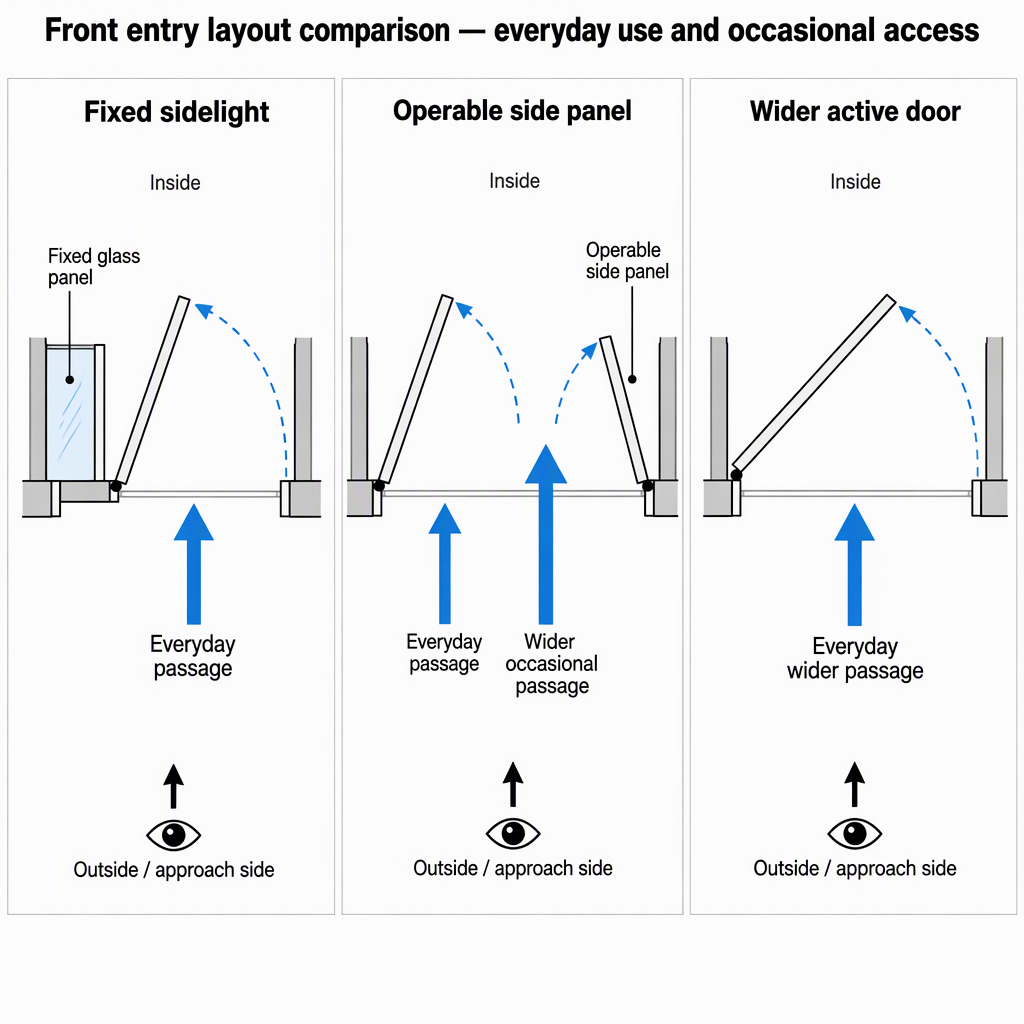
Start with the rough opening, swing direction, and daily traffic path, then decide whether the side panel should be fixed, paired, operable, or replaced by a wider active door.
DERCHI’s front entry door category describes coordinated sidelights and glass-panel choices as front-entry design options, so a front door with a side panel can be considered as a complete entrance composition rather than a door slab alone.
| Layout choice | Best use case | What to confirm before ordering |
|---|---|---|
| Single fixed side panel | A balanced option when the goal is added daylight and a more open entry appearance. | Confirm glass type, finish, and sidelight coordination with the selected front entry door design. |
| Two fixed side panels | Useful for a broad entry where symmetry matters and the active passage can remain centered. | Check that wall structure, framing, and privacy expectations still work with more glass area. |
| Operable side panel | Worth considering when occasional wider access is important, such as moving large items. | Confirm the supplier’s available opening directions, hardware options, and project-specific configuration before assuming this operation is available. |
| Wider active door instead of a side panel | A practical alternative when the main need is clear passage rather than extra light. | Compare leaf weight, swing clearance, hardware comfort, and local accessibility goals. |
Do not choose the layout from a photo alone. A side panel can improve the entry experience, but it also changes framing, glass selection, weather detailing, and the installation scope.
Pick glass for light, privacy, safety, and energy checks
For the side panel, choose glass by balancing daylight, privacy, safety-glazing requirements, and independently documented energy ratings for the final door-and-glass configuration.
DERCHI’s front entry door category discusses clear, textured, and frosted glass panels as customization options, which gives buyers a practical way to compare visibility and privacy before finalizing a design.
| Glass direction | Why buyers choose it | Decision limit |
|---|---|---|
| Clear glass | Maximizes the view and daylight at the entrance. | Use it where privacy and glare are acceptable. |
| Textured glass | Softens the view while still admitting light. | Review samples because patterns can change both privacy and style. |
| Frosted glass | Increases privacy for entries facing a street, neighbor, or shared corridor. | Confirm the look in daylight and at night when interior lights are on. |
| Documented rated glass package | NFRC explains that certified fenestration products use labels and directory listings for ratings such as U-factor, solar heat gain coefficient, visible transmittance, air leakage, and condensation index. | Ask for documents for the exact product and configuration, not only a general product-family statement. |
For energy claims, use the NFRC residential certification program as a verification model: it explains third-party verification, labeling, and the Certified Product Directory for windows, doors, skylights, and window films.
For U.S. safety context, Cornell LII identifies 16 CFR Part 1201 as the Safety Standard for Architectural Glazing Materials, but project teams should verify the current official requirements and local rules for the actual installation.
Do not assume every side panel beside a front door is code-compliant because it looks common. Safety glazing, wind exposure, impact requirements, and local approvals depend on jurisdiction and project conditions.
Plan everyday passage before you approve the design
A side panel improves the feel of an entry only if the active door still gives comfortable clear width, maneuvering space, threshold usability, and hardware operation for the people who use it.
In U.S. accessibility planning, the U.S. Access Board guide for entrances, doors, and gates discusses clear width, maneuvering clearances, thresholds, and hardware conditions for doors on accessible routes.
- Mark the direction people naturally approach the entry from the driveway, sidewalk, hallway, or lobby.
- Confirm the active door leaf and swing do not block the main approach path.
- Check whether the threshold height and shape suit the users and the project type.
- Review handle position, lock access, and whether packages or mobility aids will make operation harder.
- Test the entry plan with real daily tasks: carrying groceries, moving a stroller, receiving deliveries, or bringing in furniture.
The same Access Board guidance notes that exterior hinged doors do not have a specified maximum opening force under the referenced ADA provision, so opening comfort still needs project-level review instead of relying on one universal number.
Match hardware and swing direction to the passage plan
Choose hinges, handles, locks, and swing direction after the side panel layout is set, because hardware comfort and door clearance affect how the entry works every day.
DERCHI’s thermal break hinged entry door page describes configurable opening directions and hardware options for residential and commercial project applications.
- Confirm inswing or outswing with the project team and the local code context.
- Check that the handle side is easy to reach from the normal approach direction.
- Make sure the open door leaf will not hit the side panel trim, a nearby wall, a railing, or furniture.
- Review lockset, pull, closer, and threshold choices together rather than as separate items.
- Where an accessible route is required, review hardware operation, clear width, maneuvering clearance, and threshold conditions against the applicable accessibility rules.
- Ask whether an operable side panel needs different locking, weather sealing, or user instructions from a fixed sidelight.
Check weather exposure and energy-rating evidence
For an exterior entrance, review weather detailing and ask for energy-rating evidence for the exact door, side panel, glass, and threshold package being ordered.
DERCHI’s thermal break hinged entry door page describes thermal break design, thermally broken sills, weatherstrips, and EPDM rubber sealing strip as product design features.
NFRC explains that certified products are listed in its Certified Product Directory and display an NFRC label with ratings, so a buyer should verify energy claims with configuration-specific documentation rather than relying on a broad description.
A covered porch, coastal exposure, high sun, wind-driven rain, and freeze-thaw conditions can change the right threshold, drainage, finish, and maintenance plan. Confirm those conditions before approving the final opening details.
Use this ordering checklist before final approval
Before ordering, turn the design into a checklist that covers the opening, layout, glass, privacy, hardware, accessibility needs, energy documents, and installation responsibilities.
- Measure the rough opening and finished floor conditions before selecting the final door-and-side-panel layout.
- Confirm the hinged entry door configuration, opening direction, hardware options, thermal break design, sill, and sealing details with the selected product page and supplier documents.
- Select clear, textured, or frosted glass and coordinate the sidelight appearance with the front entry door design.
- For U.S. projects, verify whether architectural glazing safety requirements apply to the selected location and glass type.
- For public, commercial, multifamily, or otherwise covered projects, review clear width, maneuvering clearance, threshold, and hardware requirements with the applicable accessibility authority.
- If energy performance is part of the decision, request rating labels, directory information, or test documents for the exact configuration.
- Define who is responsible for removal, framing repair, flashing, drainage, sealing, trim, finish protection, and final adjustment.
- Set a maintenance plan for cleaning glass, checking seals, inspecting hardware, and keeping drainage paths clear.
Where DERCHI’s entry-door pages fit the decision
Use DERCHI’s entry-door pages to compare available door families and design options, while asking for project-specific documents before relying on certification, compliance, or performance claims.
The thermal break hinged entry door page describes a custom-size aluminum hinged entry door for residential and commercial projects, including configurable opening directions and hardware options.
The front entry doors category page is useful for reviewing glass-panel styles, sidelites, finishes, hardware, and other customization directions.
The DERCHI front entry door overview can help you navigate front entry door product links, but certification-related statements should be confirmed with independent documents or official directory listings for the exact configuration.
Conclusion
Choose a front door with a side panel when it improves the entry’s daylight, appearance, and daily use without compromising passage, privacy, glass safety, weather detailing, or documented performance requirements.
The safest decision path is simple: confirm the opening first, select the side-panel layout second, choose glass third, then verify hardware, accessibility, weather exposure, installation scope, and any rating documents before you approve the order.
FAQs about front doors with side panels
These common questions help narrow the layout, glass, passage, and documentation checks before a final specification.
Is a front door with a side panel worth it?
It can be worth it when you want more daylight and a more open entrance, especially where a coordinated sidelight fits the overall front entry design. It is less useful if the real problem is active passage width rather than light or appearance.
Should I choose one side panel or two?
Choose one side panel for a narrower or asymmetrical opening, and two side panels when the entry is wide enough and symmetry is important. In both cases, confirm framing, privacy, glass type, and the active door width before ordering.
Should the side panel be fixed or operable?
A fixed side panel is simpler for many entries. An operable panel may help with occasional wide access, but you should confirm that the selected hinged entry door system supports the needed opening direction, locking, and hardware configuration.
What glass gives privacy without making the entry dark?
Textured or frosted glass is often considered when privacy matters, while clear glass favors view and daylight. Review actual glass samples because privacy can change between daytime and nighttime lighting.
Does a side panel affect energy performance?
The whole door-and-glass configuration matters. NFRC explains that rated fenestration products use labels and directory listings for energy-performance values, so ask for documents for the exact configuration being purchased.
Can a side panel help with accessibility?
A side panel can make an entrance feel more open, but accessibility depends on the active clear width, maneuvering clearance, threshold, and hardware operation where accessibility rules apply.
Do side panels need safety glass?
U.S. architectural glazing is addressed by 16 CFR Part 1201 at a broad federal standard level, and local building rules may add location-specific requirements. Verify the exact safety-glazing requirements for your jurisdiction and installation.
What maintenance should I expect?
Plan for normal glass cleaning, hardware adjustment checks, seal inspection, and keeping drainage or threshold areas clear. For exterior entries, exposure to sun, rain, salt air, or dust may change the maintenance schedule recommended by the supplier.


