


Do not choose a front door only because it matches interior doors. For an exterior entry, first check climate fit, labeling needs, manufacturer installation instructions, privacy, weather exposure, and the real opening; then select a finish and hardware direction that works with the home’s interior palette.
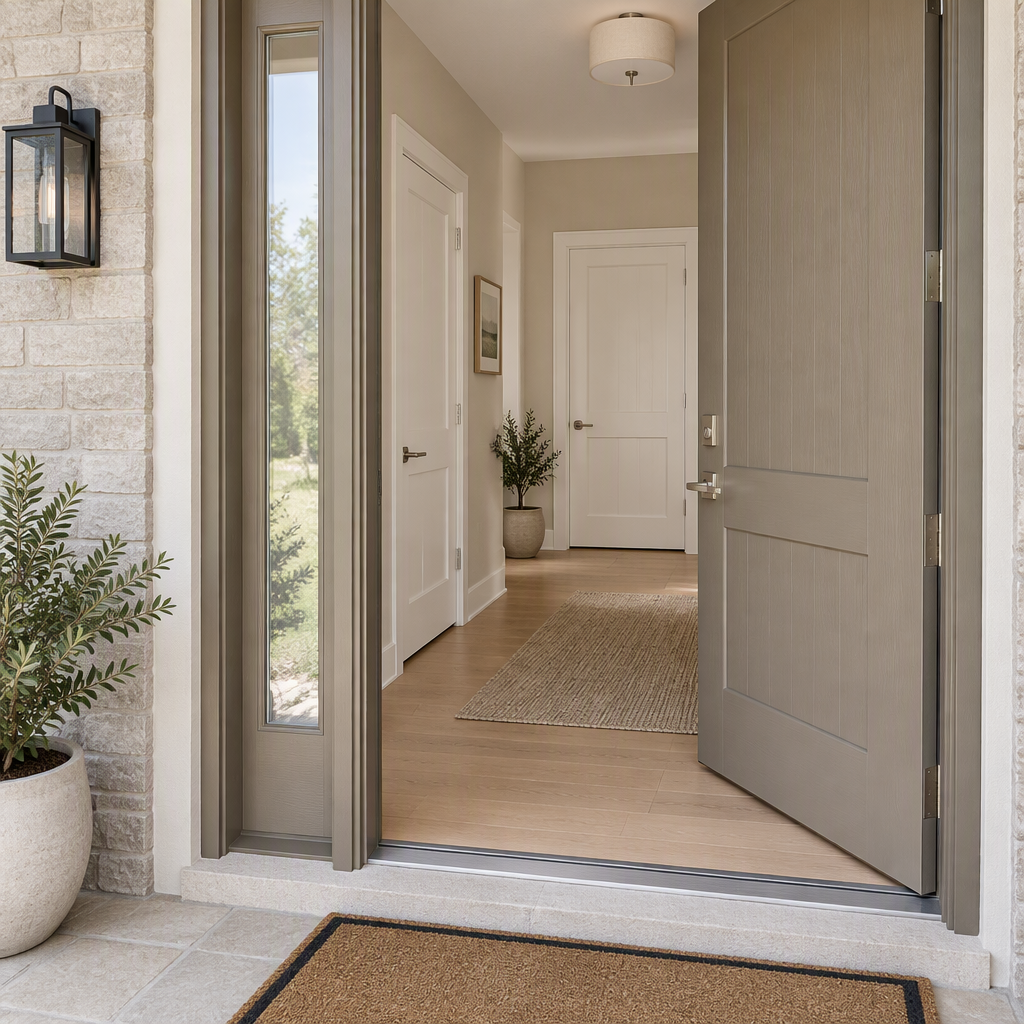
Should your front door match your interior doors?
Your front door may match your interior doors, but it does not need to. Design principles such as unity, balance, proportion, rhythm, and emphasis support a coordinated whole-home look rather than a rule that every door must be identical.
Matching all doors makes sense when the entry, hallway, and main living space are visually connected and the goal is a calm, unified palette. It can also work in minimalist homes where repeating one finish helps the openings feel organized.
| Decision point | Better choice | Why it works |
|---|---|---|
| Open sightline from entry to hallway | Match or closely coordinate | Repeating related finishes can support unity and rhythm across connected spaces. |
| Front door is the main exterior focal point | Coordinate or contrast | A controlled contrast can create emphasis without making the interior doors feel unrelated. |
| Different exterior and interior materials | Coordinate by color, trim, or hardware | Balance and proportion can come from shared details, not only from exact material matching. |
How to decide between matching, coordinating, and contrasting
Choose the strategy that makes the entry feel intentional from both sides: exact matching for quiet unity, coordination for flexibility, or contrast when the front door should act as a focal point.
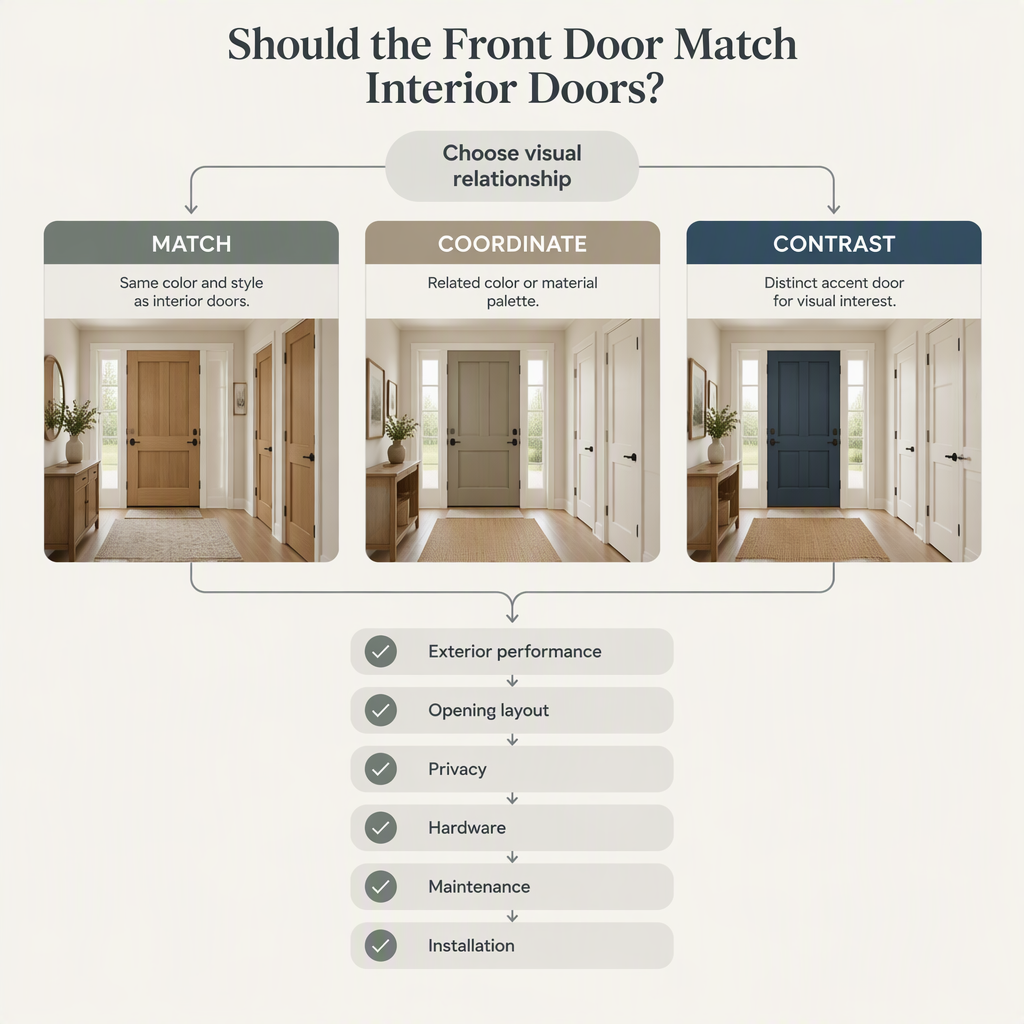
The most flexible option for many homes is coordination: repeat one or two design cues, such as tone, trim color, hardware finish, panel geometry, or glass proportion, while allowing the exterior entry door to meet different functional demands.
| Strategy | Best fit | Watchout |
|---|---|---|
| Exact match | Best when the entry door and interior doors are seen together and the design goal is strong unity. | Can feel flat if the home needs an exterior focal point. |
| Coordinated family | Best when you want a connected look without forcing different door types to appear identical. | Choose the shared element first, such as hardware finish or trim color. |
| Intentional contrast | Best when the front door should create emphasis at the entrance. | Keep the contrast controlled so it does not clash with flooring, walls, or nearby interior doors. |
Do not let color matching override exterior-door performance
Appearance matters, but an exterior front door must also suit the climate, exposure, installation, and labeling requirements that apply to the project.
ENERGY STAR residential windows, doors, and skylights guidance explains climate-zone selection, labeling, and installation considerations for U.S. energy-efficiency decisions. The NFRC FenStar Certification Program states that residential fenestration products must first be NFRC certified to earn ENERGY STAR certification.
That certification pathway does not, by itself, prove that a specific door model is certified; ask for model-specific documentation when energy labeling is a purchase requirement.
Check opening layout, glazing, privacy, and hardware together
The matching question is only one part of the specification. The opening direction, clearance, glass area, privacy level, trim, and hardware should be checked together before choosing the final look.
- Confirm left-hand or right-hand opening needs where the selected entry-door series offers opening-configuration choices.
- Compare available custom finish and hardware options with the interior door hardware so the entry does not feel accidental.
- Where a front door page lists customizable size and color, use those options to coordinate with trim, siding, flooring, and interior doors without assuming unlisted specifications.
- For residential or commercial entry settings, decide how much glass, privacy, and visibility the entry should provide before selecting a finish.
- Check how hinges, weatherstrips, sill design, and the swing path affect the installation area, not only the appearance of the slab.
A practical design test is to stand at the main entry and look inward. If interior doors are visible from the threshold, coordinate at least one feature. If they are not visible, the front door can more easily be treated as its own exterior design statement.
Where DERCHI aluminum entry door options fit in the decision
DERCHI entry-door pages can help you review available aluminum front-door styles, custom finish direction, and hardware choices, but each product page should be read for its own listed options and limits.
The Aluminum Thermal Break Hidden Hinge Entry Door page lists customizable size and color options, EPDM rubber sealing strip, polyurethane foam board filler, and applications including apartment, villa, hotel, and residential projects.
The Hinge Entry Door Thermal Break Aluminum Series page describes thermally broken sills, semi-concealed hinges, weatherstrips, customizable colors, and left or right opening choices for that series.
The DERCHI front entry doors category page presents front entry door products with custom finishes, hardware options, and residential or commercial positioning.
Use those pages as starting points for style and configuration discussions, then request any project-specific certification, code, impact, egress, or energy documentation that your market or building type requires.
Plan maintenance and installation scope before finalizing the look
Before ordering, make sure the selected appearance can be installed and maintained correctly in the real opening, because finish coordination cannot fix a poor fit or improper installation.
- Confirm the climate-zone and label requirements that apply to the project before choosing a door only because it matches interior doors.
- Follow the manufacturer’s installation instructions and coordinate the installer’s scope before the finish, hardware, and trim are finalized.
- Check the product page for listed components such as sealing strips or filler materials, then ask the supplier how those details apply to the selected configuration.
- Review the sill, hinge, weatherstrip, and opening direction details so the door can operate cleanly after trim and flooring are installed.
- Plan routine visual checks of exposed hardware, hinges, weatherstrips, sill areas, and glass edges so dirt, wear, or alignment concerns are found before they affect daily operation.
- Tell the supplier if the entry is exposed to high sun, wind-driven rain, salt air, or heavy use, then ask which finish-care and component-inspection instructions apply to the selected model and configuration.
- Coordinate hardware style with the interior design, but verify that the selected hardware is suitable for the intended exterior entry use.
Conclusion
Your front door should feel related to your interior doors, but exact matching is optional. Start with the design relationship, then check exterior performance, opening layout, privacy, hardware, maintenance, and installation before committing.
- Match when the entry and interior doors are seen together and a quiet, unified palette is the goal.
- Coordinate when you want flexibility across different materials, rooms, and exterior conditions.
- Prioritize climate, labeling, and installation requirements where exterior performance matters.
Frequently Asked Questions
These answers address common design and specification concerns when deciding whether a front door should match interior doors.
Do all doors in a house need to be the same color?
No. Doors can be the same color, but they can also coordinate through trim, hardware, proportions, or repeated tones. The goal is visual unity, not automatic sameness.
Should I choose a front door for looks or energy performance first?
For an exterior door, screen performance-related needs first, including climate suitability, labeling requirements, and installation. Then choose a finish that works with the interior palette.
Can an aluminum front door still fit a warm interior style?
Yes, if the chosen product offers suitable size and color customization and the finish is coordinated with trim, flooring, lighting, and interior hardware.
Is a contrasting front door a bad idea?
No. Contrast can work well when the front door is intended to be an entry focal point. Keep one connection to the interior, such as hardware finish or trim color.
Should the inside face of the front door match the interior doors?
It often helps if the inside face relates to nearby interior doors, especially in a small foyer. It does not have to be identical if other details create balance.
Do front door finishes prove code or certification compliance?
No. Finish selection does not prove certification or approval. If certification is required, ask for documentation for the exact model and configuration.
What is the safest design choice if I am unsure?
Choose a coordinated family: similar trim, compatible hardware, and a front-door finish that relates to the home’s exterior and interior without forcing an exact match.


