


135D Series Aluminum sliding door
The 135D Series Aluminum sliding door page lists hardware data including HOPO/HOPPE handle brand options, aluminum alloy handle material, a single hook lock point, and 304 stainless steel lock material.


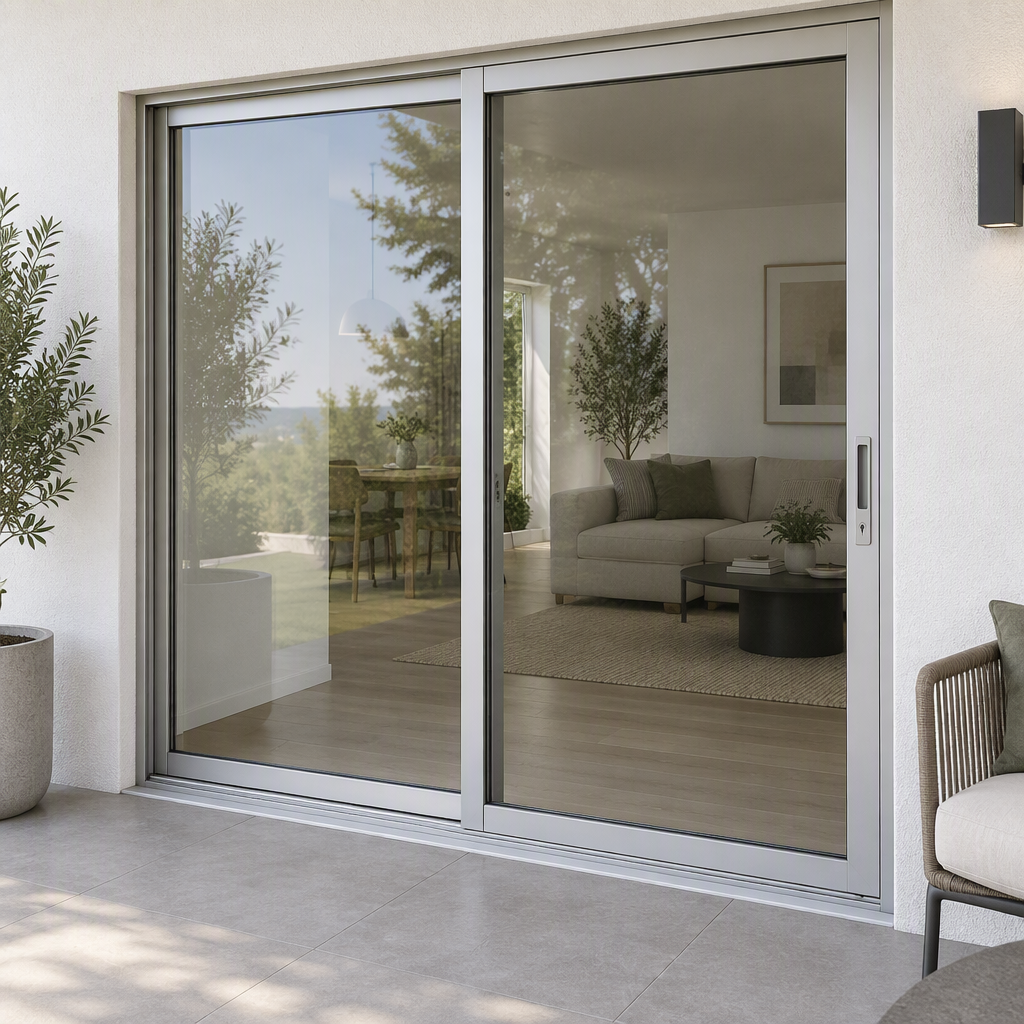
A compatible set is the one that works with the existing sliding door system, not merely one that looks similar from the room side.
Sliding door hardware works as a group of connected parts. DERCHI’s sliding door category describes hardware categories such as handles, locks, lock points, keepers, rollers, and bottom roller wheels, which is a useful reminder that the visible handle is only one part of the system.
For a replacement job, begin with the door itself: brand or series, panel type, frame profile, track condition, lock location, and the way the moving panel meets the fixed panel or jamb. For a new project, choose the door system first, then confirm the matching hardware package.
| Compatibility question | Why it matters | What to confirm |
|---|---|---|
| Is the door series known? | Different sliding door series can list different hardware details. | Product page, order record, shop drawing, or dealer confirmation. |
| Does the lock body fit the door cutout? | The lock must work with the lock point and keeper area. | Existing lock type, cutout location, and supplier match. |
| Does the handle mount correctly? | The handle must fasten securely without forcing new holes into the wrong area. | Mounting pattern and door thickness from the existing unit or drawing. |
| Does the door still slide and align? | Rollers, track, keeper, and lock position affect the operating system. | Panel alignment, roller condition, track condition, and latch engagement. |
Before ordering, record the lock type, keeper position, handle mounting pattern, door thickness, handing, panel alignment, and whether the project is a repair or a new door specification.
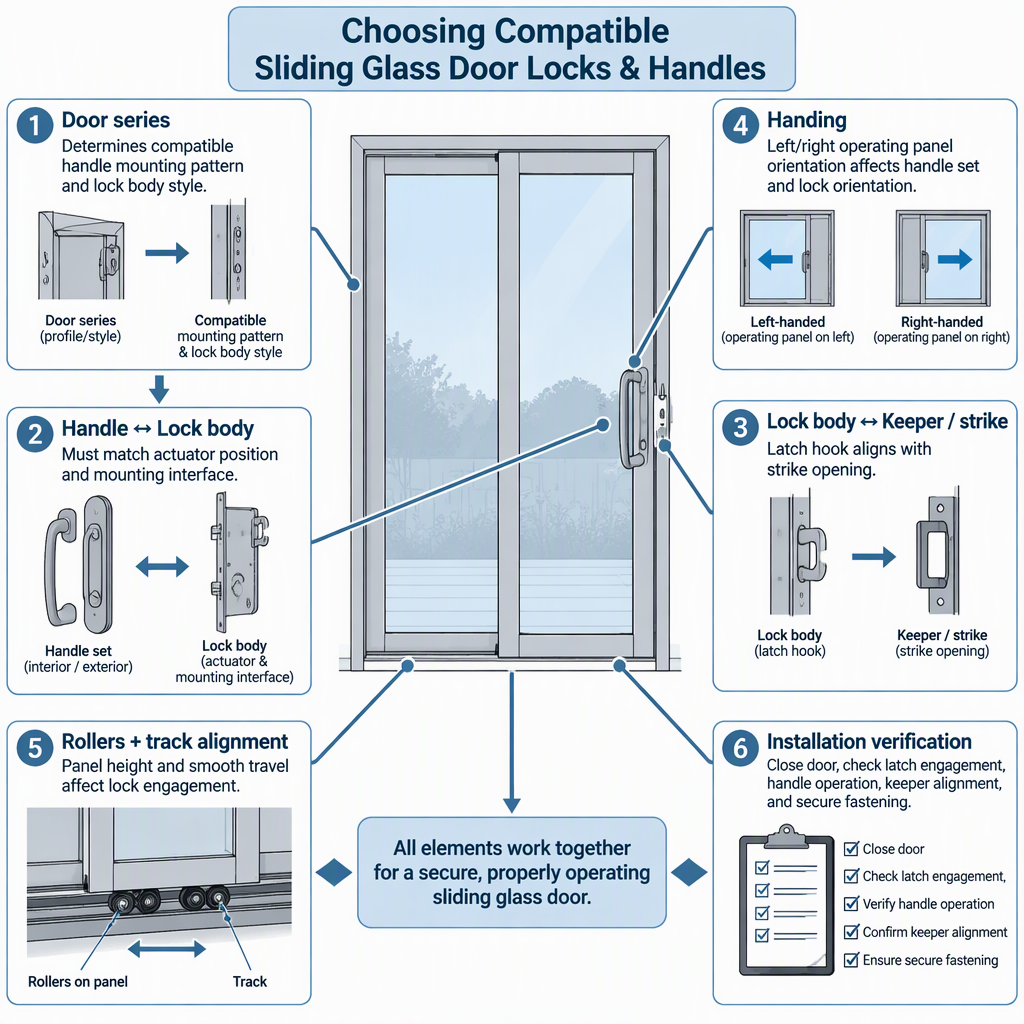
The reason to measure first is simple: DERCHI’s 135D Series and Q9 Series pages list different product-specific hardware information, so a handle-and-lock choice should be confirmed against the exact door model or configuration.
The handle, lock body, keeper or strike, cylinder or thumb turn, rollers, and track alignment should be treated as one operating system because a mismatch can stop the door from latching, sealing, or sliding correctly.
A sliding patio door handle and lock set is easy to shop by appearance, but the operating parts behind it do the important work. DERCHI’s sliding door category identifies related hardware areas including handles, locks, lock points, keepers, rollers, and bottom roller wheels.
| Part | Compatibility role | Buyer check |
|---|---|---|
| Interior and exterior handle | Provides the grip, trim, and fastener interface. | Confirm mounting pattern, thickness range, handing, finish, and whether keyed access is needed. |
| Lock body or mortise lock | Engages the lock point or hook inside the door edge. | Match the lock type and position to the existing cutout or approved door design. |
| Keeper or strike | Receives the locking point when the panel closes. | Confirm height, alignment, and frame compatibility. |
| Cylinder or thumb turn | Controls locking from one or both sides when specified. | Check project needs for interior privacy, exterior keyed access, and local approval requirements. |
| Rollers and track | Support smooth sliding and panel alignment. | Inspect wear and alignment before replacing only the handle. |
DERCHI sliding door pages show why model-specific confirmation matters: the 135D and Q9 examples list different hardware terms and hardware configurations, so one replacement set should not be assumed to fit all sliding doors.
The 135D Series Aluminum sliding door page lists hardware data including HOPO/HOPPE handle brand options, aluminum alloy handle material, a single hook lock point, and 304 stainless steel lock material.
The Q9 Series Slim Frame Aluminum Sliding Door page lists hardware items including an integrated panoramic handle, double-row large rollers, and a panoramic-door-specific lock seat.
Use these examples as a model-specific check, not as a universal replacement chart. If you are comparing DERCHI sliding door systems, start from the relevant product page or the DERCHI sliding door category, then confirm the hardware package for the exact configuration.
Safety glazing, accessibility, and egress requirements do not replace the compatibility check, but they can change what a builder or architect must verify before approving a sliding door assembly in a specific jurisdiction.
For a typical homeowner repair, the immediate task may be a matching handle, lock body, and keeper. For a builder, architect, dealer, or contractor, the approval question can be broader: the door may be part of a regulated opening, a public route, a rental property, or a weather-exposed exterior wall.
Do not treat a replacement handle as proof that the whole opening meets safety, accessibility, egress, or local building-code requirements. Confirm the applicable jurisdiction, building type, door location, glass type, and approved hardware with the project professional or authority having jurisdiction.
When a project has code or accessibility obligations, ask for the official project drawings, local approval path, and product documentation that applies to the actual door assembly. A generic online handle listing is not enough for that decision.
A stronger-looking lock does not prove a sliding door is security rated; security claims should be tied to the tested door assembly and the test method or certification documentation, not to a generic handle set.
Hardware descriptions can help you identify what belongs with a door system, but they should not be stretched into unsupported security claims. The available DERCHI sliding door pages support model-specific hardware context, not a universal forced-entry rating for every configuration.
For projects that require a security rating, ask for configuration-specific documentation. The documentation should match the door series, glass, frame, lock, keeper, panel size, and installation method being supplied.
Choose replacement hardware for a small repair only when the door, lock body, keeper, and panel alignment are still sound; choose a full sliding door specification when the opening, glazing, weather sealing, or project compliance requirements are changing.
| Situation | Likely path | Reason |
|---|---|---|
| The handle is damaged, but the door slides well and the lock body still matches the keeper. | Replace the matching hardware set. | Compatibility can be checked against the existing door and hardware. |
| The latch misses the keeper or the panel rubs the frame. | Inspect alignment, rollers, and track before ordering hardware. | Rollers, track, lock points, and keepers are part of the operating system. |
| The project changes the opening, glass, frame, or weather exposure. | Specify the full sliding door system. | A handle alone cannot define the door assembly. |
| The project is comparing DERCHI sliding door models. | Review the model page and confirm the hardware package. | The 135D and Q9 examples list different hardware-related details. |
The practical buying path is to identify the door system, verify the matching hardware package, check safety and local requirements, and confirm installation scope before ordering.
A sliding glass door lock and handle set should be selected from the door system outward. Start with the series, lock body, keeper, handle mounting, handing, rollers, and track condition. Then decide whether you need a like-for-like replacement or a complete sliding door specification.
If you are evaluating DERCHI options, use the 135D and Q9 pages as model-specific examples and confirm the final hardware package for the exact configuration before purchase.
These short answers handle common compatibility questions without adding unsupported dimensions or legal claims.
No. Compatibility depends on the door system, lock body, keeper, handle mounting, handing, and related operating parts. DERCHI’s product examples show that different sliding door series can use different hardware details.
Measure from the existing unit or approved drawing: handle mounting pattern, door thickness, lock position, keeper position, handing, and visible lock type. Also check panel alignment, rollers, and track condition before ordering.
Sometimes, but only if the new handle is compatible with the existing lock body, fastener pattern, door thickness, and function. If the lock body or keeper is worn or misaligned, replacing only the handle may not solve the problem.
Do not assume that. The 135D page lists items such as HOPO/HOPPE handle brand options, a single hook lock point, and 304 stainless steel lock material, while the Q9 page lists an integrated panoramic handle, double-row large rollers, and a panoramic-door-specific lock seat.
No. A security rating should be supported by documentation for the tested door assembly and configuration. A stronger-looking handle or lock is not enough by itself.
It depends on the jurisdiction, building type, opening size, hardware operation, and code edition applied to the project. Confirm egress requirements with the project professional or local authority before relying on a sliding door for that purpose.
Not first. A hard-to-slide panel can involve rollers, bottom roller wheels, track condition, or alignment. Inspect those items before deciding that the handle or lock is the main problem.
Ask for photos, door series, rough opening context, panel direction, lock function, finish preference, installation scope, and any project requirements for weather exposure, access, or local approval.


